

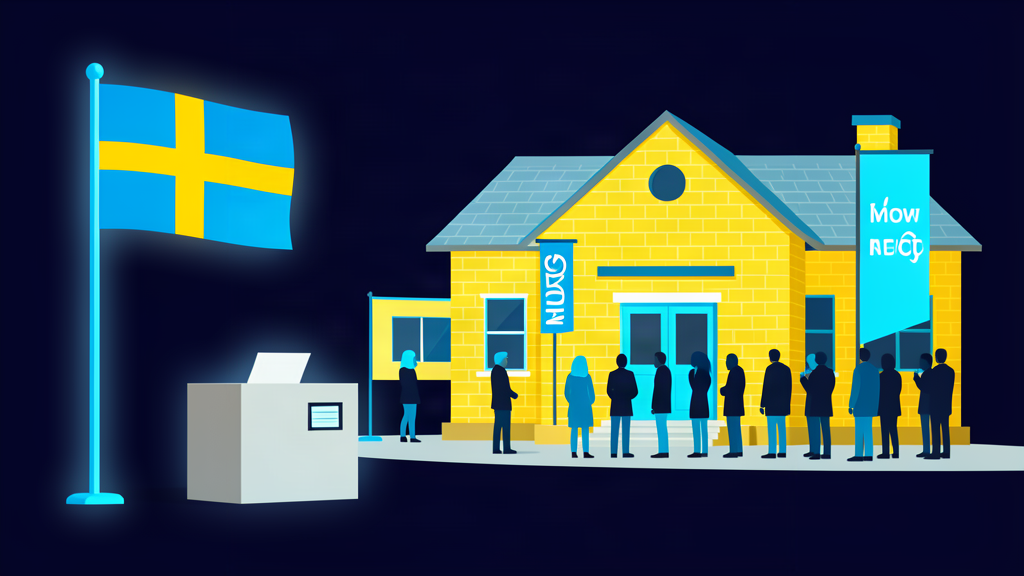
Sweden heads to the polls with the right-wing bloc holding a narrow edge in the polls, but the country’s prime minister, Ulf Kristersson, has already promised cabinet positions to the Sweden Democrats as his junior partners in a future government. The Swedish election has become a test of whether a European democracy can bring a party once relegated to the political fringe into the heart of executive power without destabilising the institutions that surround it.
A fragmented electorate
The Swedish political landscape has been reshaped by years of migration concerns, economic pressure and a broader drift to the right across the continent. Kristersson’s Moderate Party leads a centre-right bloc that includes the Christian Democrats and the Liberals, but the numbers only work if the Sweden Democrats are willing to provide the parliamentary support needed to govern. That party has risen from isolation to influence over the course of a single electoral cycle, and its leaders have made clear they expect tangible concessions in return.
On the other side, the left-wing bloc has been unable to close the gap decisively. Polls have shown a tight race throughout the campaign, with neither side able to claim a comfortable lead. Swedish voters have traditionally prized stability, and the prospect of a fractured parliament after the votes are counted has focused attention on the messy negotiations that follow any close election in a country with proportional representation.
What Kristersson is offering
The prime minister has said publicly that he intends to give the Sweden Democrats roles in his next cabinet if his bloc wins enough seats to form a government. That would mark a significant shift in how Swedish politics operates, because it would move the party from external support into formal executive responsibility. Critics have warned that normalisation of this kind could make it harder to hold the party to account once it is inside government rather than outside it.
The Sweden Democrats have built their appeal on a platform of stricter migration controls, tougher law and order policies and a sceptical stance towards what they describe as the failures of international cooperation. For Kristersson, the bargain offers a route to a working majority. For his opponents, it tests whether a mainstream conservative leader can rely on a partner with a more combative style without absorbing the political damage that comes with it.
Why it matters
The outcome will be watched closely elsewhere in Europe because Sweden has often functioned as an early indicator of political change on the continent. A right-wing government that includes the Sweden Democrats at its core would reinforce the pattern of mainstream parties accommodating harder-line voices in order to stay in power. That has implications for how Sweden approaches migration, climate policy, foreign affairs and its role within the European Union. It also raises the question of whether the coalition will hold together once the campaign rhetoric gives way to the day-to-day compromises of government.

ADVERTISEMENT
What happens next
Once the votes are counted, the real work begins. Sweden’s system means that government formation can take weeks if no bloc has an outright majority, with party leaders negotiating portfolios, policy commitments and the boundaries of their agreements. If Kristersson’s bloc comes out ahead and the Sweden Democrats accept the terms on offer, he will move to form a government with them in senior positions. If the left-wing bloc edges ahead instead, the fight will shift to whether it can assemble its own stable majority or whether Sweden faces another period of minority rule and legislative gridlock. Either way, the result will define the country’s political direction at a time when European governments are under pressure on several fronts at once.


















We do not allow links of any sort in comments. No SPAM whatsoever. On topic comments only.