

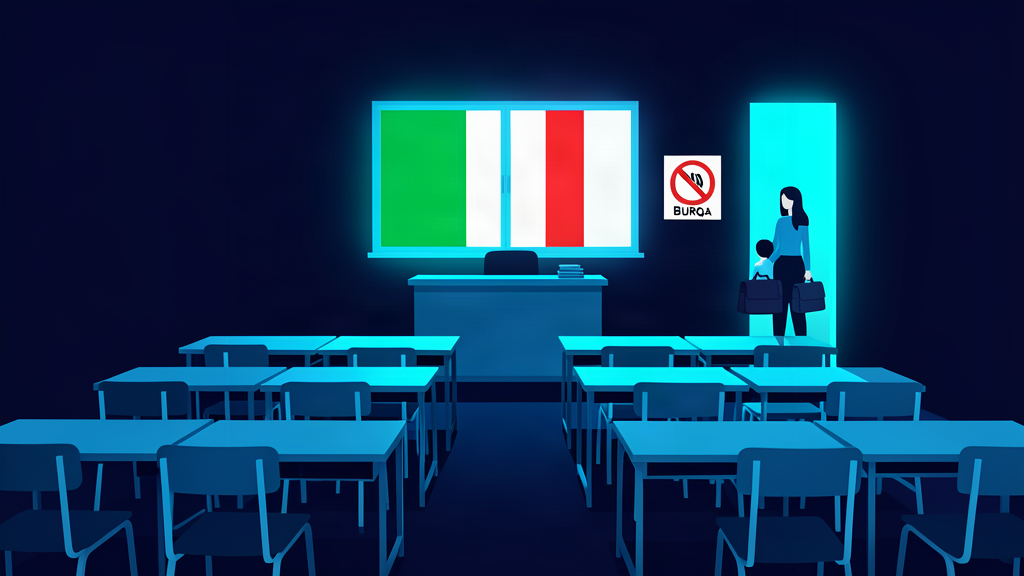
Italy’s cabinet has approved a series of education measures that include banning face-covering garments such as the burqa and niqab from schools, alongside a cap on the number of foreign-born pupils allowed in any single classroom. Prime Minister Giorgia Meloni described the measures as “common-sense tools that do not divide but really help to integrate,” framing the policy as a way to strengthen social cohesion rather than target any particular community.
The measures
The cabinet decision covers two distinct elements. The first prohibits students and others from wearing full-face coverings inside school buildings, a restriction that would apply to the niqab — a veil covering the face except for the eyes — and the burqa, which covers the entire body and face. The second element introduces a numerical ceiling on the proportion of pupils in a class who were born abroad or have foreign citizenship, aiming to prevent the formation of classrooms where a majority of students share a non-Italian background.
The government has not yet published the detailed legislation or specified how the classroom cap would be calculated or enforced. Implementation details, including penalties for non-compliance and any exemptions for religious reasons, are expected to be set out in forthcoming decrees.
Why it matters
The moves sit within a broader European debate about integration, identity, and the role of public institutions in managing cultural diversity. Several European countries, including France and Belgium, already have restrictions on full-face coverings in public spaces, though the extension of such bans specifically into schools is a more targeted intervention. Italy, with its own significant migrant population and history of inward migration, is navigating tensions between the government’s emphasis on integration through shared norms and criticism from rights groups who argue that blanket bans can alienate the very communities they are meant to include.
The classroom cap element is particularly contentious. Supporters argue that mixing pupils from different backgrounds promotes social cohesion and helps Italian language acquisition. Opponents warn that rigid quotas could lead to segregation in practice, push schools into difficult allocation choices, and stigmatise foreign-born children. The balance between those competing concerns will shape the political and legal response.
What happens next
The measures are expected to proceed through Italy’s legislative machinery, with implementing decrees to follow. Schools and local authorities will need guidance on enforcement, and legal challenges are possible, particularly around the classroom cap’s compatibility with existing education and anti-discrimination rules. The policy will also be watched closely by other European governments grappling with similar questions, and by advocacy groups on both sides of the integration debate.

ADVERTISEMENT
Source: BBC News, 24 September 2026



















We do not allow links of any sort in comments. No SPAM whatsoever. On topic comments only.