

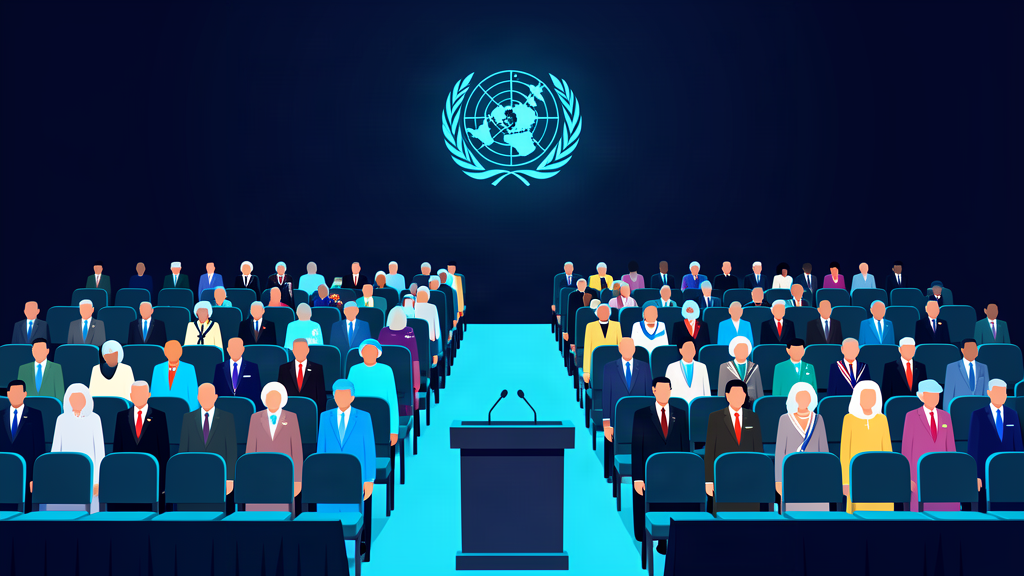
Dozens of delegates have walked out of the United Nations General Assembly hall as Israeli Prime Minister Benjamin Netanyahu took the podium to deliver his address. The mass departure, captured on video and widely shared, underscores the deep international divisions over Israel’s policies and the fraught atmosphere that has surrounded this year’s UN gathering.
The walkout
As Netanyahu began speaking to the assembly, a significant number of delegates from different delegations rose from their seats and left the chamber. The walkout was not sanctioned by any single bloc, but appeared to be the result of individual delegations or representatives choosing not to remain for the Israeli leader’s remarks. Such walkouts are not uncommon at the UN when controversial figures address the assembly, but the scale of this one drew attention and was seen as a pointed display of disapproval.
The UN General Assembly has long been a venue where states use their speeches to signal positions, appeal to global opinion, or challenge one another. Addressing the assembly as a sitting prime minister carries significant international weight, but it also exposes the speaker to visible diplomatic reactions — including walkouts — when the audience is sharply divided.
Why it matters
The walkout reflects the strained diplomatic environment around Israel’s actions and policies, which have drawn condemnation from a range of governments, civil society groups, and international bodies. The timing — within the current session of the UN General Assembly — places Netanyahu’s address at the centre of a global forum where rival narratives are being contested in real time. A visible walkout by dozens of delegates signals that opposition to Israel’s positions is not confined to rhetoric in press conferences or resolutions behind closed doors, but is being expressed even during the formal speeches of the world body.
For Netanyahu and his government, the walkout is a diplomatic embarrassment that may complicate efforts to win broader international support or present Israeli policy in a favourable light. For his critics, it is a visible reaffirmation of the isolation that many argue Israel faces at the UN. The incident is likely to be cited by both sides in the ongoing debate over accountability, international law, and the role of global institutions.
What happens next
The walkout is unlikely to alter the substance of the General Assembly session, but it will feed into the diplomatic narrative around Netanyahu’s visit and the broader Israeli-Palestinian issue. Other UN speeches, draft resolutions, and behind-the-scenes negotiations will continue in parallel. Observers will watch whether the episode prompts any formal response — such as statements from delegations, the UN Secretary-General’s office, or civil society groups — and whether similar scenes recur during the remainder of the session.

ADVERTISEMENT
Source: Al Jazeera, 24 September 2026


















We do not allow links of any sort in comments. No SPAM whatsoever. On topic comments only.