

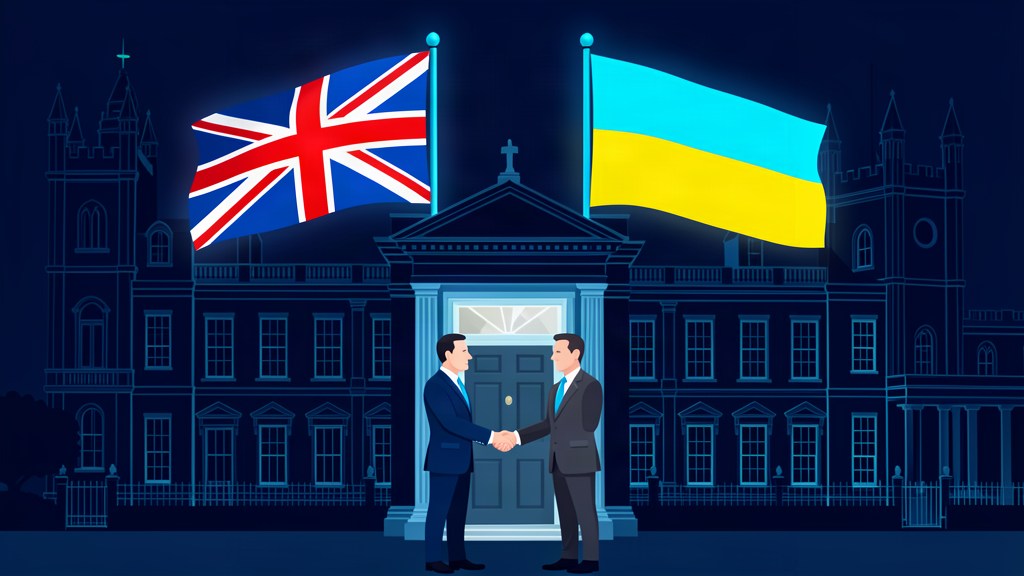
Prime Minister Andy Burnham welcomed President Volodymyr Zelensky to Downing Street on Wednesday for talks that come as Ukraine enters the fifth year of Russia’s full-scale invasion. The audience, reported by BBC News, underscored London’s position as Kyiv’s closest continental backer and raised fresh questions about how long Western support can sustain the current front lines without a decisive breakthrough. For shoppers in Manchester’s Northern Quarter or commuters on the London Underground, the meeting was a reminder that a war once seen as distant now shapes everything from petrol prices to the armed forces budget.
Why it matters
The United Kingdom has been Ukraine’s largest military donor since the full-scale invasion began, and Prime Minister Burnham’s personal elevation to Number 10 after the 2024 general election has made the relationship both a symbol of continuity and a domestic political litmus test. BBC News noted that Burnham’s approach differs from his predecessors in tone more than substance: the commitment to military aid remains robust, but the rhetoric now frames Ukraine as much a Western European neighbour as an eastern frontier. That shift matters to voters in marginal constituencies where the cost of living and energy security sit alongside defence spending in daily conversation. The Prime Minister’s Manchester roots give him a working-class credibility that his opponents in Westminster struggle to match when they question the financial toll of Britain’s stance. A sustained commitment also reinforces the UK’s leadership of NATO’s northern flank and its influence with Washington, where a return to the White House next year could recalibrate the transatlantic alliance’s priorities.
What happens next
Neither Downing Street nor Ukraine’s presidential office announced a new financial package at the meeting, but officials confirmed that the national security council will produce a review of long-term support within weeks. Parliament returns to scrutiny of the armed forces budget as the winter heating season approaches, and opposition parties are expected to press the Prime Minister on the cost implications of sustained military expenditure. President Zelensky’s London visit formed part of a wider European tour, with Berlin and Paris next on his agenda, as he sought to lock in commitments before the calendar year turned and a fresh wave of Western elections threatened to shift priorities once again. The BBC’s coverage suggested that the tenor of the discussions — measured, resolute, deliberately low-key — pointed to a long winter of dialogue rather than a sudden breakthrough.
On the ground, ordinary Britons feel the ripple effects in subtle but persistent ways: higher defence-linked borrowing costs, military recruitment drives on the evening news, and a steady stream of Ukrainian refugees whose arrival has reshaped local services from Bristol to Belfast. The Downing Street meeting did not promise an end to any of that, but by keeping Ukraine at the top of the European agenda it ensured those ripple effects would not be forgotten in Westminster corridors.
Source: BBC News — Why Zelensky’s meeting with Burnham matters










We do not allow links of any sort in comments. No SPAM whatsoever. On topic comments only.