

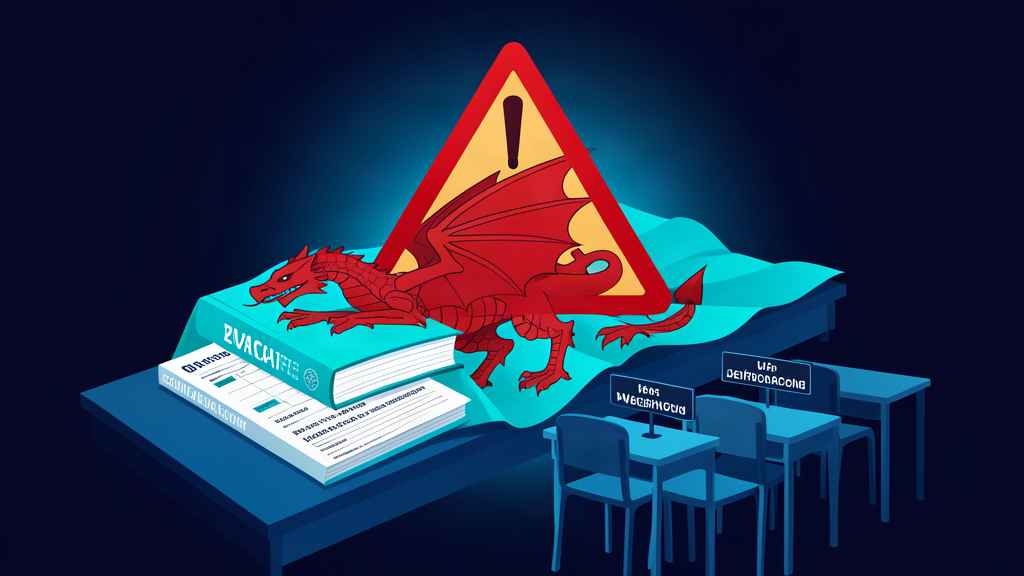
Wales is grappling with a deepening crisis in school standards, with international test results placing Welsh pupils among the lowest-performing students in Europe and a new curriculum overhaul offering few guarantees of improvement. The situation, reported by BBC News, has intensified scrutiny of the Welsh Government’s education policies at a time when families across Cardiff, Swansea and the valleys are increasingly questioning whether their children are receiving a world-class education. The latest figures from the Organisation for Economic Co-operation and Development show Welsh 15-year-olds trailing their counterparts in England, Scotland and the Republic of Ireland across mathematics, science and reading.
Why it matters
For parents in Wrexham, Merthyr Tydfil and Newport, declining school standards hit close to home: a child’s future earning potential, their chances of securing a place at a good university, and even the economic prospects of their local community all hinge on the quality of education delivered today. BBC News noted that Wales’ performance in the Programme for International Student Assessment (PISA) has stagnated since the Welsh Government introduced its new curriculum in 2022, with reading and mathematics scores falling behind comparable nations. The crisis is not uniform — some coastal schools serving affluent areas of the Vale of Glamorgan continue to perform well — but the overall picture suggests that the ambitious reform, designed to replace the English model with something distinctly Welsh, has left teachers and pupils in a state of flux. Prime Minister Andy Burnham’s government, which devolved education to the Welsh Parliament, has been asked to intervene, though any Westminster action would require careful navigation of constitutional boundaries. The broader implications extend beyond Wales: if the new curriculum fails to deliver, it could undermine the credibility of devolution itself and fuel renewed debates about whether education policy is better managed from Cardiff Bay or Westminster.
What happens next
The Welsh Government has pledged to provide additional training for teachers transitioning to the new curriculum, and extra funding for schools in the most deprived areas, but sceptics argue that such measures address symptoms rather than the underlying structural issues. BBC News reported that a cross-party group of Assembly Members is preparing a motion of no confidence in the Education Secretary if the next round of PISA results — due in two years — fail to show marked improvement. For now, parents are being urged to participate in “parent voice” surveys, while education unions warn that the continued rollout of curriculum reforms without adequate support risks further demoralising an already stretched teaching workforce. The Welsh Government’s education spokesperson has insisted that the reforms will take time to bear fruit and that judging them against a single set of international benchmarks misses the point of a curriculum designed to be more creative and less exam-focused than its predecessor.
Community colleges from Llanelli to Bangor are reporting increased demand for catch-up tutoring, and local authorities are grappling with how to fund additional support without raiding budgets already stretched thin by rising energy costs and teacher recruitment difficulties. For Welsh speakers, the crisis also raises uncomfortable questions about bilingual education: while the new curriculum promises to immerse more children in the Welsh language, early evidence suggests that pupils struggling with English literacy are falling further behind.
Source: BBC News — Wales has a school standards crisis. Will plans to fix it actually work?












We do not allow links of any sort in comments. No SPAM whatsoever. On topic comments only.