

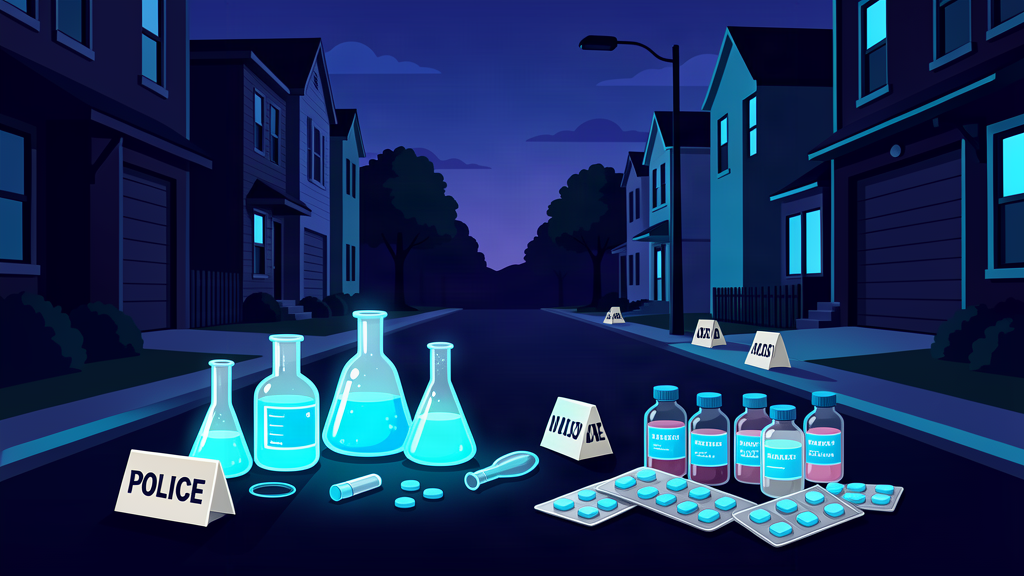
A new wave of homemade synthetic drugs is sweeping across the United States, as fentanyl and other manufactured opioids produced in makeshift home labs deepen an already devastating addiction crisis even as overall overdose deaths slowly decline. The BBC’s Quentin Sommerville has spent days inside affected American neighbourhoods, meeting users, dealers and recovery workers who describe a drugs landscape that has mutated beyond recognition from the heroin epidemics of previous decades.
The new threat
The drugs are entirely man-made — nothing like the poppies that once supplied heroin. Fentanyl, 50 to 100 times more powerful than heroin, can now be cooked up in basements and bathtubs using household ingredients and precursor chemicals shipped from overseas suppliers. The resulting cocktails are cut with synthetic tranquilliser simulants, which make reviving overdose victims more difficult, according to the BBC’s reporting.
At its peak in 2022, 110,000 Americans were dying from drug overdoses annually, mostly from opioids. That figure has fallen to around 70,000 last year, but the decline masks a shifting threat: the synthetics are now appearing in communities that had previously seen only traditional street drugs, and the drugs can be produced locally rather than imported as finished product.
Why this matters beyond America’s borders
The synthetic drug trade is not a remote American problem. UK law-enforcement agencies have repeatedly warned that fentanyl and its derivatives are beginning to appear in British streets, often smuggled alongside traditional heroin and cocaine imports. The National Crime Agency has noted that British criminal networks are adapting quickly, using the same dark-web distribution methods pioneered in the US. For UK health officials, the concern is that synthetic opioids could accelerate addiction rates in a country already grappling with rising opioid prescriptions and treatment waiting lists.
Prisons caught in the crossfire
The crisis has even breached the walls of America’s correctional facilities. The BBC reported from inside Cook County Jail in Chicago — the largest single-use jail in the country — where synthetic drugs are being mailed in soaked into the pages of books and letters, evading the body scanners designed to catch body-cavity concealments. Security footage from 2023 shows prisoners spasming and collapsing during overdose seizures, as the jail lost eight inmates that year compared to its usual one or two annual deaths.
What happens next
The 2024 US presidential election has put drug policy at the centre of campaign debates, with candidates trading blame over border security and foreign-manufactured precursors. For now, the BBC’s reporting suggests that as long as the synthetics can be produced in small, dispersed labs, law-enforcement agencies on both sides of the Atlantic will struggle to keep pace. UK addiction charities are already preparing for the possibility that fentanyl becomes a mainstream street drug, as has happened across the Atlantic.


















We do not allow links of any sort in comments. No SPAM whatsoever. On topic comments only.