

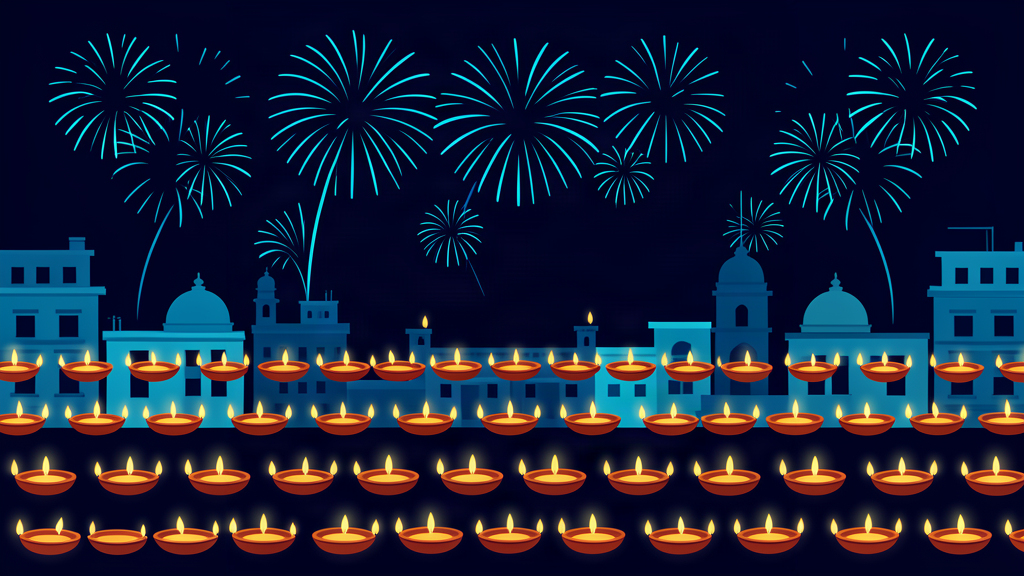
Homes and temples are glowing across India to mark Diwali, with millions celebrating the Hindu festival of lights, the BBC reports. Families are illuminating homes, temples, offices and streets with oil lamps and colourful lights to symbolise the triumph of light over darkness, and the festival is being marked with prayers, family gatherings, traditional sweets and fireworks.
Diwali falls on the darkest night of the Hindu lunar month of Kartik, when the moon is not visible in the sky, the BBC explains. Traditions vary across India’s regions and communities, but the celebration is widely shared, and in the days leading up to the festival families clean and decorate their homes with flowers, colourful lights and traditional oil lamps known as diyas. Markets bustle with shoppers buying festive essentials, colourful rangoli patterns appear at entrances to homes, and families come together for prayers, elaborate feasts and the exchange of gifts.
Meaning behind the lights
At its heart, the BBC notes, Diwali celebrates the return of Lord Ram to Ayodhya after his victory over Ravan, the main antagonist in the Hindu epic Ramayana, and symbolises the triumph of good over evil, light over darkness, and knowledge over ignorance. The third day is the main celebration, when families offer evening prayers to Lakshmi, the Hindu goddess of wealth and prosperity, before gathering for festive meals and fireworks. The celebrations began on 6 November with Dhanteras, when buying gold, silver or new utensils is considered auspicious, and the second day, Chhoti Diwali or small Diwali, is marked by lighting oil lamps in many households.
The festival is also celebrated by Sikhs and Jains, the BBC reports. Sikhs mark Bandi Chhor Divas, or Prisoner Release Day, commemorating the release of their sixth guru, Guru Hargobind, from imprisonment at Gwalior Fort in the early 17th century, while for Jains Diwali marks the attainment of moksha, or liberation from the cycle of rebirth, by Lord Mahavira. The fourth day is celebrated differently across India, and the fifth and final day, Bhai Dooj, celebrates the bond between brothers and sisters. India’s stock exchanges even hold a special one-hour Muhurat trading session, which the BBC says will take place on 8 November this year.
Celebrations and the pollution debate
Despite the joy of the festival, the BBC reports growing concerns over air pollution, particularly in northern India. Seasonal weather and the burning of crop residue contribute to deteriorating air quality, and firecrackers set off during Diwali can make the situation worse. Air pollution in the capital, Delhi, has reached such hazardous levels that the BBC describes this as the most polluted Diwali festival in a decade, and Mumbai has also experienced high pollution in recent weeks. India’s Supreme Court has permitted the manufacture, sale and use of certified green firecrackers in Delhi and surrounding areas for a limited period, designed to produce fewer emissions, but critics question their effectiveness.
Why it matters for the UK
For the UK, Diwali is one of the most visible festivals of the year, celebrated by Hindu, Sikh and Jain communities in cities and towns across Britain, with family gatherings, temple events and community celebrations that bring streets and homes to life. The BBC notes that with Indian communities spread across the world, Diwali is also celebrated internationally, and for many British families the festival is a time for reunion, remembrance and the exchange of gifts, as well as for sharing traditional foods and sweets. The pollution debate in India also resonates in the UK, where councils and community groups often promote cleaner celebrations and advise on the safe use of fireworks.

ADVERTISEMENT
Why it matters
The BBC’s account captures both sides of the festival: a profound celebration of light, knowledge and community, and a public-health challenge when fireworks and seasonal weather push air quality to dangerous levels. For families in Britain celebrating this weekend, the message from India is a reminder to balance festivity with care for neighbours, pets and the environment.
What happens next
Across India, the final days of Diwali will bring family gatherings and, for many, the chance to mark the new year in their own communities. In the UK, community celebrations will continue through the weekend, and the debate over air quality and fireworks will shape how future festivals are marked, both in India and in British cities where the festival is now a fixture of the calendar.















We do not allow links of any sort in comments. No SPAM whatsoever. On topic comments only.