

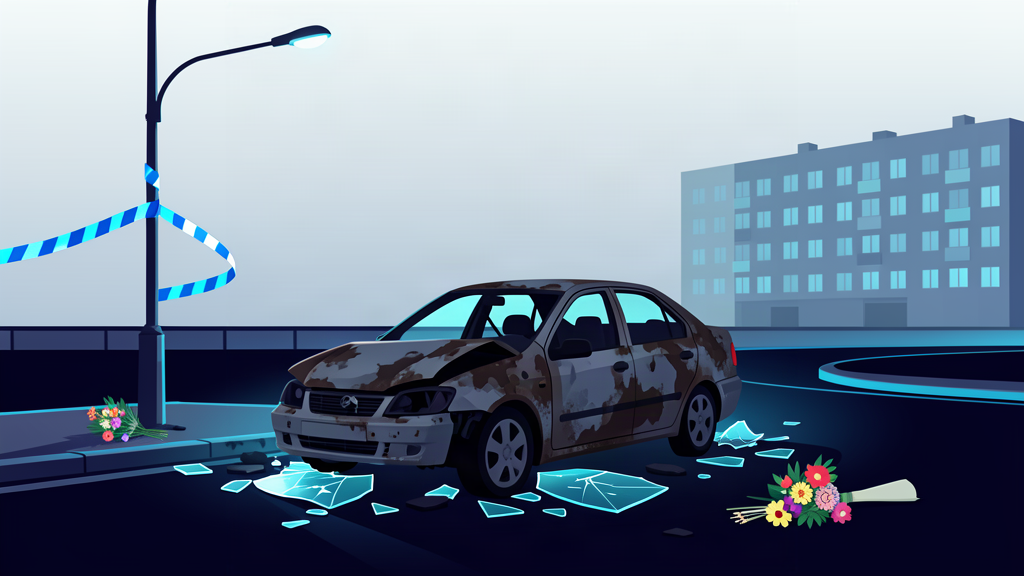
A car bomb in Moscow has injured a former adviser to Ukraine’s former prime minister, Mykola Azarov, with Russian investigators saying the attack was part of a campaign against pro-Kremlin figures. Sergei Zavorotny was behind the wheel when the explosion tore through his car on Friday morning and was taken to hospital, the Russian Investigative Committee said in a Telegram statement. The blast came a day after a similar explosion in Saint Petersburg killed a member of the Russian military.
The attack
Russia’s Investigative Committee said Zavorotny, who had been an aide to Azarov until the prime minister resigned in 2014 and fled to Russia, was injured and taken to one of Moscow’s hospitals for treatment. Unconfirmed reports from Russia described him as having lost his left arm and suffering a brain injury, broken ribs and a broken right leg. The car bomb went off a day after an explosion in the Pushkinsky District of Saint Petersburg killed a member of the Russian military. Russia described the bombs as the latest in a series of attacks targeting pro-Kremlin figures.
The peace talks
The violence unfolded against a backdrop of informal peace talks in Dublin aimed at ending the war in Ukraine. US envoys Jared Kushner and Steve Witkoff had visited Moscow to speak with President Vladimir Putin, while Ukrainian President Volodymyr Zelensky welcomed the prospect of European involvement in the process. Earlier, UK Prime Minister Andy Burnham said the UK national security adviser would join the talks in Dublin alongside Zelensky, Kushner and Witkoff. Hours later, Downing Street said the adviser could no longer take part, and the meeting went ahead without him.
Why it matters
The strikes show the war’s toll persisting even as diplomacy advances. Russia and Ukraine both continued attacks on each other’s territory, with Ukraine accusing Russia of targeting a hospital and Russia saying a Ukrainian strike hit an industrial facility in the Samara region, killing four. Both sides also reported further deaths in the Volgograd region, the Bryansk border region and across southern Ukraine. For Europe, the Dublin meetings underscore the debate over how far it should shape any peace settlement, with the UK playing a developing role alongside the informal discussions.
What happens next
Investigations are under way to determine the devices used, and examinations including medical and explosives tests have been appointed. No claim of responsibility has yet emerged. The peace process continues, with European representation expected to grow as the US-Russia track proceeds. The immediate human questions are the safety of the injured adviser in hospital, and the fate of the Russian military member killed in Saint Petersburg.



















We do not allow links of any sort in comments. No SPAM whatsoever. On topic comments only.