

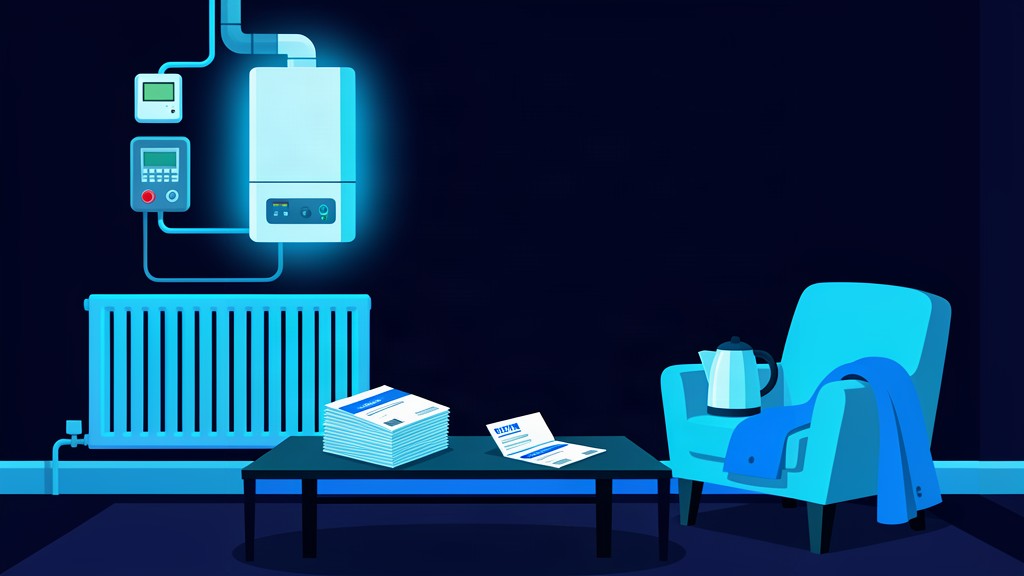
The chief executive of Centrica, the company that owns British Gas, says he is “hugely concerned” about the effect of sharply higher energy bills on households. Chris O’Shea warned that more people will struggle to pay or will choose not to when prices jump in the new year, according to a BBC News report.
His remarks put a company at the centre of the domestic energy market on the side of those calling for action. Suppliers are often cast as the problem in the cost-of-living debate, so an admission from the top of one of the biggest names in the sector carries weight — and raises awkward questions about what can be done before the coldest months arrive.
A warning from the top
The concern is not only about the headline price of a unit of gas or electricity. Standing charges, which are paid even by households that use very little, have become a particular source of anger, and customers on prepayment meters frequently face worse rates than those who pay by direct debit. Together these pressures turn a billing problem into a question of basic affordability.
O’Shea’s point, as reported by the BBC, is about behaviour as much as prices. When bills rise faster than household budgets, some people fall behind while others make the difficult decision to cut consumption even when that means living in colder homes. Both outcomes worry the industry, not just campaigners, because they lead to more debt and more disconnection risk.
The warning also sits alongside a wider squeeze on family budgets. Food, rent and transport have all cost more in recent years, and energy absorbs a larger share of income for lower-income households because they spend a greater proportion of their budget at home. A rise that looks manageable to a comfortable family can therefore be genuinely unaffordable for a pensioner on a fixed income.
Why it matters
Energy is one of the few costs that almost every household cannot avoid, which makes it a sensitive political issue as well as an economic one. Fuel poverty affects pensioners, low-income families and renters in poorly insulated homes disproportionately, and the strain shows up in NHS waiting rooms as much as in supplier call centres. A winter price jump also feeds wider inflation, keeping pressure on the Bank of England and on household expectations.

ADVERTISEMENT
For ministers, the timing is uncomfortable. Any support announced too late will miss the months when demand is highest, while help that is too broad risks being expensive. For Centrica, there is a commercial tension too: higher prices improve the company’s margins while making its customers less able to pay them.
What happens next
Attention now turns to whether the government will expand targeted support, and whether regulators will look again at standing charges and the treatment of prepayment customers. Suppliers will also come under pressure to improve the terms they offer to those in arrears. The warning from Centrica’s chief executive will not by itself lower a single bill, but it does make it harder for anyone to pretend the problem is confined to the most vulnerable few.








We do not allow links of any sort in comments. No SPAM whatsoever. On topic comments only.