

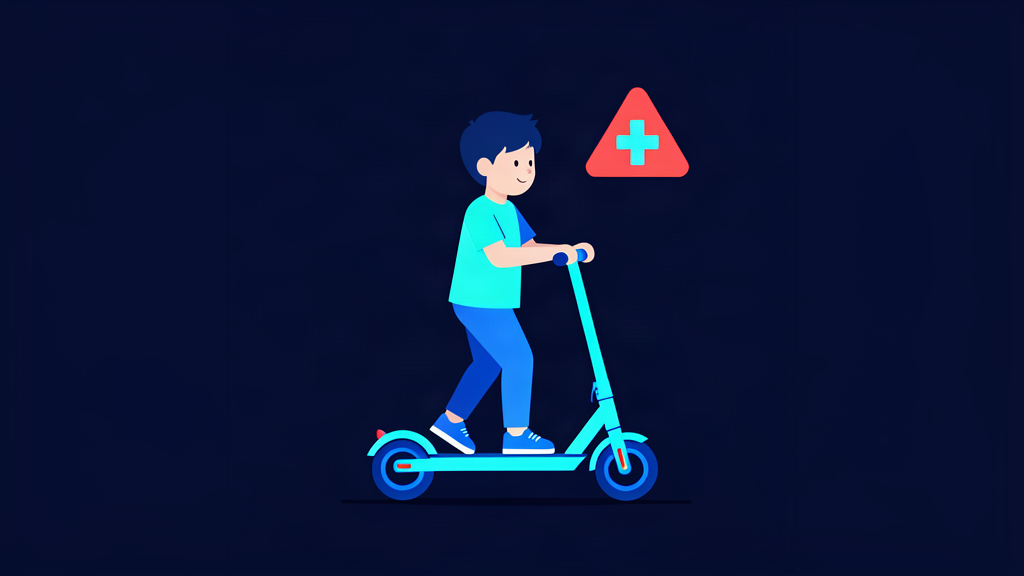
Three major trauma centres have treated nearly 500 children for e-scooter injuries since 2019, with annual cases soaring from fewer than ten to almost 150 — prompting doctors to demand tougher UK laws.
A steep climb in child casualties
A new review by emergency medics has laid bare the rising toll of e-scooters on British children, revealing that hospitals in Liverpool, Manchester and Sheffield alone have treated 477 under-16s since 2019, as annual casualties climbed from fewer than ten to nearly 150 in 2024. Published in the BMJ’s Emergency Medicine Journal, the findings track a clear upward curve that mirrors the explosion in private e-scooter ownership.
Why the numbers are rising
Emergency doctors point to a lack of any meaningful restrictions. Unlike bicycles or mopeds, privately owned e-scooters occupy a legal grey zone, and children have easy access to machines built for adult speeds on public roads and pavements, where they mix with traffic and pedestrians alike.
A legal grey zone on British streets
Remarkably, there is no legal age restriction, speed limit or safety-equipment requirement for the estimated 1.2 million private e-scooters in use across the country. Rental schemes are tightly licensed and restricted to users 18 and over on approved routes, but the private market sits largely outside those rules.
How the law differs across the UK
In Scotland, Wales and England the private-use position is broadly similar, while Northern Ireland applies its own traffic framework. The mismatch between permissive private ownership and restrictive rental rules leaves families confused about what is actually legal, and clinicians argue that confusion is costing children their safety.
What other countries do
Several European nations set minimum ages, mandatory helmets and capped speeds for powered micro-mobility, with some banning private devices from pavements entirely. British doctors suggest the UK could borrow those measures rather than waiting for the next casualty peak before acting.

ADVERTISEMENT
Doctors call for protective legislation
Clinicians are urging ministers to close the gap with minimum ages, speed caps and helmet requirements, arguing that prevention is cheaper and kinder than emergency surgery. The Royal College of Emergency Medicine has previously flagged e-scooters as a growing burden on already stretched A&E departments.
What parents should know
For families, the advice is blunt: treat an e-scooter like a motorised vehicle, insist on protective gear, and recognise that pavements and traffic mix badly with inexperienced young riders. Supervision and honest conversations about risk remain the first line of defence.
The NHS cost of these injuries
Beyond the human toll, the casualties carry a financial weight the health service can ill afford. Paediatric trauma care, surgery, rehabilitation and follow-up appointments add up to significant recurring cost at a time when emergency departments are already under strain, strengthening the doctors’ argument that prevention is the cheaper path.
Outlook
With casualty figures still climbing, pressure is building on Westminster to turn informal guidance into law before the next summer surge fills paediatric trauma wards again.
Source: Original report. Rewrite for Your News Website.














We do not allow links of any sort in comments. No SPAM whatsoever. On topic comments only.