

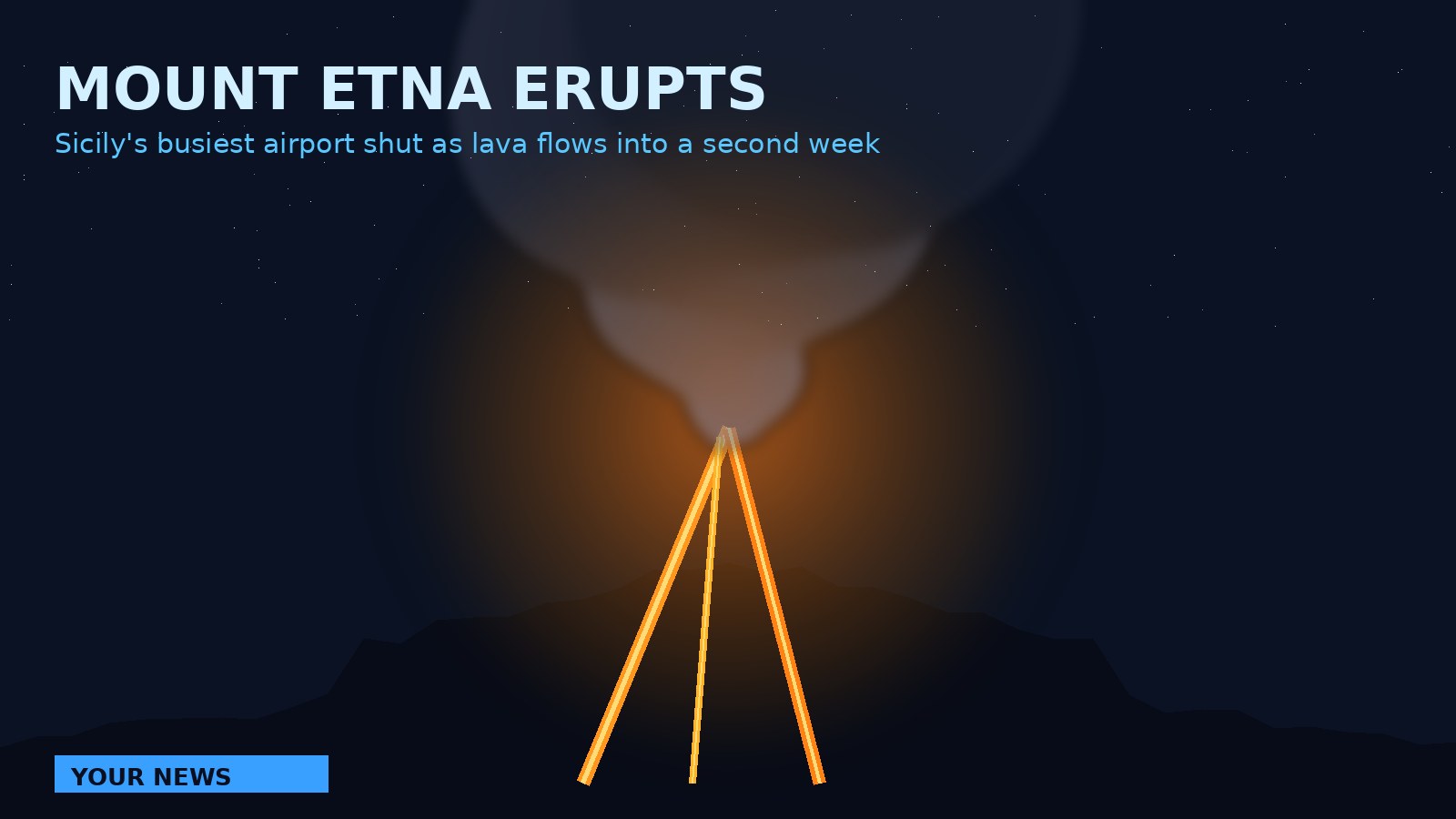
Mount Etna has erupted for a second straight week, sending rivers of lava down its slopes and a towering ash plume over eastern Sicily, in an episode that has repeatedly closed the island’s busiest airport and disrupted hundreds of flights.
Airport closures strand travellers
The latest eruptive phase began around 7 August and intensified on 11 August when a new vent opened in the Valle del Bove, producing lava fountains visible for miles. Catania-Fontanarossa Airport, just a few kilometres from the summit, first closed on 7 August, briefly reopened on 9 August when the aviation alert was downgraded from red to orange, then shut again as activity picked back up and the alert returned to red.
Airport operator SAC said arrivals and departures would remain suspended until the early hours of Saturday 15 August, after more than a third of the 1,974 flights scheduled between the previous Thursday and Wednesday were cancelled or rerouted. Comiso airport, to the south, also briefly suspended flights because of ash fall on 11 August before returning to normal operations.
Ash drifts across the Mediterranean
The Volcanic Ash Advisory issued on 15 August put the plume at around 12,000 feet, with explosive activity continuing. Winds have carried fine ash as far as North Africa, while satellite imagery shows a broad smoke plume spreading from the volcano’s summit. No injuries have been reported, and local authorities say nearby towns remain safe, though hikers have been warned to keep clear of the active fissures.
Europe’s most active volcano
Etna, on the eastern coast of Sicily, is the tallest and most active volcano in continental Europe, with a recorded eruptive history stretching back thousands of years. Its frequent paroxysms draw both scientific study and tourism, and the current episode has drawn crowds to viewpoints around the mountain despite the travel disruption.



















Really helpful article, thank you – looking forward to more like this!