

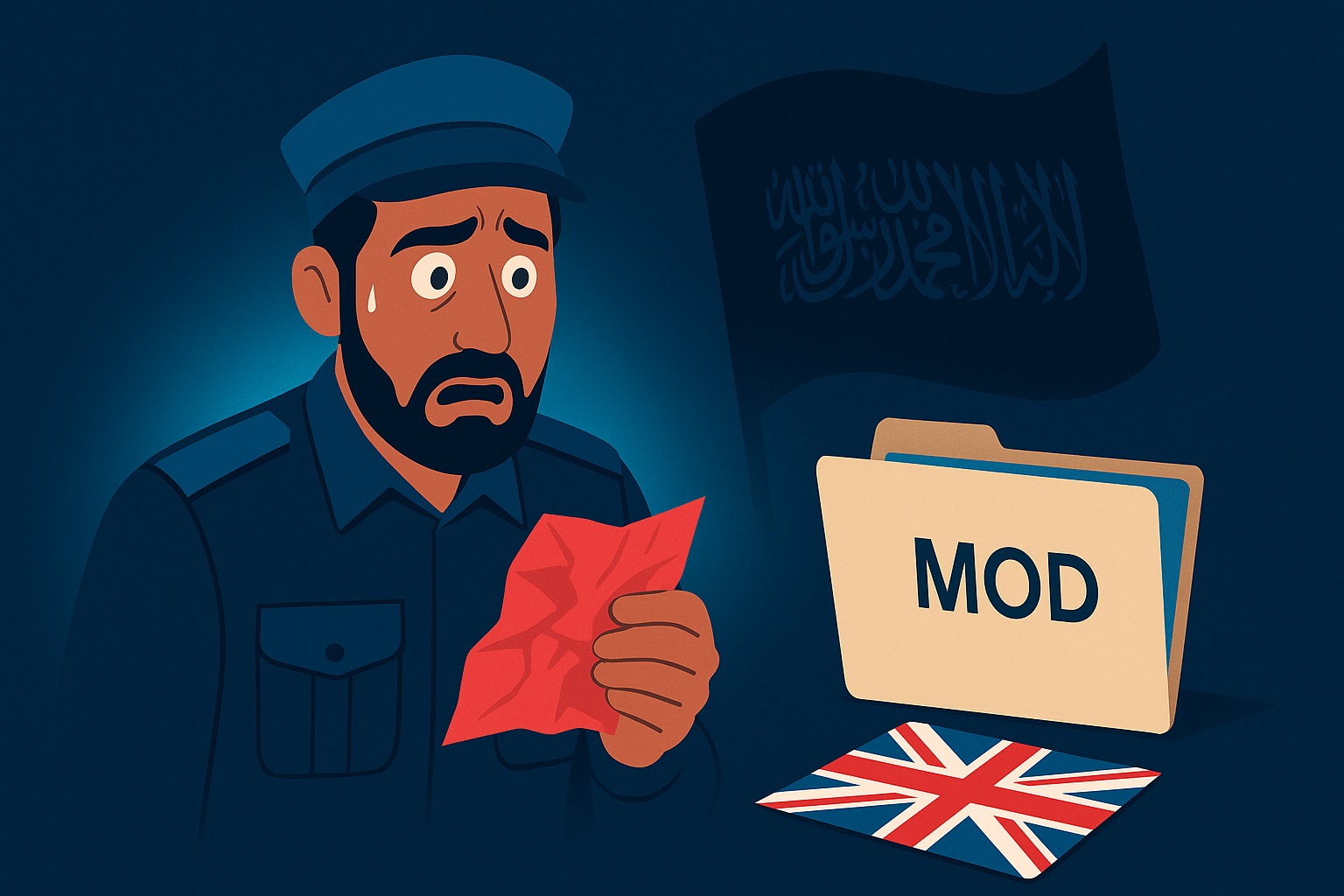
A loyal ally left exposed by a British data breach
A former member of Afghanistan’s national police special unit is living under direct threat from the Taliban after the British Ministry of Defence accidentally exposed his identity in a 2022 data leak. The man — we are withholding his name — worked alongside UK forces and holds certificates of service signed by senior British commanders who praised his “dedication, unparalleled service and leadership”. Since his details surfaced in the breach, which compromised more than 18,700 Afghans who had supported Britain’s mission, he has received explicit threats against his life.
Years of service, then a refusal
The case exposes the human cost of one of the most serious data failures in recent British military history. Despite his record, the UK has declined his application for resettlement under the Afghan Relocation and Assistance Policy (ARAP). He now describes a “constant fear” of reprisals, with the Taliban openly hunting those who served the previous government and its Western partners. For a man who risked everything alongside British troops, the rejection has landed as a profound betrayal.
A breach that keeps spreading
The 2022 incident — in which an MoD official emailed a sensitive dataset without proper safeguards — has cast a long shadow. Although the government later established a secret compensation scheme, many applicants say the process has been slow, opaque and inconsistent. Critics in Parliament have accused ministers of treating loyal interpreters, police officers and intelligence sources as liabilities rather than obligations owed in honour.
The shadow of a super-injunction
For months, the full scale of the leak was hidden behind a super-injunction that prevented British media from reporting it. When the order was lifted, it emerged that the MoD had paid out millions in settlement to those affected, yet dozens remain in limbo. The episode has become a test of whether the UK honours the commitments made to Afghan partners when Kabul fell in 2021.
What it means for Britain
For the UK, this is far more than a foreign-policy embarrassment. It raises hard questions about the duty of care owed to local staff who risked their lives for British troops, and about the security of the vast government datasets that hold the names of people whose safety depends on anonymity. Ministers insist they are reviewing resettlement decisions, but for those still waiting, every delay is measured in personal danger.
The road ahead
Campaigners are calling for an urgent parliamentary review and a fast-track route for anyone named in the leak who remains inside Taliban-controlled territory. Until then, the man at the centre of this case — and thousands like him — remain stranded between a British promise of protection and a bureaucracy that has so far failed to keep it. The Ministry of Defence says it takes the security of affected individuals extremely seriously and continues to support eligible applicants, but declined to discuss individual cases.

ADVERTISEMENT
Source: Original report. Rewrite for Your News Website.















Really helpful article, thank you – looking forward to more like this!