

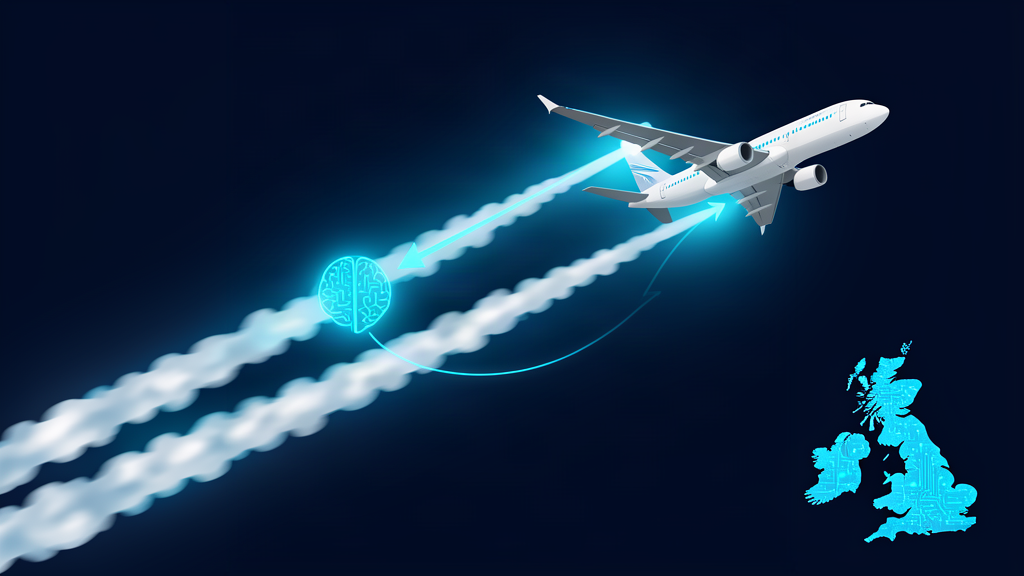
A new British trial hopes to use artificial intelligence to help aircraft avoid the condensation trails that stream from their engines and trap heat in the atmosphere. The project aims to show that clever routing, guided by machine learning, can cut aviation’s hidden warming effect without big changes to flight times or fuel burn.
The problem with contrails
When a plane burns fuel at altitude, water vapour can freeze into thin clouds known as contrails or “sky graffiti”. On their own they look harmless, but spread out they form a layer that stops heat escaping into space at night. Scientists say these trails may account for a significant slice of aviation’s total warming impact, and over short timescales possibly more than the carbon dioxide from the fuel itself.
How the AI works
The idea is to predict where contrails will form using weather and humidity data, then nudge a flight a few hundred feet higher or lower to avoid those zones. The AI model flags the risky bands of sky and dispatchers adjust the flight plan. Because the changes are small, passengers would notice little, while the climate benefit could be large and immediate.
Why a UK trial matters
Britain is home to major carriers, some of the busiest airspace in the world and leading climate research, making it a natural testing ground. If the trial proves the technique works at scale, it could be folded into how flights are planned out of hubs such as Heathrow and Manchester. The approach is attractive because it needs no new engines or fuels, just smarter decisions before the aircraft leaves the gate.
The limits to watch
Researchers caution that avoiding contrails can sometimes mean burning extra fuel, which adds carbon dioxide. The sweet spot is avoiding trails where the climate payoff outweighs the extra emissions. The trial will measure whether the net effect is genuinely cooling, and whether airlines can adopt it without disrupting tightly scheduled operations.
A quiet tool in aviation’s climate kit
If successful, AI-guided routing could become a quiet but powerful part of aviation’s response to climate change, complementing cleaner fuels and more efficient aircraft rather than replacing them. For British travellers, the hope is that future flights leave a lighter mark on the sky, one carefully plotted course at a time.

ADVERTISEMENT
Source: Original report. Rewrite for Your News Website.
























Really helpful article, thank you – looking forward to more like this!