

A dramatic rescue at the hospital entrance
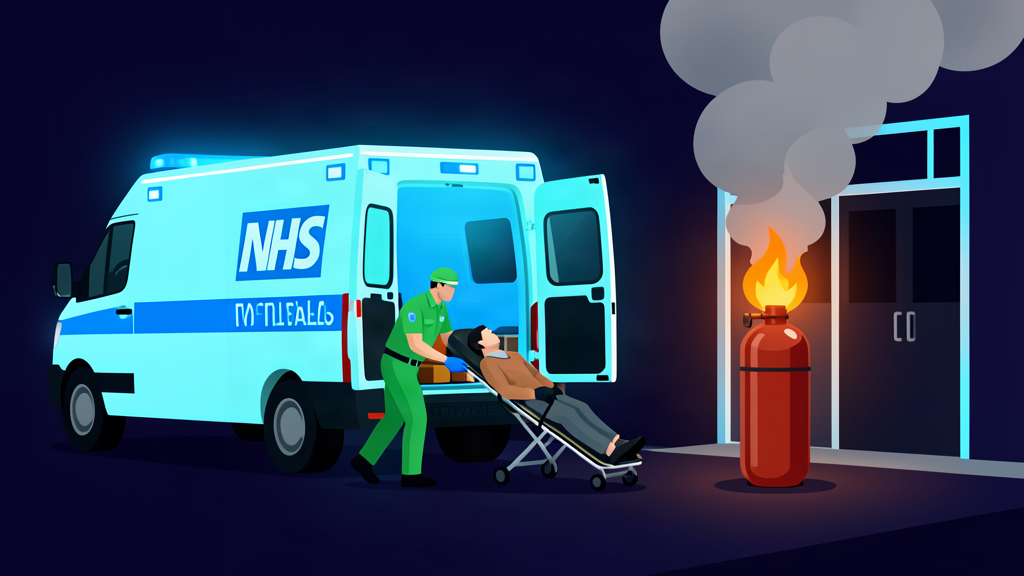
A paramedic is being hailed for bravery after pulling a man from the back of an ambulance as oxygen cylinders caught fire and exploded outside East Surrey Hospital, in an incident now being reviewed by trust bosses. According to uknip.co.uk, the emergency unfolded when cylinders carried on board the vehicle ignited, triggering a blast and setting the ambulance alight at the hospital site. The crew member is reported to have dragged the patient clear of the burning ambulance before the situation worsened, an action colleagues have described as heroic.
What the report describes
The account states that the explosion was caused by oxygen cylinders on the ambulance, and that a quick-thinking paramedic got the man to safety while the vehicle was engulfed. The patient had been aboard the ambulance at the time of the incident. No further casualty details have been confirmed in the report, and the exact cause of the ignition is not yet established. The South East Coast Ambulance Service and the hospital trust have not yet published a full statement, but such events are typically followed by an internal safety review and, where appropriate, a referral to the Health and Safety Executive.
A recognised hazard on the NHS fleet
Oxygen is carried on virtually every front-line ambulance in the country, and pressurised cylinders are a well-documented fire risk when they meet an ignition source or are exposed to heat. Crews train regularly to manage medical gases safely, and vehicles are built with ventilation and stowage designed to limit the danger. Incidents where a cylinder fails or ignites are rare, but when they occur on a live vehicle the consequences can escalate within seconds, which is what makes the speed of this rescue so notable.
Why it matters
The episode underscores the everyday hazards faced by ambulance crews who work with volatile medical gases while treating patients in confined, moving spaces. For the public it is a reminder that the people who turn up to medical emergencies are themselves exposed to real risk, and that split-second decisions by paramedics can be the difference between life and death. It also points to the wider pressure on hospital sites, where accident and emergency entrances are busy, high-traffic environments.
What happens next
The trust and ambulance service are expected to examine how the cylinders came to ignite and whether any changes to procedure are needed. A formal investigation will determine the root cause, and any lessons are likely to be shared across the South East Coast region. In the meantime the paramedic’s actions have been widely praised, with the rescue held up as an example of the quick judgement expected of front-line NHS staff.
Source: Original report. Rewrite for Your News Website.
















Really helpful article, thank you – looking forward to more like this!