

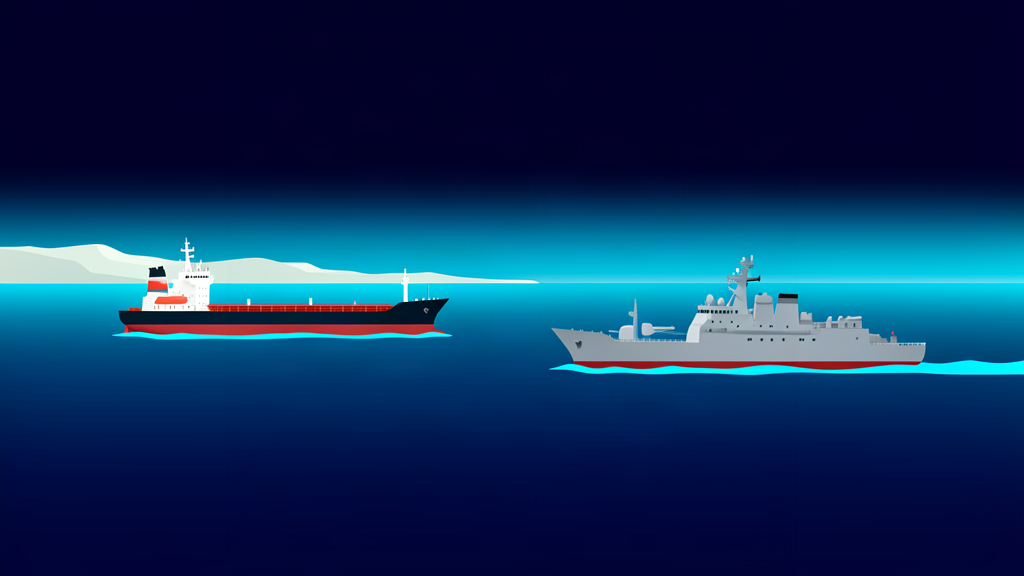
US President Donald Trump has rejected Iran’s proposal for a ceasefire aimed at reopening the Strait of Hormuz, leaving one of the world’s most important shipping lanes at the centre of renewed geopolitical uncertainty. The president said the deal was not acceptable, according to reporting from The New York Times, and declined to say whether military strikes would resume after the midterm elections.
The Strait of Hormuz, a narrow channel between Oman and Iran, carries a substantial share of the world’s seaborne oil and gas shipments. Any significant disruption there sends immediate ripples through global energy markets, and the prospect of renewed tension in the waterway has drawn close attention from governments and industry alike.
Iran’s proposal, as reported, sought to halt hostilities and allow the strait to reopen to commercial traffic. The US rejection of that proposal — and the president’s ambivalence about whether to restart military action — leaves the situation in a state of suspended tension. The timing, with midterm elections approaching, adds a domestic political dimension to a decision with international consequences.
The broader context involves a long-running confrontation between the United States and Iran that has included sanctions, diplomatic expulsions, maritime incidents, and periodic military posturing. The Strait of Hormuz has been a recurring flashpoint in that confrontation, with both sides aware of its strategic significance and the economic leverage it represents.
Why it matters
The Strait of Hormuz is not just a regional chokepoint; it is a global economic artery. A significant portion of the world’s oil supply passes through it, and any sustained closure or disruption would push energy prices higher — with consequences that reach directly to consumers at the petrol pump in the UK and across Europe. Even the threat of disruption can cause markets to price in risk, adding a premium to oil that feeds through to transport costs, heating, and industrial production.
Beyond the economics, the US rejection of a ceasefire proposal signals that the diplomatic route is, for now, stalled. That leaves military and coercive options on the table, which raises the risk of escalation. The president’s hesitation about resuming strikes after the midterms suggests that domestic political timing is influencing a decision with international stakes — a combination that adds unpredictability to an already volatile situation.

ADVERTISEMENT
What happens next
The immediate question is what Iran does in response to the rejection. Tehran could choose to escalate its own posture, maintain the status quo, or seek alternative diplomatic channels. The US, meanwhile, faces a decision about whether and when to resume military action, with the midterm election cycle now a factor in that calculus.
Energy markets will continue to monitor the situation closely, and shipping companies operating in the region will be weighing their own risk assessments. Governments in Europe and Asia, which depend on stability in the strait for their energy supplies, will be watching for any sign that the situation is moving toward open conflict or back toward negotiation.























We do not allow links of any sort in comments. No SPAM whatsoever. On topic comments only.