

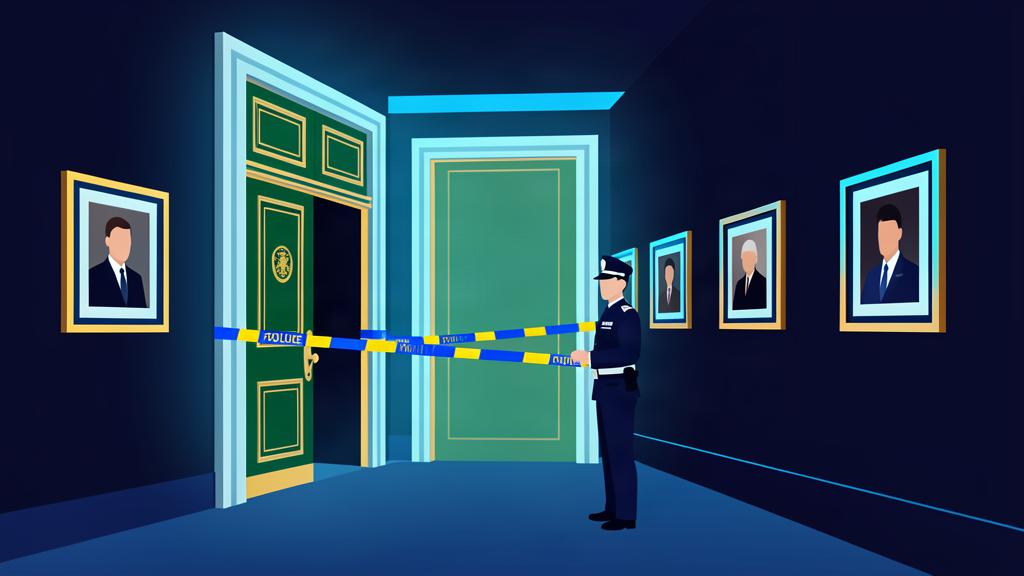
Five years after her father was murdered, Katie Amess has told the BBC that politicians remain at risk and has questioned whether anything has genuinely changed to protect them. Her comments mark the anniversary of a killing that shocked Westminster and prompted sustained debate about the security of public figures, and they land at a moment when protection budgets and threat assessments remain under review.
Five years on
The murder of a sitting member of parliament turned the issue of protection for politicians from a specialist concern into a mainstream one. The BBC reports that Ms Amess is using the anniversary to press the point that the risks have not gone away, and that the assurances given in the aftermath have not translated into a settled answer about who is protected, how, and at what cost.
A persistent category of risk
Threats against elected figures have become a recurring feature of British political life rather than an aberration. Security services and police assess risks case by case, and protection is adjusted accordingly. That model has existed for years, but scrutiny of it tends to peak only after an incident, which is precisely the pattern Ms Amess is objecting to.
The argument is structural rather than sentimental. Her father was a public figure who continued to meet constituents and appear in public. Any approach to protecting people in that position sits alongside a democratic expectation that they remain accessible, and the tension between the two is permanent.
What protection looks like in practice
Protection for public figures in the UK is not one arrangement but a set of them. Threat assessments determine who receives officers, where they go and how they travel, and the level of threat can change during the life of a parliamentarian. Members of both Houses have publicly reported years of disruption to constituency work and family life as a result of what that entails.
Some of the disruption is physical, in the sense of buildings becoming difficult to enter and public events requiring significant planning. Some of it is quieter: constituents unable to reach an office, staff working under heightened conditions, and a general narrowing of how freely a public figure can move.

ADVERTISEMENT
The access problem
There is an irreducible tension running through all of this. An MP who cannot go out in their constituency is failing at the job, and the constituency expects access. A public figure who appears without protection is making a statement about their own safety that the authorities have no ability to control.
That is why the pattern of attention following incidents is difficult to break. The protective apparatus is calibrated by what has happened rather than by what is plausible, which means the worst case is the one that tends to be planned for.
Why the anniversary is used
Anniversaries are convenient moments for organisations to press their case, because coverage is available without a fresh incident being required. That is not a criticism of Ms Amess in particular. It is a description of how attention moves in any area where the underlying risk does not get resolved, and where those pressing for change need a reason to be heard.
Why it matters
Security arrangements for public figures cost money, occupy police and protective resources, and shape how politicians work. Decisions made in the aftermath of a high-profile killing tend to persist long after the attention has moved elsewhere, which is why anniversaries matter as much as the news cycle around them.
What happens next
Expect the anniversary to be used by campaigners and by parliamentarians from all sides to press for a settled, published position on protection. Any change in approach would need to be reflected in funding and in operational practice rather than in announcement alone. For now, the BBC reports, Ms Amess’s position is that the risk is unchanged and the response has not kept pace.


















We do not allow links of any sort in comments. No SPAM whatsoever. On topic comments only.