

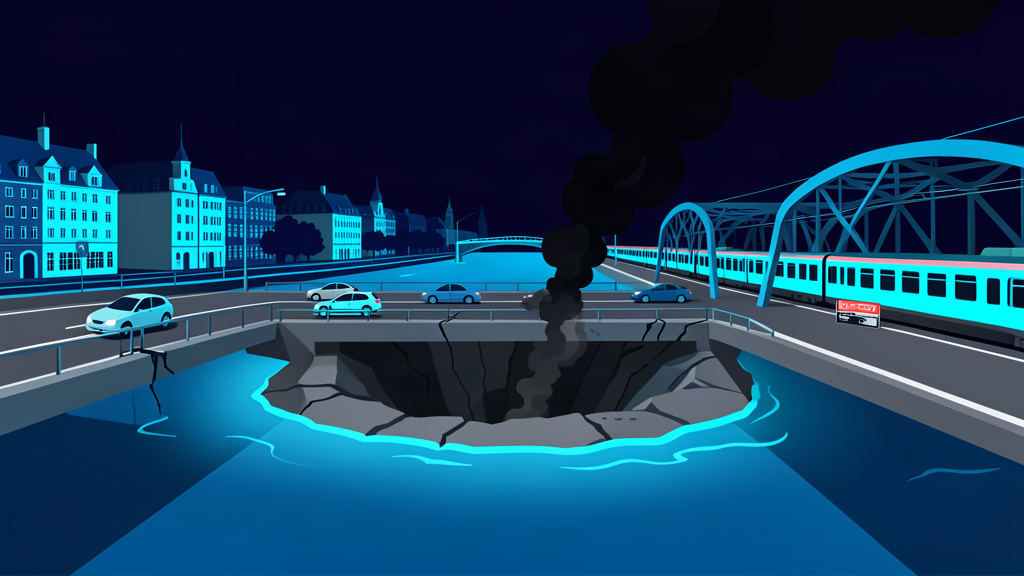
A major bridge in Kyiv has been hit by Russian strikes for the second day running, with unverified video footage showing a drone crash into the roadway and explode in a ball of fire as cars move across it. The attack on Sunday came hours after German chancellor Friedrich Merz arrived in the Ukrainian capital by train, and just a day after the same crossing was damaged in an earlier drone attack that tore up the road surface and disrupted traffic.
Kyiv mayor Vitali Klitschko said Sunday’s strike also damaged a heating main, meaning residents of the north-eastern Desnyanskyi district face a temporary loss of hot water. Emergency services were dispatched to the scene, and Klitschko reported the hit on Telegram, writing: “Hitting the roadway on the North Bridge. Emergency services are on their way to the scene.”
A pattern of infrastructure strikes
The Pivnichnyi, or Northern, Bridge is not an isolated target. Major bridges in Kyiv have been struck repeatedly over the past four days as Moscow escalates its campaign against critical infrastructure in the Ukrainian capital. Klitschko has warned that the city is now in a “very dramatic situation”, with Russian strikes hitting “critical infrastructure, logistics, housing” and other key facilities.
Analysts quoted by the BBC say Russian drones are unlikely to be able to bring the bridges down outright. The danger is cumulative. Repeated attacks force closures, interrupt traffic and risk weakening structures until they become unusable, which is a far more insidious form of damage than a single spectacular collapse.
Merz’s message of support
The timing of the attack lent the German chancellor’s visit an uncomfortable edge. Merz travelled to Kyiv underlining continued European backing for the country, writing on X: “Ukraine is facing decisive weeks. That is why I travelled to Kyiv today with the message: You can rely on us.” He also framed the assistance in terms of German self-interest, saying Germany’s own security depends on the outcome of the war, and pledged further help to strengthen Ukrainian air defences.
Moscow has justified the campaign as retaliation for Ukrainian strikes on Russian energy facilities, even though Russia was the party that launched the original campaign of attacks on Ukraine’s infrastructure. Russia began its full-scale invasion of Ukraine in 2022.

ADVERTISEMENT
Why it matters
Attacks on bridges and heating infrastructure in a capital city are aimed at something more than disruption. They are designed to show that ordinary urban life cannot be insulated from a war on its doorstep, and to drain the political will of allies watching from the west. A city without functioning crossings or heating is a city that cannot go on with its day.
What happens next
Attention now turns to the air defences Merz promised. Kyiv’s bridges will be repaired, but the deeper question is whether the additional interceptor systems promised by Berlin can arrive quickly enough to change the tempo of the attacks on the capital’s infrastructure.





















We do not allow links of any sort in comments. No SPAM whatsoever. On topic comments only.