

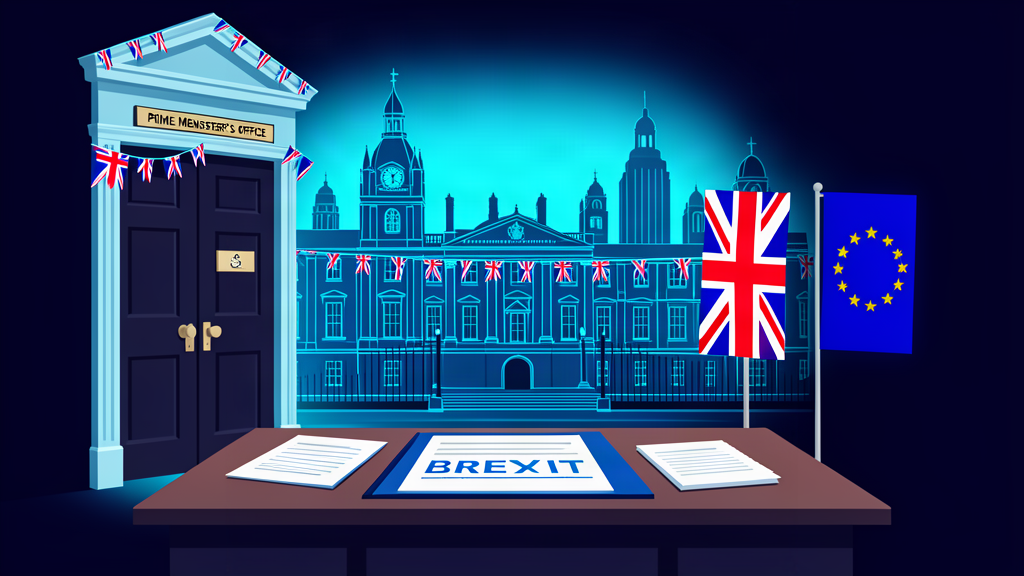
With the country still divided over its relationship with the European Union, Prime Minister Andy Burnham is preparing to relitigate Brexit on his own terms, arguing that unresolved trade frictions and regulatory gaps are holding back British growth. The BBC’s political editor Chris Mason writes that, for the first time since the UK left the EU, a leader will unflinchingly debate the merits of departure — and the gaps it left behind.
A new political moment
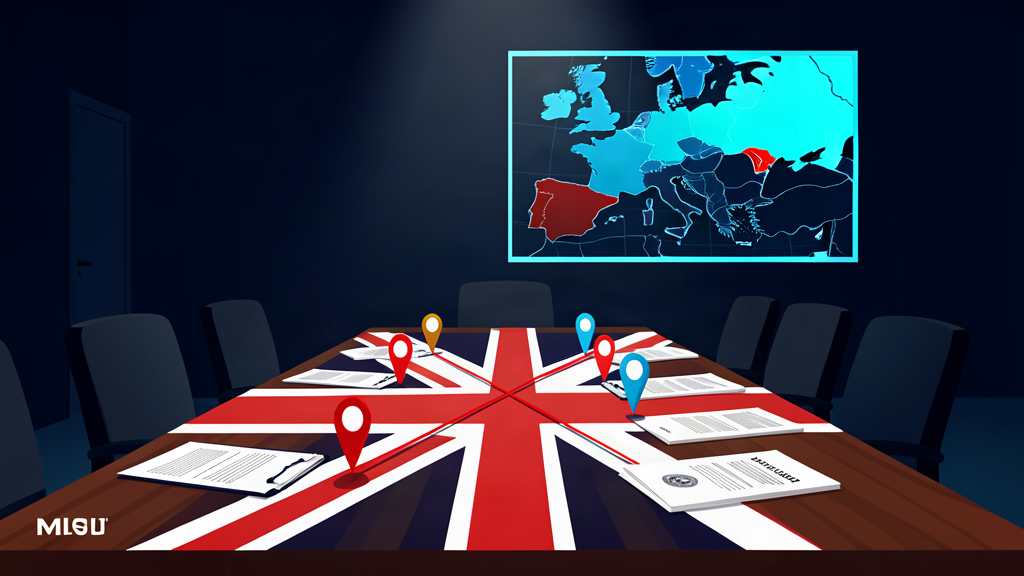
Burnham’s decision to reopen the Brexit conversation reflects a calculation that the issue, far from fading, has settled into a persistent drag on the economy. In recent weeks the prime minister has signalled support for exploring mutual recognitions and veterinary agreements that could ease checks on food and goods moving between Great Britain and Northern Ireland. Speaking to business leaders, Burnham argued that Britain’s current trade position left manufacturers caught between two regulatory regimes with no clear path to seamless trade.
The rhetoric marks a departure from the cautious approach of recent governments, who avoided revisiting a topic that polls show remains emotionally charged. Burnham’s team believes there is now political space to acknowledge what went wrong and to outline corrections, even if the door to full re-accession remains closed. Chris Mason notes that the prime minister is gambling that voters will reward candour over denial.
Opposition responses
Opposition parties have reacted with a mixture of cautious welcome and outright scepticism. The Liberal Democrats have backed renewed talks on mutual recognition, while the Conservative Party’s Brexit wing has accused Burnham of attempting a “remoaner” pivot. Downing Street insists the initiative is driven by practical economics rather than ideology, pointing to delays at Dover and Calais that officials say cost the freight sector significantly in lost productivity each month.
Why it matters
For ordinary voters, Brexit delivered fewer tangible benefits than the 2016 campaign promised, yet it remains a defining political identity. By choosing to lead on the issue himself, Burnham risks both energising his base and exposing divisions within his own party that still harbour mixed feelings about closer alignment with Europe. The debate also matters for Britain’s economic trajectory: frictionless trade will remain a constraint on growth for as long as the gap between UK and EU rules is unresolved.
What happens next
A consultation paper is expected by the autumn, followed by a Commons debate in November. If the government can secure any breakthrough with Brussels — even on limited mutual recognitions — it would reshape the economic backdrop ahead of next year’s local elections. Chris Mason concludes that the real test is not whether Burnham opens the debate, but whether he can close it with something voters can feel in their wallets.

ADVERTISEMENT
Source: BBC News.









We do not allow links of any sort in comments. No SPAM whatsoever. On topic comments only.