

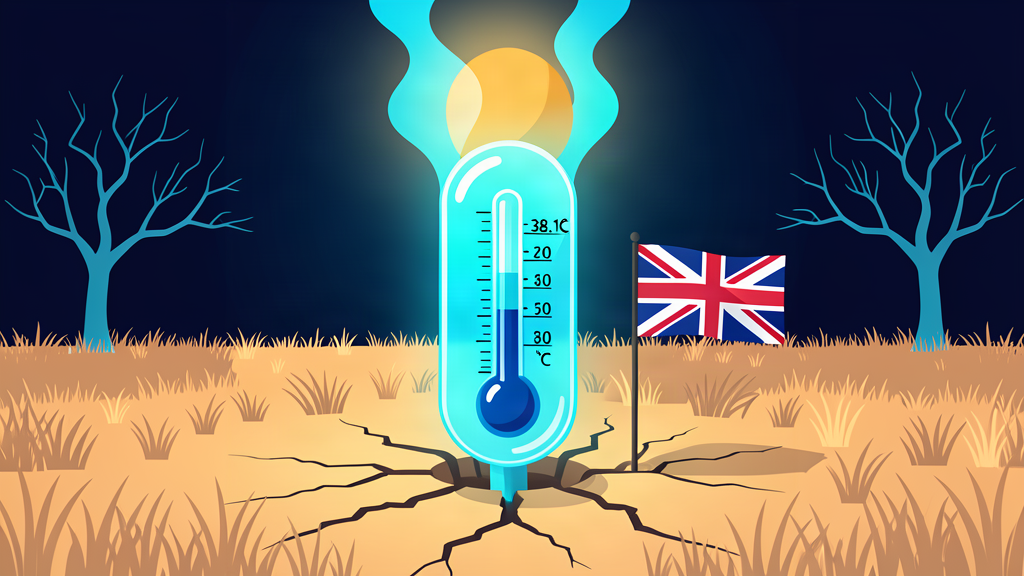
Britain bakes in record heat
The UK has sweated through its hottest day of 2026 so far, with temperatures reaching 38.1C as a relentless heatwave settled over the country. Met Office stations reported readings above 30C before 11am, and the mercury kept climbing through the afternoon, prompting health alerts across England and Wales and straining public services from Cornwall to Aberdeen as the heat bit early in the day.
The human cost at home
For British households, the heat is more than uncomfortable. The UK’s ageing housing stock is poorly equipped for extremes, and hospitals report rising admissions linked to heat exhaustion and respiratory strain. Vulnerable groups — the elderly, young children and those with chronic conditions — face the greatest risk as the climate warms, and ambulance services brace for surging call-outs as people fall ill in the rising temperatures.
Travel and infrastructure strain
Rail operators imposed speed restrictions to prevent buckling tracks, while some schools closed early and water companies urged restraint. The episode exposes how fragile everyday British infrastructure remains in the face of weather once considered exceptional, and how quickly the routine rhythms of work, school and travel can break down when the temperature spikes without warning.
A warning from the scientists
A former government scientific adviser warned that the “shattering” heat is a sign of worse to come. Climate researchers note that 38C days, virtually unthinkable in the UK a generation ago, are becoming more frequent as global temperatures rise, and that adaptation has lagged far behind the pace of change, leaving the country exposed to hazards it is not built to withstand.
Europe ablaze
The heat is not confined to Britain. Greece battled wildfires whipped by gale-force winds, forcing evacuations and scarring landscapes across the Mediterranean. The shared crisis underscores how climate-driven extremes now sweep the continent in tandem, and how migration pressures, food prices and insurance costs all rise together when the weather turns violent.
How the UK compares internationally
Compared with southern Europe, the UK’s heatwave thresholds are lower, yet the health impact can be worse because buildings are designed to retain warmth rather than shed it. Air-conditioning remains rare in British homes, and that gap between expectation and reality is precisely why a 38C day here can be as disruptive as a far hotter one abroad, with consequences for productivity and wellbeing.

ADVERTISEMENT
Preparing homes and hospitals
Experts argue the response must go beyond emergency warnings. Retrofitting homes with shading and ventilation, planting urban trees, and building resilience into hospitals and care homes would save lives. Without such investment, each successive record summer will land harder on the NHS and on the communities least able to cope with the strain.
What the UK must do
Ministers face renewed pressure to adapt: from shading cities and retrofitting homes to securing water supplies and protecting the NHS. The 2026 heatwave is a flashing signal that resilience, not just reduction of emissions, must be a national priority — and that the cost of inaction will be measured in lives lost to preventable heat.
This article was rewritten for Your News Website from the original Guardian report — read the full story via the source link below.















We do not allow links of any sort in comments. No SPAM whatsoever. On topic comments only.