

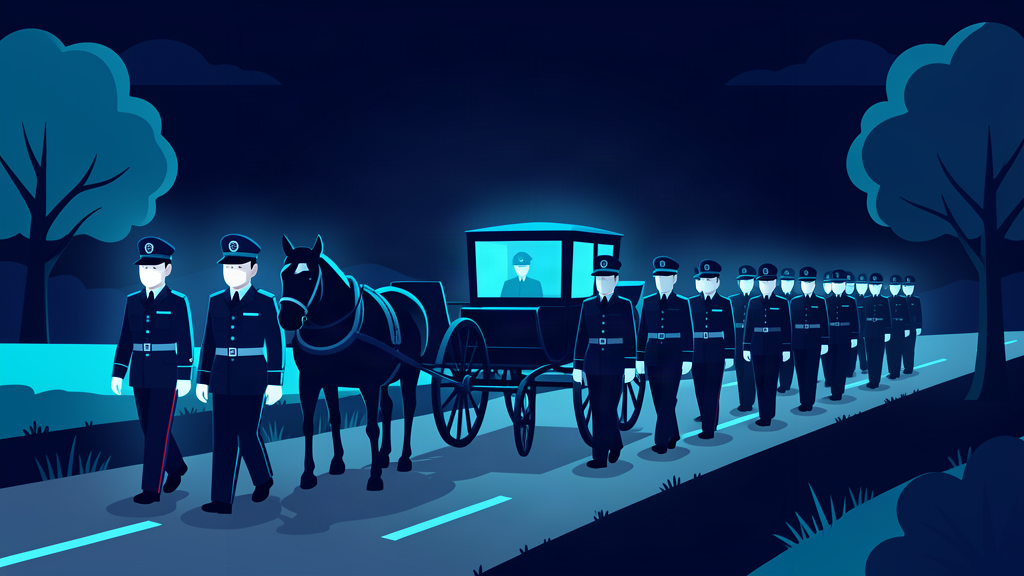
The funeral of a police officer killed alongside six others in a crash on the A66 is taking place today, as his family remembers him as a man who brought light and laughter into every room. PC Matthew Blades died in the collision on the A66 in Teesside, one of the deadliest road incidents in recent memory involving a police vehicle.
A life remembered
The family’s tribute, shared with the BBC, describes PC Blades as someone who lit up the spaces he moved through. In a statement released around the time of the funeral arrangements, they said he brought light and laughter into every room. That phrasing captures the tone of the remembrance: less an inventory of service years and ranks than a portrait of the person left behind.
The funeral is being held in the wake of an incident that has already drawn extensive tributes from colleagues, emergency services and politicians. The A66 crash in which PC Blades died also claimed the lives of six others, including another officer, in circumstances that have triggered a major investigation and a heightened public focus on road safety, police pursuits and the risks faced by officers responding to incidents on major roads.
For the family, the day is personal. For the force and the communities connected to it, the day is also an acknowledgement of the cost that falls on individual households when a public servant is killed on duty.
The wider grief
The funeral does not sit in isolation. It follows days of tributes, reports and public reaction to the A66 deaths. Those killed have been named in stages as formal identification processes allowed, and each announcement has been accompanied by its own family statements and community responses. The cumulative effect has been a sustained period of mourning across the areas connected to the crash.
The loss of a police officer in particular carries a different weight for the force involved. Changes to staffing, morale, training and pursuit policy are often discussed in the aftermath of such incidents, and the death of a serving officer tends to intensify those conversations. Colleagues of PC Blades have spoken publicly about the loss to the team and to the communities they serve, without minimising the grief inside the family itself.

ADVERTISEMENT
Why it matters
This matters because it is a real death with real consequences for one family and one force, and because the wider circumstances of the A66 crash have already prompted difficult questions. Funerals are where private grief becomes public, and where a community signals what it values. Remembering PC Blades as someone who brought light and laughter is a way of insisting that the man behind the uniform was more than the circumstances of his death.
It also matters because the A66 crash has become a reference point in debates about how police respond to incidents on fast, major roads and how risk is managed during pursuits and emergency driving. That debate will continue in policy terms. Today is not primarily about policy; it is about a family saying goodbye and a force acknowledging a loss.
What happens next
The inquest and any criminal investigation into the circumstances of the crash will continue to run in parallel with the mourning. The Coroner’s court will eventually consider the evidence surrounding the collision, and that process may shape how similar incidents are handled in future. In the shorter term, the funeral marks a milestone in a grieving process that does not have a clear endpoint for those most closely affected. The BBC’s coverage of the family’s tribute provides a record of how PC Blades was remembered at the time of his funeral.










We do not allow links of any sort in comments. No SPAM whatsoever. On topic comments only.