

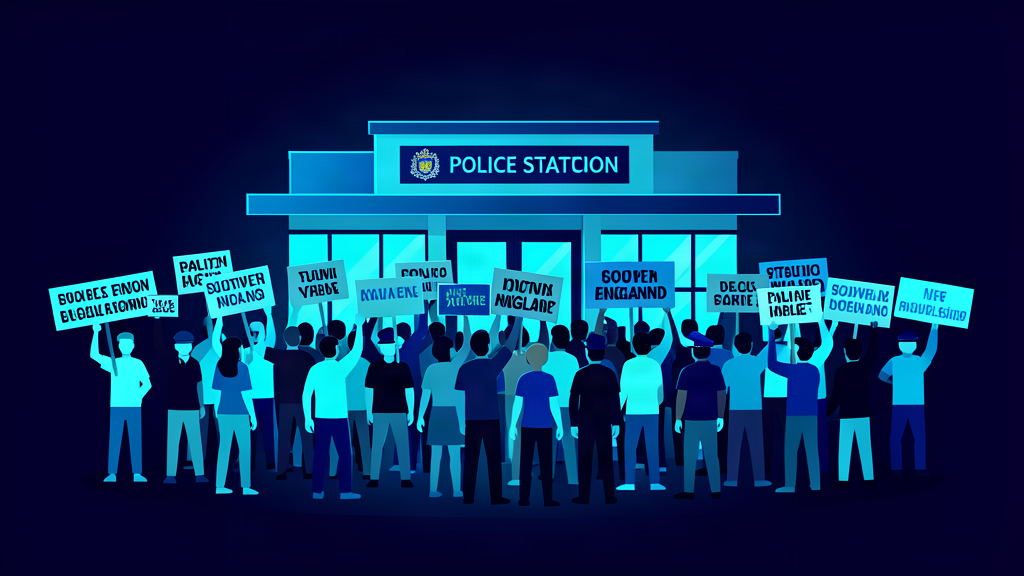
Protesters have gathered outside a police station in southern England following the arrest of far-right activist Daniel Thomas, prompting a significant public response in the hours after the detention. The arrest and subsequent demonstrations highlight the ongoing tensions around far-right activity in parts of the UK and the public’s reaction to high-profile cases.
The arrest and public response
Daniel Thomas, described as a far-right activist, was arrested, and within hours protesters had assembled outside the relevant police station. The demonstration reflected a combination of local concern and wider political sentiment, with people turning out to express their views on the streets rather than through established political channels. Police presence at the scene was reported as authorities managed the gathering.
Far-right activism has periodically surfaced in UK political life, with various groups and individuals drawing public attention through protests, online activity, and contested public statements. When such figures are arrested, the response can be swift and visible, particularly in communities that have previously experienced tensions linked to extremist views or organised demonstrations.
Context of far-right activity in the UK
The UK has seen a series of episodes in recent years in which far-right groups have organised demonstrations, sometimes leading to public order challenges. These events have drawn responses from counter-protesters, local communities, and the authorities. The arrest of an individual associated with far-right activism inevitably becomes a flashpoint, attracting both those who oppose such views and those who view the detention through a different lens.
Analysts of political extremism note that arrests of this kind can serve both to enforce the law and to signal the boundaries of acceptable public activity. At the same time, they can inflame existing divisions, particularly when the reasons for the arrest are not yet fully clear to the public.
Why it matters
How the authorities handle high-profile arrests linked to far-right activity sets a public signal about the rule of law and the limits of extremist expression. The size and character of the protest outside the police station also reflect the level of public feeling on the issue, which is relevant to local officials, police commanders, and national political leaders alike.

ADVERTISEMENT
What happens next
The immediate next steps will involve the police processing the arrest and determining what charges, if any, are brought. Meanwhile, the protest is likely to be a talking point in local and national discussion. If further demonstrations are planned, authorities will have to weigh public safety against the right to protest. The broader question of how to address far-right activism — through enforcement, community engagement, or both — remains a live issue across parts of the UK.























We do not allow links of any sort in comments. No SPAM whatsoever. On topic comments only.