

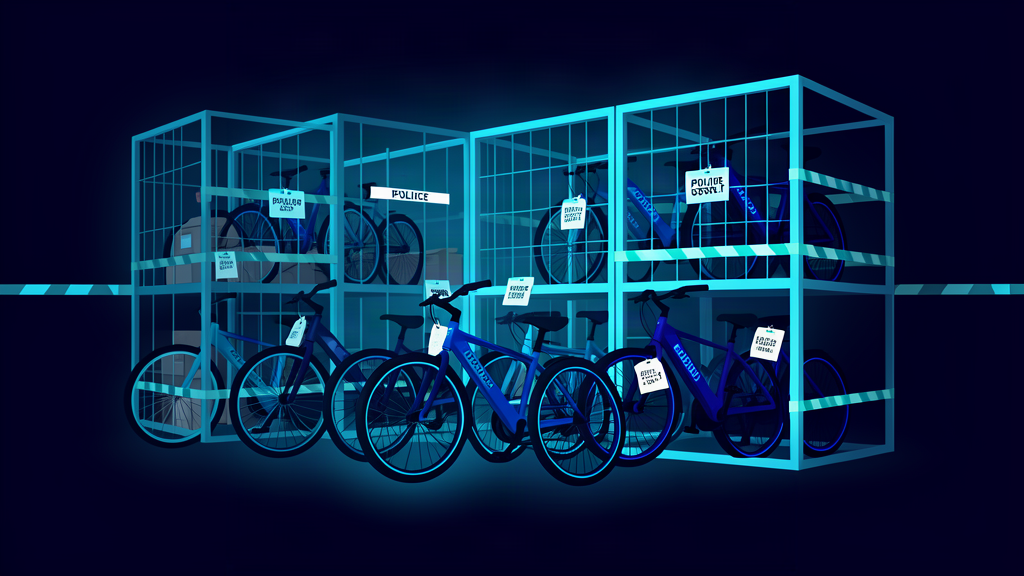
Thousands of e-bikes confiscated by police across the UK every year are being sold on at public auction rather than destroyed, the BBC has found, raising fresh questions about how forces handle suspected illegally modified or crime-linked electric bikes.
Under current practice, most confiscated e-bikes are destroyed, but an investigation by the BBC discovered that at least 161 were sold at auction last year alone. The bikes are seized for a range of reasons: suspected use in crimes, modification that breaches road legality rules, or because they are considered dangerous or non-compliant.
Why police seize e-bikes
E-bikes occupy a complicated legal space in the UK. To be classified as a pedal cycle rather than a moped or motor vehicle, an e-bike must meet strict specifications: the motor must be below 250 watts, it must cut off when the rider stops pedalling, and it must not provide assistance above 15.5mph. Bikes that exceed those limits, or that have been tampered with to bypass the restrictions, fall into a different legal category and require licensing, insurance and registration — requirements many riders do not meet.
Police forces seize bikes that appear to have been illegally modified, are being used in the course of a crime, or are otherwise linked to an investigation. The scale is substantial: thousands are confiscated annually, according to the BBC’s reporting, though exact national figures are hard to pin down because forces handle and record seizures differently.
What happens to seized bikes
The default outcome for many seized e-bikes is destruction. That reflects both the legal position — a bike that breaches road vehicle standards cannot simply be returned to the road — and practical considerations around storage, cost, and whether a modified bike can ever be made fully compliant. Destruction also removes any risk that a bike linked to a serious offence could re-enter circulation.
But the BBC’s investigation found that destruction is not universal. At least 161 e-bikes were sold on at auction in the course of the past year, generating revenue that may go back into force budgets or local policing initiatives. Auctions are a familiar route for police to dispose of seized property, from vehicles to electronics, and e-bikes increasingly form part of that pipeline.

ADVERTISEMENT
Why it matters
The discovery matters for several reasons. For riders and sellers, it raises the question of what happens to a bike after police take it — and whether a bike that was illegal when seized could be bought by someone else who then uses it without knowing its history. For police, the practice of auctioning rather than destroying sits alongside broader pressures on budgets and the cost of storage and disposal. And for policymakers, the figures underline how the rapid growth of e-bikes has outpaced the systems designed to regulate them.
The reliance on destruction as the default also means that the bikes that do end up at auction are the exception, not the rule — which makes the BBC’s finding of at least 161 sold last year a notable proportion of the overall total.
What happens next
The BBC’s findings are likely to prompt questions for police forces about the criteria they use when deciding whether to destroy or auction a seized e-bike, and whether those decisions are applied consistently. Forces may also face queries about whether auction buyers are informed that a bike was seized, and what checks, if any, are in place to prevent a bike with a problematic history being resold without disclosure.
For the wider e-bike market, the story adds weight to ongoing debate about enforcement of electric bike rules, particularly as sales continue to grow and as the line between compliant and non-compliant bikes becomes harder for ordinary riders to judge. Whatever the outcome of those questions, the basic picture is unlikely to change quickly: thousands of e-bikes will continue to be seized each year, and forces will continue to have to decide what to do with them.






















We do not allow links of any sort in comments. No SPAM whatsoever. On topic comments only.