

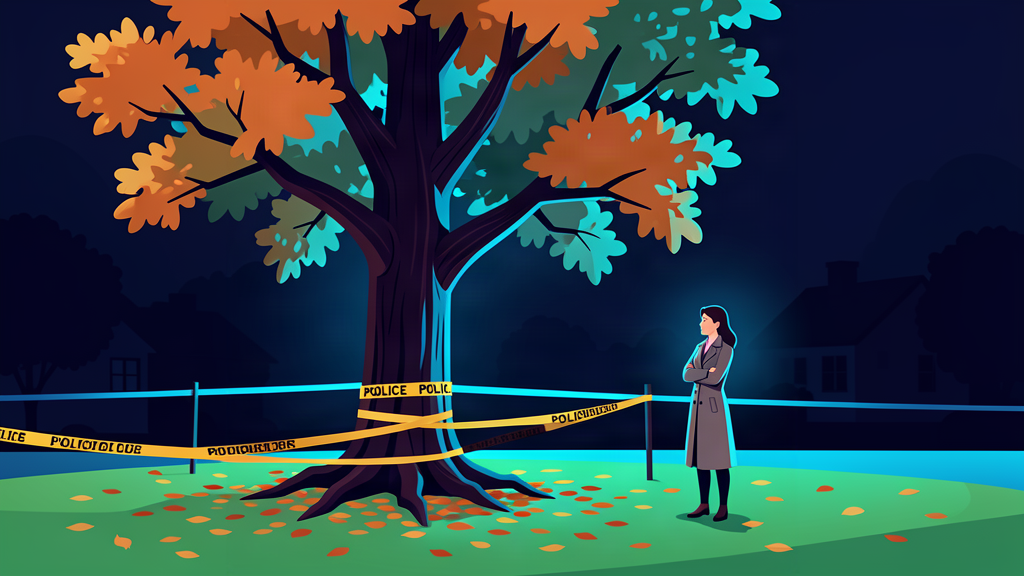
The mother of a young woman whose body was discovered in a tree has said she is “shocked” after police told her the body appears to have been placed in the tree after death rather than having fallen there naturally.
Christy Spivey’s daughter, Tasia Fortune, was found hanging in a tree in Riverside, Glasgow, in August 2024. For more than a year, the family believed she had taken her own life. Now, after a review of the circumstances, Police Scotland has indicated that the position and condition of the body suggest it was put in the tree post-mortem.
What the police are saying
Police Scotland has not categorised the death as a suicide and is treating the case with the close attention that a suspicious death requires. Officers have told the family that forensic indicators point to the body having been placed in the tree rather than having come to rest there on its own. Ms Spivey told the BBC that the news has left her with “more questions than answers” and that she is struggling to reconcile the new information with what she was previously told.
The Crown Office and Procurator Fiscal Service, which oversees prosecutions in Scotland, has been notified and will determine whether a criminal investigation is warranted. In cases involving unexplained deaths, the procurator fiscal has the authority to order a fatal accident inquiry or direct police to pursue specific lines of enquiry.
The family’s search for answers
Ms Spivey has called on investigators to be open and transparent as the review continues. She said the family have spent more than a year trying to come to terms with the loss of Tasia Fortune and that the change in police position has added a fresh layer of distress. The family are not alleging anything specific at this stage, but they are seeking a clear account of how and why the initial assumption was made.
Deaths that are referred to the procurator fiscal are not uncommon in Scotland, and the process is designed to establish the circumstances surrounding a death where the cause is not straightforward. When a body is found in unusual circumstances, the fiscal’s office can direct a further pathological review, request additional scene examination, or commission a full inquiry. Families are entitled to be kept informed of significant developments.

ADVERTISEMENT
Why it matters
This case raises the difficult question of how deaths are initially assessed when a body is discovered in atypical conditions. An early assumption, however reasonable it may seem at the time, can later be revised when further examination or review suggests a different picture. For families already coping with loss, a change in the official understanding can be deeply unsettling and can reopen questions that they thought had been answered.
The case also highlights the role of the procurator fiscal in Scotland, a system that differs from the coroner’s courts used elsewhere in the UK. Where a death is unexplained or the circumstances are unclear, the fiscal has an independent duty to investigate, and the outcome can range from a report to a full public inquiry. How that process is handled — and how well families are kept up to date — matters to public confidence in the system.
What happens next
Police Scotland and the Crown Office are expected to continue reviewing the available evidence. Depending on what that review establishes, the case could move towards a formal criminal investigation, remain open as an unexplained death, or be resolved with a clear explanation of the sequence of events. Ms Spivey has said she will continue to press for answers and for an account she and her family can understand.
The family are likely to wait for the next formal update from police or the procurator fiscal. In the meantime, the case remains open and the death is not being treated as a suicide.




















We do not allow links of any sort in comments. No SPAM whatsoever. On topic comments only.