

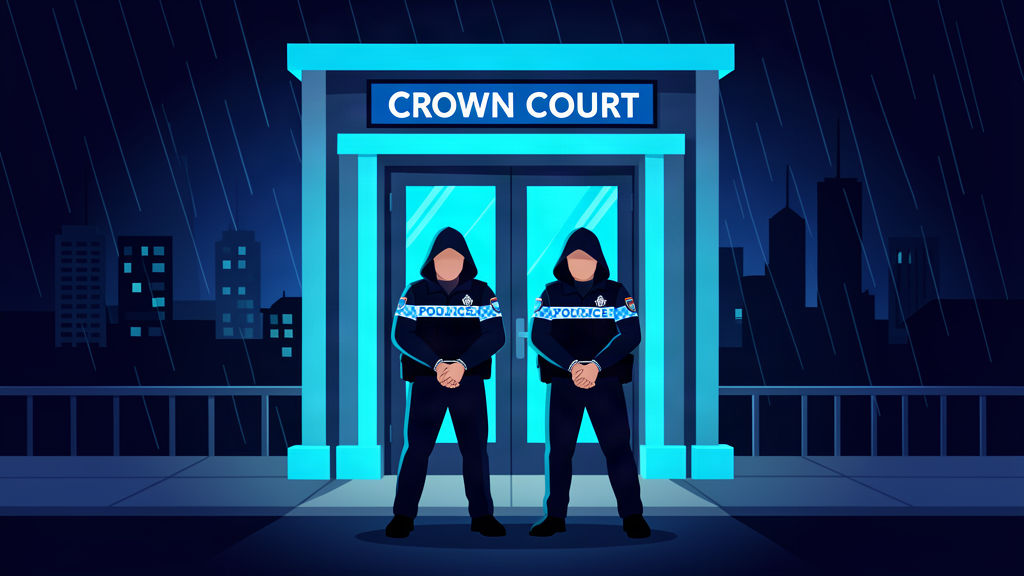
Two Iranian men have been charged in the United Kingdom with terrorism offences over an alleged plot to target Jewish people, in a case that has triggered fresh security scrutiny of an alleged planned attack in Manchester. British police said the two men, both Iranian nationals, were charged on Friday with terrorism-related offences, according to the New York Times, which reported the development on 2 October. The charges are the latest step in a case that British authorities have described as serious and ongoing.
The arrests and charges land in a country that has spent recent years repeatedly revising its approach to domestic security threats, balancing the need for operational intelligence against the legal safeguards that protect defendants in court. Charges under terrorism legislation in the UK carry distinct legal weight and are handled by specialist prosecutors, and they are made without the public being given the full detail of what the prosecution case will later rely on.
What the charges mean
A charge is not a conviction. It is the formal step that opens a criminal process, and it signals that police and prosecutors believe they have gathered enough material to put a case before a court. Reporting from the New York Times indicates the two men are accused of being involved in a suspected plot to target Jewish people, a phrase that points toward a targeting of a community rather than an attack on a specific institution.
That distinction matters. UK security policy has increasingly focused on preemptive action against plots that have not matured into violence, a shift driven in large part by the threat of attacks in crowded public spaces. Officials have repeatedly stressed that the aim of charging early is to stop an incident rather than to respond to one.
Why Manchester
The case is associated with Manchester, a city with a large and long-established Jewish community and a high profile as a centre for trade, sport and media. Cities of that kind are attractive targets for those seeking symbolic as much as practical impact, and they are also places where communities are closely connected and well aware of the risk.
Manchester has previously been at the centre of significant security incidents, including the 2017 Arena attack, which remains one of the most serious acts of violence in the city in recent memory. That history has shaped how the city, its police force and its institutions plan for security at large public events.

ADVERTISEMENT
Why it matters
The case is significant for two reasons. The first is the nature of the alleged threat itself, since a plot directed at a community is a different category of risk from a lone offender with improvised means. The second is the origin of the suspects involved. Reporting over recent years has repeatedly described UK domestic security cases involving individuals with overseas connections, and the intersection of foreign state-linked activity and UK domestic infrastructure is a recurring policy concern.
For Jewish communities in Britain, cases of this kind have a direct effect on daily life, from security at synagogues and schools to the level of anxiety around public gatherings. For the wider public, the case is a reminder that the threat picture remains active and that arrests do not always come with visible disruption.
What happens next
The two men will appear before magistrates’ court, where they will be formally charged and remanded or bailed. Under UK procedure, a committal hearing will follow to decide whether the case proceeds to crown court. Counter-terrorism policing has said little beyond confirming the charges, and the investigation is understood to be continuing. Police have not ruled out further arrests as the inquiry develops, and any search of the evidence in open court will happen well after the events in question.




















We do not allow links of any sort in comments. No SPAM whatsoever. On topic comments only.