

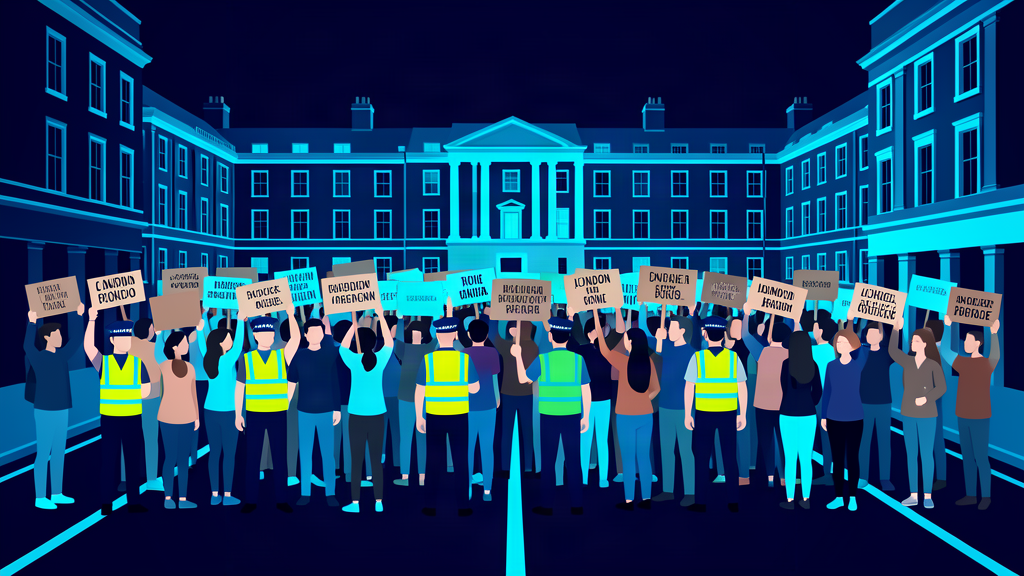
The Metropolitan Police has urged student organisers to move a planned protest set for 7 October, saying officers attempted to contact the University of London Coalition to ask for a postponement. The request, reported by the BBC, comes as police prepare for another week of demonstrations across London, and it underlines the growing pressure on organisers to consider timing and route in the run-up to a large protest cycle.
Police do not formally possess the power to cancel a peaceful protest, and the Met’s public position remains that demonstrators must be able to assemble lawfully. What the force can do is engage in negotiation about arrangements, warn organisers about the operational realities of policing a large crowd, and apply conditions where it believes the threshold is met. The approach described here is a request rather than an instruction, and the response will determine how the week unfolds.
Why the timing matters
October is a heavy month on the London calendar. Protest movements targeting the government over public spending and policy regularly mark the anniversary of earlier demonstrations, and universities have become a focal point in that action. A large gathering in the centre of London brings a different policing challenge from a march confined to one campus or district, particularly when it coincides with other scheduled events.
The University of London Coalition has become a significant organising body in the student movement, capable of mobilising across institutions and coordinating with groups outside the student population. That reach is precisely what makes its announced dates a matter of interest to the Met.
Negotiation behind the scenes
Behind-the-scenes engagement between police and protest organisers in Britain has become an established part of how large demonstrations are managed. The approach is designed to reduce risk without restricting lawful speech, and it has in many cases allowed organisers to adjust routes, timings or stewarding arrangements to the satisfaction of both sides.
Organisers who decline to engage can find that conversations become considerably harder. Police retain the ability to impose conditions on a protest, restrict the area it occupies, or take action against individual participants where it believes the law has been broken. The relationship is not adversarial by design, but it is not free of leverage.

ADVERTISEMENT
Why it matters
The dispute is a small episode with wider significance. It shows that the operating environment for protest in Britain has tightened, with police increasingly willing to use engagement as a mechanism for shaping events. It also gives organisers a decision to make, and the wider public a visible signal that the government and its police are prepared to engage directly with the protest movement rather than leave demonstrations to unfold without contact.
For students, the practical question is whether a powerful symbol of opposition remains available to them at a moment of rising dissatisfaction. For the Met, it is about managing risk around an event that has the potential to grow quickly and to be transmitted worldwide within hours.
What happens next
The Coalition will decide whether to accept the request. If it holds the 7 October date, the Met is expected to publish its operational plan closer to the day, including any conditions on the route and assembly point. Officers will also be placed on mutual assistance footing, with neighbouring forces including the British Transport Police and the City of London Police potentially involved in the policing operation.


















We do not allow links of any sort in comments. No SPAM whatsoever. On topic comments only.