

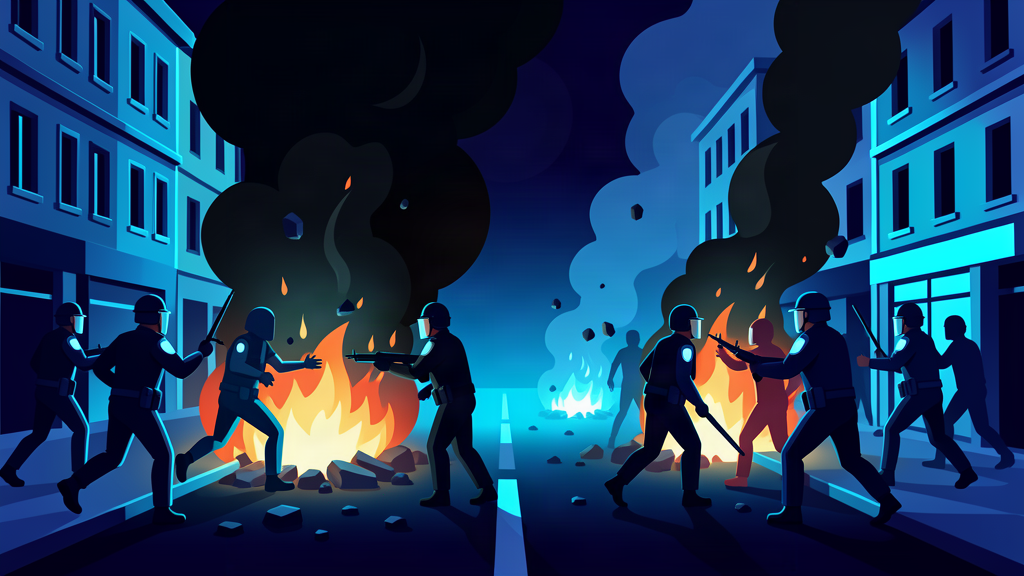
Violent anti-government protests have entered their seventh day across Albania, with almost 300 people injured — more than half of them police — as demonstrators clash with riot squads in the capital Tirana and other cities. The unrest shows no sign of easing, prompting the UK Foreign Office to warn British nationals to avoid protest areas.
A seventh day of clashes
The BBC reports that protesters, many draped in the Albanian flag, have erected burning barricades in central Tirana and hurled stones at police lines. Security forces responded with water cannon and tear gas, with smoke rising from street fires through the early hours. The demonstrators cite corruption and the rising cost of living, though specific grievances vary by neighbourhood. Hospitals across the country have treated the injured, with police officers among the casualties, according to BBC News.
UK advice and diplomatic response
The UK Foreign, Commonwealth & Development Office has updated its travel advice for Albania, urging British travellers and expatriates to steer clear of demonstration zones. A Foreign Office spokesperson said the situation remains unpredictable and volatile, with consular staff monitoring developments. Prime Minister Andy Burnham’s government has not issued a formal statement, though officials in Whitehall are said to be in regular contact with Tirana.
Economic disruption
Albania’s tourism sector — which has seen growing numbers of UK visitors in recent years — faces disruption as the protests continue into a second week. The UK Department for Business and Trade has not indicated any change to trade relationships with Albania, but tour operators are reportedly monitoring the situation closely. Airlines flying the Tirana route continue to operate, though some passengers have reported delays near protest zones.
Why it matters
While Albania is not a major destination for British tourists, the stability of the Western Balkans remains a concern for UK foreign policy. The UK has traditionally supported Albania’s bid for closer EU integration, and sustained unrest could complicate those ties. For Albanian-British dual nationals — who number in the thousands — the violence raises safety concerns. The unrest also underscores the fragility of democratic institutions in the region, a matter that Prime Minister Burnham has spoken about in previous international forums.
What happens next
Protests are expected to continue into an eighth day, with opposition leaders pledging to escalate demonstrations unless concessions are made. The Albanian government has called for dialogue but has not detailed specific reforms. The UK Foreign Office says it will update its travel advice if the situation deteriorates further, and British citizens in Albania are advised to monitor local media and register with the embassy.













We do not allow links of any sort in comments. No SPAM whatsoever. On topic comments only.