

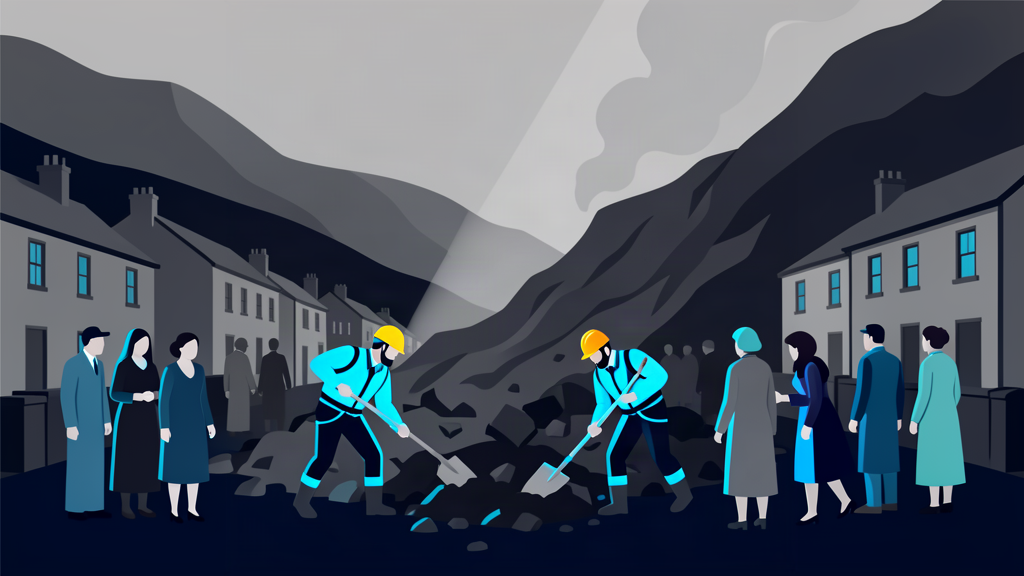
Sixty years after the 1966 Aberfan disaster, the British royal family has returned to the South Wales valley to mark the anniversary, standing beside survivors and bereaved families as they remember the 144 people – 116 of them children – who died when a mountain of coal waste buried their school and homes.
Why it matters
The commemoration is the latest chapter in a long fight for justice that has never fully ended. The 1966 collapse of a coal-tip above the village was one of the worst civilian tragedies in post-war Britain, and survivors have spent decades pressing the state for a full account of what happened and how the response failed them. With King Charles III, Queen Camilla and the Prince of Wales attending, the ceremony lifts the anniversary onto the national stage and renews pressure for any remaining inquiries to conclude. For the UK’s political establishment, the service is both a moment of collective remembrance and a reminder of how disasters test the relationship between communities and the state.
A community still waiting
Beyond the formal service, Aberfan itself is a place where loss is lived every day. The memorial garden, the rebuilt school, and the scarred mountainside are physical reminders that the disaster was never a single day but a condition that reshaped a valley. Residents say the royal visit brings welcome visibility, but many stress that their focus remains on unresolved questions about how the tip was licensed and who signed off on warnings never passed to residents. The 60th anniversary, they say, is not about closure but about ensuring a story so often told as history is not allowed to fade while families are still alive to tell it themselves.
National memory
The ceremony, held under a grey South Wales sky, followed a route that survivors have walked countless times since 1966 – from the memorial garden up the slope to the edge of the tip line where the collapse began. Choirs from the valley sang hymns chosen by the families, and children from the rebuilt school laid flowers. In a statement read on behalf of the Prince of Wales, the royal family expressed “profound sorrow” and said the national memory must “honour not only the dead but the living who have carried this loss.” For many in the congregation, the words mattered less than the act of being seen at a moment that has, for decades, felt too often like an afterthought.
What happens next
In the weeks after the service, local groups say they will publish a new oral-history project of survivor testimonies, and campaigners have signalled they will press Westminster for a final accounting of inquiry documents still held in archives. The royal family’s presence keeps the Aberfan case within reach of public attention, and the families hope it converts into concrete action on compensation and memorial funding before Prime Minister Andy Burnham’s government turns to the autumn agenda. As the community returns to ordinary life in the valley, the question that endures is whether a 60th anniversary can become a closing chapter rather than another anniversary of waiting.
















We do not allow links of any sort in comments. No SPAM whatsoever. On topic comments only.