

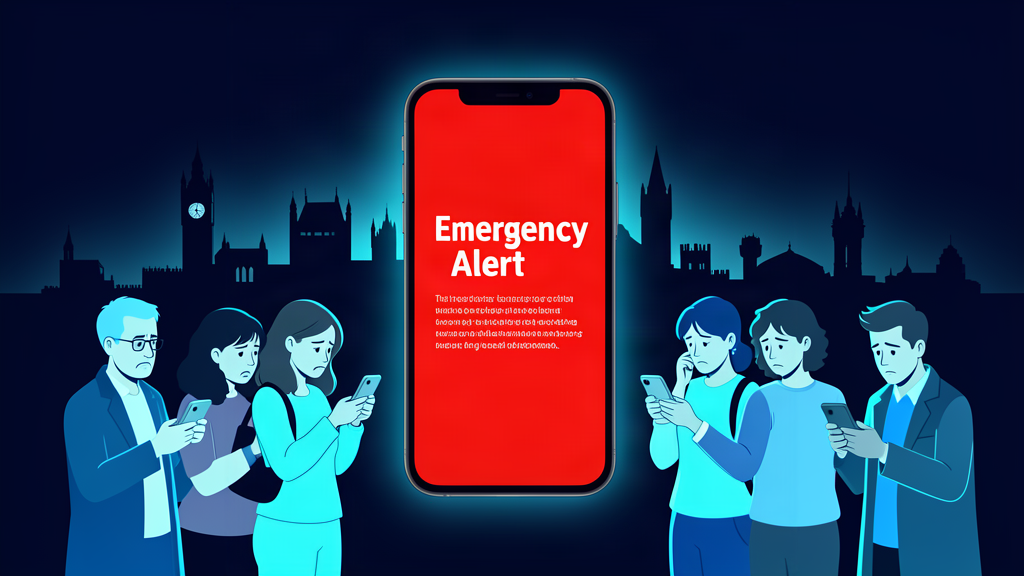
Millions of people across England and Wales received an unexpected wildfire alert on their phones earlier this month, and the engineers who helped build the UK’s Emergency Alert system are now questioning how the government is choosing to use it, the BBC reports. The warning, pushed direct to handsets, was intended to keep people safe – but according to those who designed the technology, it partly backfired.
How the UK alert system works
The Emergency Alert system uses cell-broadcast technology to send a loud siren and notification to every compatible mobile phone in a defined geographic area. It was built to cut through the noise of an ordinary day and reach people who might otherwise miss a local radio bulletin or a social-media post. Since its national launch, it has been used for severe-weather warnings and, in some regions, for incidents requiring immediate action. The design philosophy is simple: when seconds count, the message should arrive without the recipient needing to opt in.
Why the latest use drew criticism
The BBC reports that the specialists who helped create the platform say the wildfire alert showed a mismatch between the tool’s intended purpose and how it was deployed. An alert that lands on millions of phones outside the actual danger zone can confuse rather than inform, and risks eroding the public’s trust in a system that depends on people taking it seriously. When recipients receive a warning that does not appear to apply to them, the danger is “alert fatigue” – the slow dulling of attention that could prove costly the next time a genuine, life-threatening message is sent.
A question of targeting
The core concern raised is one of precision. The engineers argue that the value of the system lies in tight geographic targeting: a message that is relevant to the street you are standing on, not to an entire nation. Used loosely, the alert becomes a blunt instrument. Used well, it is one of the most powerful public-safety tools available to government. The BBC’s reporting suggests the recent episode exposed the gap between those two modes of use.
Why it matters
The Emergency Alert system only works if the public believes it. Every mis-targeted or confusing message chips away at the instinct to act, and the UK government has invested heavily in a platform whose entire credibility rests on restraint and accuracy. With extreme weather and wildfire risk rising across the country, the way ministers choose to wield this tool will shape how many people respond when it truly counts.
What happens next
The BBC reports the system’s creators are calling for clearer rules on when an alert should be sent and to whom. Expect renewed debate in Westminster about the thresholds for a national message, and likely scrutiny from MPs on the science and technology committee. For now, the episode stands as a warning that a powerful system, poorly aimed, can do as much harm to public confidence as good to public safety.

ADVERTISEMENT
Source: Original report. Rewrite for Your News Website.








It’s quite concerning that the creators of the Emergency Alert system are questioning its recent usage. While I agree that timely notifications can save lives, it’s crucial that the alerts are used appropriately and matched to the context. I hope the government listens to their feedback to improve the system for future emergencies.