

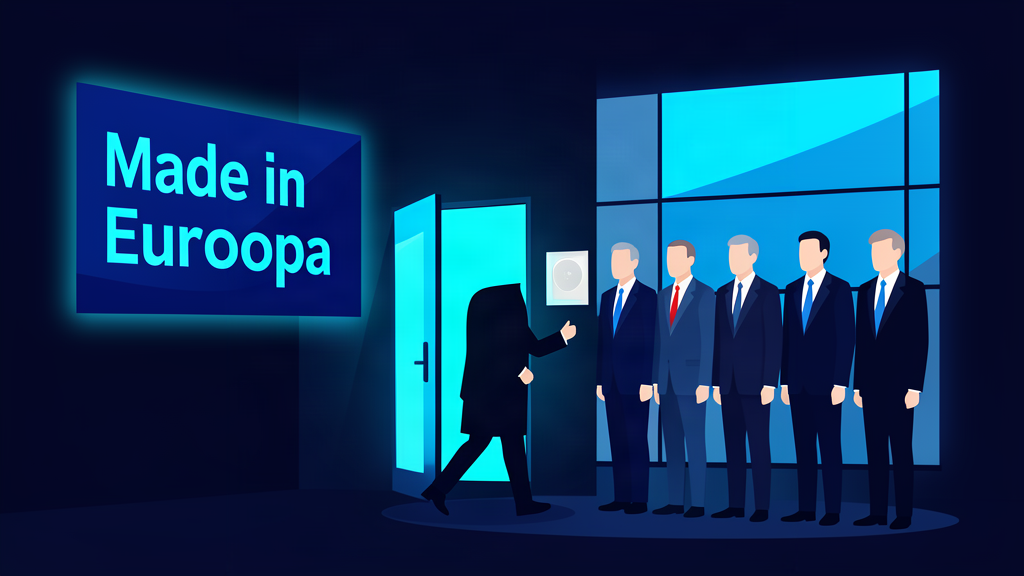
The UK chancellor is set to ask EU finance ministers to allow Britain to join the “Made in Europe” industry scheme, arguing that closer participation would deepen economic ties between the UK and the bloc “rather than erecting new barriers”. The move represents a fresh push for closer post-Brexit regulatory alignment in industrial policy, coming as the government seeks to strengthen its economic relationship with Europe.
What is the Made in Europe scheme
The “Made in Europe” programme is an EU-driven initiative designed to coordinate and strengthen industrial capacity across member states, with a focus on boosting domestic manufacturing and reducing reliance on external supply chains. It sits within the wider framework of European industrial policy, which has increasingly sought to build resilience in key sectors such as technology, energy, and advanced manufacturing.
Participating countries coordinate on standards, investment, and procurement to create a more unified industrial base. For the UK, which left the EU single market and customs union at the end of the Brexit transition period, gaining access to such a scheme would represent a significant step towards closer economic integration than currently exists under the Trade and Cooperation Agreement.
Why it matters
The chancellor’s request speaks to a broader debate about the shape of the UK’s post-Brexit relationship with Europe. While the government has ruled out rejoining the single market, customs union, or free movement, there is growing interest in sector-specific cooperation that could benefit British industry without requiring a wholesale renegotiation of the existing deal.
Proponents argue that schemes like “Made in Europe” offer a pragmatic way to align on industrial standards and unlock investment, particularly in sectors where UK and European supply chains are deeply intertwined. Critics, however, may see it as a step towards regulatory alignment that could constrain the UK’s ability to set its own rules.
The timing is also significant. With industrial competitiveness high on the political agenda and concerns about the UK’s long-term economic trajectory, closer ties with European industry programmes could provide a boost to manufacturing and technology sectors.

ADVERTISEMENT
What happens next
The chancellor is expected to raise the proposal directly with EU finance ministers in the coming weeks. The reaction from European capitals will be an important indicator of whether the EU is willing to extend participation in the scheme to a non-member country. Any decision would require consensus among member states and the European Commission.
If the approach is well received, the UK could begin negotiations on the terms of participation. If it meets resistance, the government may have to consider alternative ways to achieve its industrial policy objectives. Either way, the proposal signals that the UK is actively exploring avenues for closer economic cooperation with Europe beyond the baseline arrangements in place since Brexit.


















We do not allow links of any sort in comments. No SPAM whatsoever. On topic comments only.