

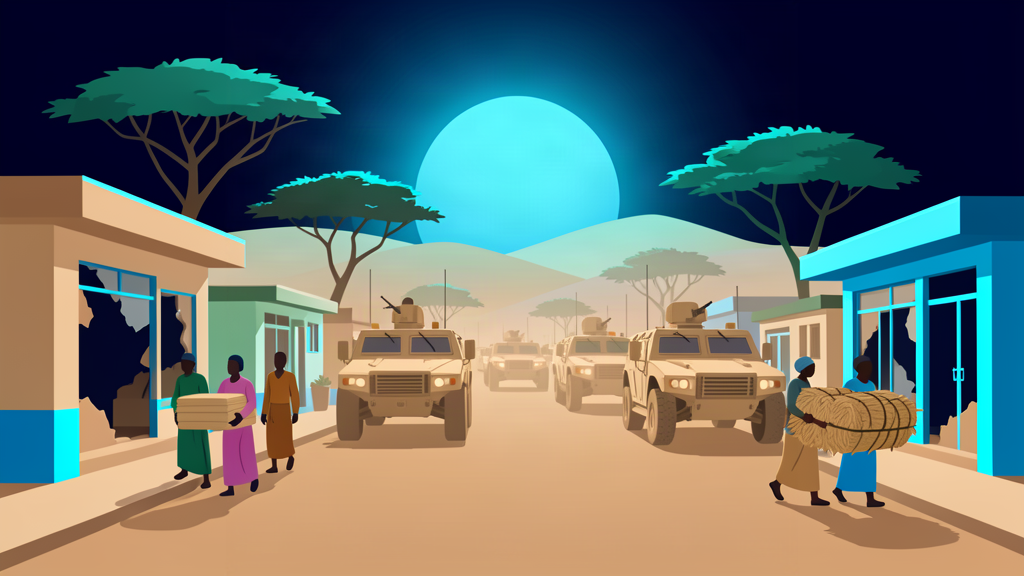
Rebel forces have withdrawn from Mekelle, the regional capital of Tigray in northern Ethiopia, with two residents telling the BBC that pro-government forces have taken control of the city. The change of hands in the city is the most concrete sign yet of how far the balance of power in the region has shifted.
What residents reported
The account comes from people on the ground rather than from either side’s official statement, and the BBC is clear about that provenance. In a conflict where access for outside journalists and observers is severely constrained, resident testimony has become one of the few available ways of establishing what is happening.
Two accounts are not a full picture of a city, and a change of control in a capital does not by itself settle the wider contest. What it does signal is a decisive moment in the immediate vicinity of Mekelle.
A longer conflict
Tigray has been at the centre of Ethiopia’s civil war for years, and the region has seen mass displacement, infrastructure destruction and fighting that repeatedly brought civilian towns into the line of fire. Relief and access have been persistent problems, and the humanitarian situation has been shaped as much by the state of local infrastructure as by the fighting itself.
The situation on the ground
Beyond the immediate question of who holds the city, the detail that matters most to the people living there is what happens next in the streets. Residents described to the BBC conditions consistent with a transfer of authority rather than an ongoing battle, which would suggest the change happened faster than observers outside the region were able to confirm.
That distinction has practical consequences. Where a city changes hands by agreement or by withdrawal under pressure rather than street fighting, the immediate priority is usually the safety of residents, the continuity of basic services, and the status of people who cannot leave. Where it changes hands after sustained combat, all three of those things take considerably longer.

ADVERTISEMENT
Verification and its limits
Independent verification in Tigray remains difficult. Communications restrictions, limited transport options and the difficulty of moving journalists and monitors through the region all narrow what can be confirmed. Resident accounts remain the primary source in that environment, and they are the only ones the BBC has cited here.
That is worth stating plainly rather than dressing up. Two residents describing pro-government control is meaningful evidence of a change of position, but it is not a survey of a city of considerable size, and it does not establish the wider military picture. Nor does it indicate whether the rebel withdrawal from Mekelle extends to other towns in the region.
Who is likely to be affected
Any change in control of a regional capital in a conflict of this scale has consequences well beyond the fighting itself. Return of administration can affect movement permits, market access, the ability of aid organisations to deliver, and the legal status of people who moved during the conflict. Those effects tend to be felt first by those with the least capacity to absorb them.
Why it matters
Mekelle is a significant administrative and commercial centre, and its status affects movement, trade and the ability of aid agencies to operate across a large part of northern Ethiopia. A change in who controls the city is therefore relevant well beyond its boundaries.
What happens next
The immediate questions are practical: what happens to those who remained, whether services and markets reopen, and whether the wider front moves. Verified confirmation from independent sources will be needed before the full significance can be assessed, and the humanitarian consequences in the days after a change of control are typically the most immediate concern.



















It’s a relief to hear that the situation in Mekelle is evolving, but I worry about the implications for civilians. With so much destruction and displacement already in Tigray, I hope that any change in control leads to better conditions on the ground, rather than more suffering. The humanitarian crisis seems far from over.