

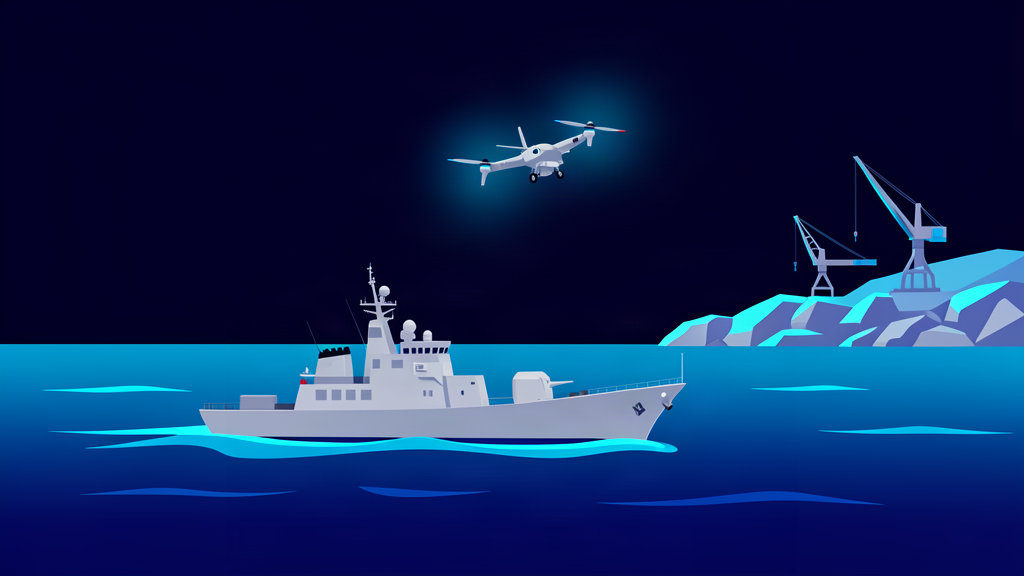
Ukraine says it has struck a Russian warship in Libya using drones, in an attack that widens the geography of a conflict already being felt across Europe. President Volodymyr Zelensky made the claim, according to BBC News, while the Kremlin warned of an escalation of tensions in the region but declined to comment directly on the reported attacks in Libya. If confirmed, the strike would mark a significant extension of Ukraine’s operations beyond its own territory and the Black Sea. The report underlines how the war continues to reach into distant regions, with consequences for shipping and international security that extend well beyond the battlefield.
What has been reported
The BBC reports that Mr Zelensky said a Russian warship had been hit by Ukrainian drones in Libya. Details of the vessel, the extent of any damage and the circumstances of the strike were not immediately clear from the initial report. The Kremlin’s response was to caution against an escalation of tensions in the region, without directly confirming or denying the specific attack. That carefully worded reaction leaves several questions unanswered, including whether the ship was on active duty, what it was doing in the area and how Russia intends to respond. Ukraine has increasingly used unmanned aircraft to reach targets that would previously have been beyond the reach of its forces, and long-range drones have become a central part of its strategy.
A widening war
The reported strike fits a pattern of Ukraine taking the fight to Russian assets beyond the front line. In recent months, operations have targeted military installations, energy infrastructure and ships, using domestically produced drones that can travel far further than traditional weapons. Russia has repeatedly warned that such attacks cross red lines, yet has often stopped short of the retaliation it threatened. That gap between warning and action has encouraged Kyiv to press further, while leaving allies uneasy about how long the pattern can hold. The appearance of the war in Libya is a reminder that its reach is no longer confined to Europe’s eastern flank.
Why it matters
For Britain, the significance is both strategic and practical. The UK has been among Ukraine’s strongest supporters, supplying weapons, training and intelligence, and any extension of the conflict into new waters complicates that backing. Shipping is a particular concern: attacks on vessels, even in distant seas, raise insurance costs and disrupt trade routes that British businesses rely on. There is also the question of international law. A strike on a warship in the territorial waters of a third country would raise difficult legal questions, and allies will want to understand exactly what happened before deciding how to respond. The incident comes at a time when negotiations over the war remain stalled, making each new development harder to absorb.
What happens next
Attention will now focus on verification: whether independent evidence emerges to confirm the strike, and how Russia responds in the days ahead. A direct Russian reaction against Ukrainian interests would risk widening the conflict further, while a muted response might indicate a desire to avoid escalation. NATO members, including Britain, will be watching closely, both for the implications for their own naval assets and for the effect on diplomatic efforts. Ukraine is likely to continue using long-range drones as part of its campaign, and further incidents beyond the Black Sea cannot be ruled out. The coming weeks will show whether this episode is a one-off or the start of a more dangerous phase.
Read the original report at BBC News – https://www.bbc.co.uk/news/articles/cr894gjz0j0yo

























We do not allow links of any sort in comments. No SPAM whatsoever. On topic comments only.