

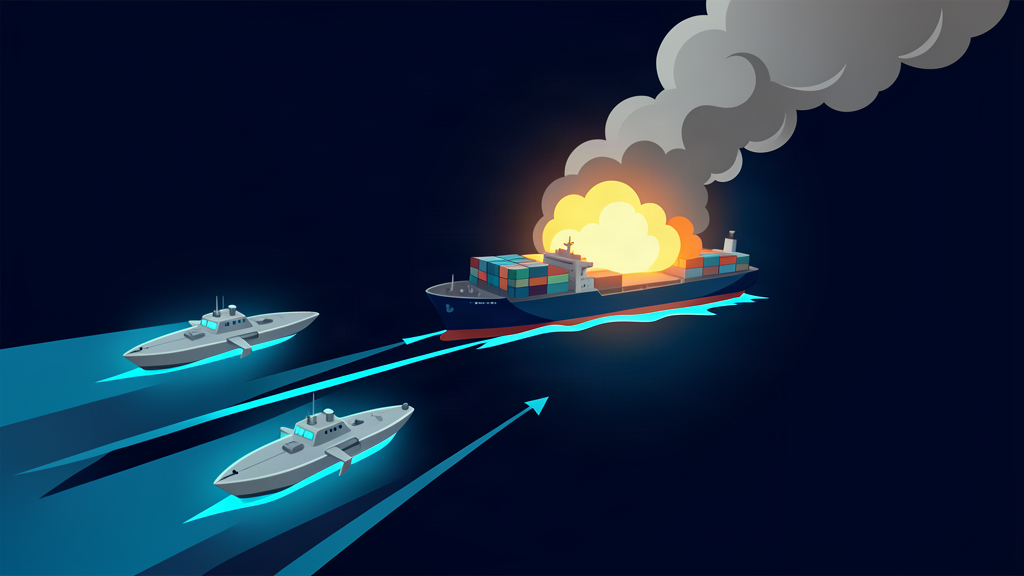
Two Russian ships have been struck by Ukrainian drones in Libya, according to verified video footage examined by the BBC, in a strike that carries the maritime war far from the Black Sea and into waters used by international shipping.
What the verified footage shows
The material reviewed by the BBC shows huge fireballs and dense smoke plumes rising from the vessels, with uncrewed sea drones seen attacking the ships. By checking the footage against known locations and other visual markers, the broadcaster was able to verify that the incidents had taken place rather than relying on unverified claims circulated online. The use of sea drones — small, low-profile craft that can be directed at a target vessel — has become a defining feature of the conflict at sea, allowing a side without a large conventional navy to threaten far larger ships at comparatively low cost.
Why the location is significant
Libya sits on the Mediterranean shipping routes that connect Europe, North Africa and the wider world, so an attack in these waters is a reminder that the conflict is not contained to the eastern front. Shipping in the region already operates under a cloud of security concerns, and an incident involving Russian vessels raises questions about how commercial traffic navigates contested space. The strike also underlines how drone warfare has reduced the distance between a battlefield and a port: systems developed for one theatre can be deployed hundreds of miles away, changing the calculations for anyone operating in the area.
Why it matters for Britain
The UK is a close supporter of Ukraine and has consistently argued that the rules-based order should apply to the seas as much as to land. An attack on vessels in a busy international corridor therefore matters to London beyond the immediate military contest, because it touches the safety of shipping and the broader question of how states respond when infrastructure far from the front line becomes a target. For observers in Britain, the footage is also a measure of how the balance of the war is evolving: cheaper, reusable systems are being used to challenge assets that once seemed comparatively secure.
What happens next
Attention will now turn to the condition of the two ships and to whether either side confirms the details of the strike. Analysts will be looking for signs of how the drones were launched and guided, since that shapes the threat to other vessels in the region. In the shorter term, shipping interests are likely to review their movements and precautionary measures in the Mediterranean. The BBC says the footage was verified as genuine, and further details are expected to emerge as the episode is assessed.
Source: BBC News. Read the original report at the BBC.

ADVERTISEMENT
The incident also illustrates a wider trend in modern warfare: the growing use of uncrewed systems that can be deployed without risking a crew. For Ukraine, such tools offer a way to apply pressure across a much larger area than conventional vessels could cover. For the other side, they present a defensive problem that is hard to solve completely, since a small fast-moving craft can be difficult to pick out against busy shipping traffic. Neither side has published full details of the encounter.
























We do not allow links of any sort in comments. No SPAM whatsoever. On topic comments only.