

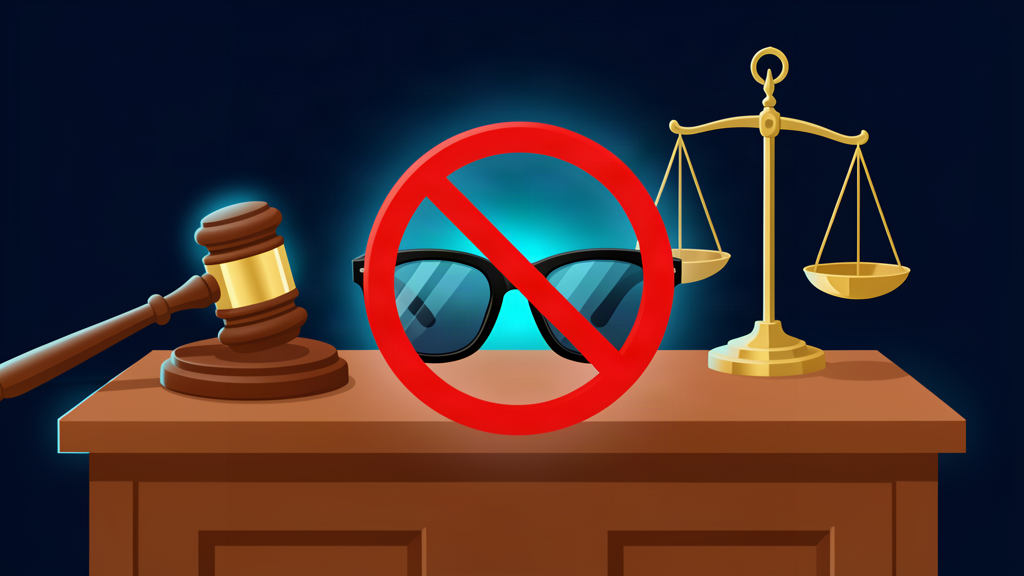
Courts across England and Wales have banned Meta’s camera-equipped smart glasses, confiscating them at the door amid fears they turn everyday wearers into unwitting surveillance.
Anyone attempting to enter a court in England and Wales while wearing Meta’s smart glasses now risks having them confiscated at the door, in a sweeping ban that positions the courtroom among the growing list of British venues treating the devices as covert surveillance tools rather than harmless gadgets.
Why the courts acted
The glasses can record video while being worn, with no obvious indication to those being filmed. Court officials concluded that introducing such technology into sensitive legal proceedings created an unacceptable risk to privacy, witness safety and the integrity of justice itself. Security staff have been told to seize the devices on entry and return them only when the visitor leaves the building, a blunt but unambiguous signal.
From New York to the UK
The move follows a similar prohibition announced by courts in New York last month, signalling a transatlantic tightening around so-called “spyware” wearables. Restaurants, theatres and pubs in Britain have already moved to bar the glasses, and the judiciary’s intervention extends that boycott into one of the most private settings in public life, where confidentiality is not a courtesy but a legal duty.
What the ban means for UK citizens
For the average Briton, the ruling is a reminder of how quickly consumer technology can outrun the rules designed to govern it. Courtrooms handle vulnerable witnesses, confidential evidence and matters of liberty; the prospect of silent, always-possible recording has convinced officials that prevention, not policing after the fact, is the only safe approach when the recording is invisible to everyone else in the room.
The backlash against smart glasses
Critics argue the devices blur the line between personal gadget and surveillance camera, capturing strangers without consent or knowledge. Supporters counter that the hardware is little different from a phone on a tripod. The courts, however, have sided firmly with caution, treating the glasses as a category apart because they are worn on the face, operated hands-free, and designed to look like ordinary eyewear.

ADVERTISEMENT
A wider debate on wearable surveillance
What this means for wearers
For Britons who own the glasses, the ban is a practical headache: the devices are legal to buy and wear on the street, yet increasingly unwelcome in shops, cinemas and now courts. Visitors should expect to be asked to remove or surrender them, and to plan around venues that simply will not admit the technology. The message from institutions is consolidating into a clear norm: record only where everyone can see you are recording.
The England and Wales decision is likely to fuel calls for clearer regulation of body-worn cameras and AI-assisted recording devices. As manufacturers race to embed cameras and microphones into everyday objects, institutions from schools to hospitals will face the same question the courts just answered: when does convenience become a threat to the people in the room? For now, in British justice, the answer is a clear, confiscatory and unapologetic no.
Source: Original report. Rewrite for Your News Website.





















Really helpful article, thank you – looking forward to more like this!
Really helpful guide, thank you – looking forward to more like this!