

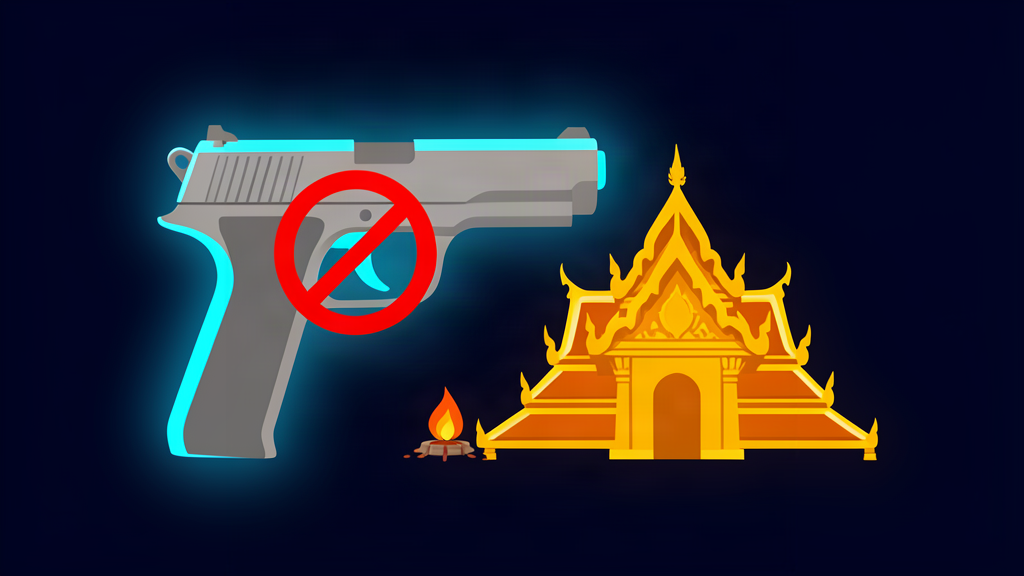
Thailand has frozen firearm licences after a school shooting killed nine, as the teenage gunman and the grandparents he murdered were cremated, prompting a UK-relevant debate on what strict control really delivers.
Thailand has suspended the issuing of firearm licences in the wake of a devastating school shooting in Nonthaburi that left nine people dead, as the bodies of the teenage attacker and the grandparents he killed were cremated. Prime Minister Anutin Charnvirakul has ordered tighter controls and what he called “decisive penalties” pending the passage of new legislation.
What happened in Nonthaburi
The shooting has shocked a country where mass attacks are comparatively rare but where firearm ownership has long been a contested issue. The prime minister directed the interior ministry and police to halt licences to possess, purchase and carry guns, a temporary freeze intended to remain in place until a tougher gun-control law is passed. The measures reflect both national grief and political pressure to be seen acting decisively.
A nation in mourning
As the teenage shooter and his victims were cremated, the government signalled that leniency on weapons was over. Officials have promised an overhaul of the licensing regime, echoing demands from families who question how a minor was able to access a firearm in the first place, and why existing safeguards failed so completely on a ordinary school day.
What the UK can learn
For British readers, the tragedy lands against a very different backdrop. The UK already operates some of the strictest gun laws in the world, introduced and deepened after its own mass-casualty events including Hungerford and Dunblane. While no framework eradicates risk entirely, the contrast underlines how licensing speed and the cultural normalisation of firearms shape outcomes. The Thai freeze is, in effect, a rapid version of the restrictive regime Britain has long maintained.
Travel and safety for UK visitors
British nationals visiting Thailand should note the heightened security posture around schools and public venues, and the likelihood of tighter checks on weapons and permits. The Foreign Office routinely advises vigilance at crowded locations, and the current climate makes situational awareness especially prudent for families and school groups travelling in the region this year.

ADVERTISEMENT
The road to new gun laws
Britain’s own reckoning
Closer to home, the tragedy invites reflection on the UK’s own licensing system, which requires police vetting, a legitimate reason and secure storage for any firearm. British voters periodically debate whether those rules go far enough, particularly around shotguns and heirloom weapons passed down through families. Thailand’s emergency pause is a stark illustration of how quickly a society can move from routine access to sudden prohibition when confidence in the system collapses overnight.
Whether the suspension becomes lasting reform depends on Thailand’s legislature. Campaigners hope the moment proves a turning point; sceptics recall past pledges that faded once headlines moved on. What is certain is that the cremation of a child killer and his grandparents has become a national reckoning over who should be allowed to hold a gun, and why such weapons were ever within a teenager’s reach.
Source: Original report. Rewrite for Your News Website.



















We do not allow links of any sort in comments. No SPAM whatsoever. On topic comments only.