

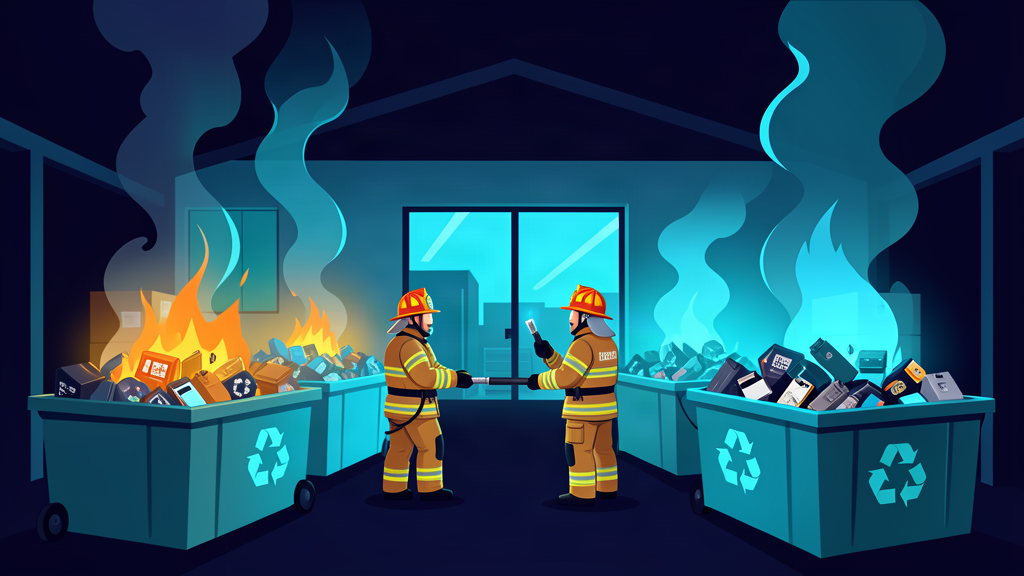
Firefighters across Britain are confronting a growing and costly hazard hidden inside the nation’s household waste, as lithium batteries discarded in the wrong bin are now triggering more than ten blazes a week at recycling centres and the bill for dealing with them has climbed to around £1bn a year.
A crisis in the bin
The scale of the problem has reached what experts describe as a crisis. Figures reported by the Guardian show fires caused by wrongly discarded lithium cells, including the small power packs inside vapes, e-cigarettes and countless everyday gadgets, are breaking out at UK waste facilities at a rate of more than ten every week. Each incident forces an emergency response, disrupts the sorting lines that keep materials flowing, and risks the lives of staff who may not know a battery is lodged inside a pile of rubbish until it suddenly ignites.
The culprits are familiar objects. Rechargeable and single-use lithium cells sit inside phones, power tools, toothbrushes, toys and, increasingly, disposable vapes that are thrown away still charged. When a lorry compacts a load or a trommel screen crushes a casing, the cell can short, heat and burst into flames that are difficult to put out and spread quickly through paper, plastic and cardboard.
The vape factor
Disposable vapes have become a particular flashpoint. Millions are sold in the UK each year and many end their life in general waste rather than at a battery collection point, meaning a concentrated source of fire risk travels straight into the recycling stream. Waste operators say the surge in these devices has coincided with the rise in incidents, and they want manufacturers and retailers to make safe disposal as easy as the purchase.
Why it matters
Recycling-centre fires are not a minor nuisance. A battery that ignites releases toxic fumes and can endanger the people who work to keep the country’s waste stream moving. Fire chiefs have warned that the sheer volume of incidents is stretching resources, while the estimated £1bn annual cost lands on councils and operators already under financial pressure. For households the consequence is ultimately higher charges and a more dangerous local facility, and for the wider system it is lost material that should have been recovered.
What happens next
Attention is turning to prevention. Campaigners and waste operators are urging clearer labelling, more accessible battery drop-off points and a stronger public message that loose batteries and old vapes should never be tossed into general or recycling bins. Ministers and regulators are being pressed to tighten guidance and enforcement so the most common culprits are captured before they reach a lorry or a sorting hall. Until then, fire services say the simplest defence is awareness: a battery that still holds charge should be taken to a collection point, not left to smoulder in the wheelie bin.

ADVERTISEMENT
Source: Original report. Rewrite for Your News Website.





















Really helpful article, thank you – looking forward to more like this!