


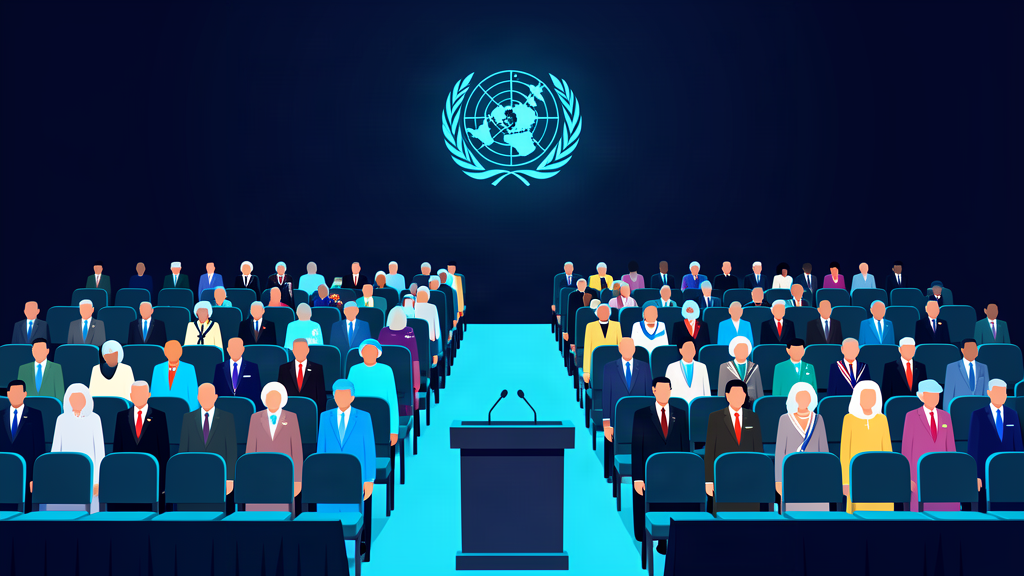
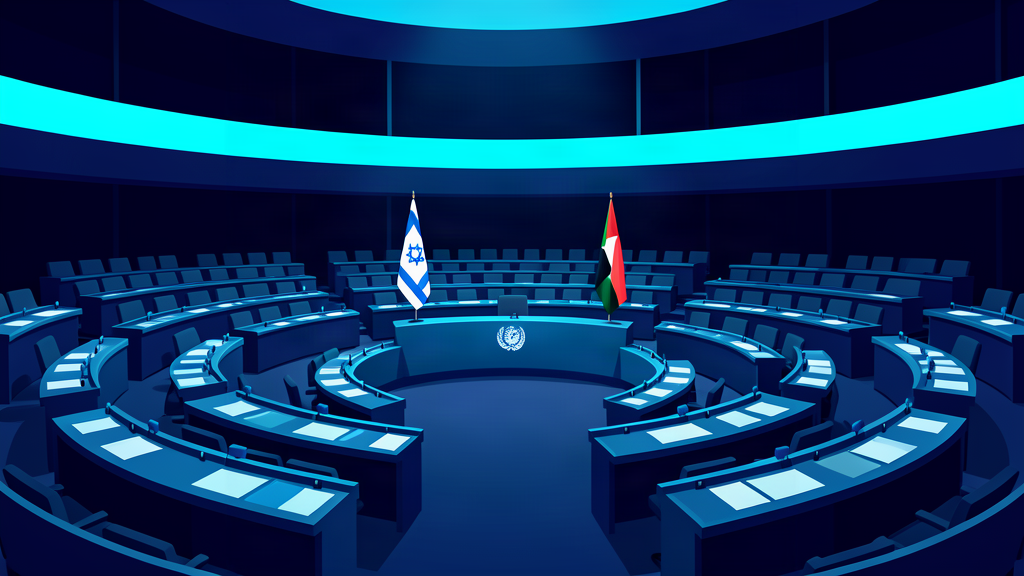
Benjamin Netanyahu has used his address to the United Nations General Assembly to launch a wide-ranging attack on Israel’s enemies and allies alike, denouncing Iran and New York City’s new mayor, Zohran Mamdani, while lashing out at critics who accuse Israel of crimes against Palestinians. The speech, delivered as world leaders gathered in New York, laid bare the depth of Israel’s diplomatic isolation on several of the most heated issues before the assembly.
The Israeli prime minister’s remarks came against a backdrop of intense international scrutiny of Israel’s conduct in Gaza and the occupied territories, as well as growing tension with political forces in the United States that have become more sympathetic to the Palestinian cause. Netanyahu’s address was both a rebuttal of those criticisms and an assertion of Israel’s position on the global stage, even as several delegates walked out in protest.
The attack on Iran
Central to Netanyahu’s speech was a renewed denunciation of Iran, which he portrayed as the principal threat to Israel and to regional stability. The Iranian government has long been a focus of Israeli security policy, and Netanyahu has made opposing its influence a consistent theme of his diplomatic efforts abroad. In the address, he characterised Iran as a state that supports militant groups across the region and seeks to undermine efforts to stabilise the Middle East.
The language reflected the deep distrust that has defined Israeli-Iranian relations for years. With both countries operating in a volatile security environment, Netanyahu’s remarks were as much a warning as a complaint, signalling that Israel would continue to treat Iran as a primary adversary regardless of the diplomatic setting.
The criticism of New York’s mayor
One of the more striking elements of the speech was Netanyahu’s attack on Zohran Mamdani, the mayor of New York City. Mamdani, who has positioned himself as a left-wing voice on issues including housing, policing, and foreign policy, has drawn criticism from supporters of Israel for his stance on the conflict. Netanyahu singled him out by name, framing his election and his views as symptomatic of a broader shift in American political attitudes that he regards as hostile to Israel.
The targeting of a major American city’s leader was unusual in a UN address and underscored how directly Netanyahu is willing to engage domestic political debates in the United States when he sees them as relevant to Israel’s standing. For New York’s Jewish community and for observers of US politics, the remarks will be seen as part of a wider contest over the future of pro-Israel sentiment in American public life.

ADVERTISEMENT
The response to war-crimes accusations
Perhaps the most contentious part of the address came when Netanyahu responded to critics who accuse Israel of committing crimes against Palestinians. Such accusations have multiplied as the war in Gaza has continued and as international courts and human rights organisations have scrutinised Israeli military operations. Netanyahu rejected the characterisation outright, presenting Israel’s actions as defensible and necessary in the face of threats from militant groups.
He did not offer detailed legal arguments in the speech itself, but the blunt rejection of the accusations was aimed squarely at the audience in the General Assembly hall and at the wider diplomatic community following the session. The walkouts by some delegates during the address reflected the depth of disagreement that persists over Israel’s conduct and the willingness of some governments to signal their disapproval publicly.
Why it matters
The speech matters because it captures the current state of Israel’s relationship with the world. On one level, Netanyahu was doing what Israeli leaders have often done at the UN: defending the country’s actions, naming its adversaries, and trying to shape how the international community perceives the conflict. On another, the address revealed how much the terrain has shifted. A mayor of New York — not the US president — was singled out for criticism, and the walkouts suggested that Israel no longer commands the same level of automatic support in the assembly that it once did.
For the UK and other Western allies, the speech reinforced the difficult balancing act that has defined much of the recent diplomacy: maintaining support for Israel’s right to defend itself while facing growing domestic and international pressure to hold it accountable for the conduct of the war. The accusations of crimes against Palestinians are not going away, and Netanyahu’s rejection of them at the UN is unlikely to settle the issue.
For Israel, the address was also a domestic political statement. Netanyahu faces challenges at home, and a high-profile UN speech offers a chance to demonstrate leadership and resolve to his own base, even as the diplomatic costs of the conflict continue to mount abroad.
What happens next
The speech will now ripple through the diplomatic channels that matter most: the UN itself, where follow-up debates and resolutions are likely to keep the issue in view; the United States, where the Mamdani criticism will feed into ongoing arguments about American policy toward Israel and Palestine; and the broader international community, where the war-crimes accusations are likely to remain a live subject of investigation and political contestation.
Netanyahu’s aides are expected to continue pursuing the diplomatic offensive that the speech began, working to shore up support among sympathetic governments and to contest the narrative advanced by Israel’s critics. Whatever the immediate reception, the address will be read as part of a longer struggle over how the war is understood, who is held responsible, and what a durable resolution might look like.
For now, the speech stands as a clear statement of Israel’s position at a moment of heightened international pressure, and one that is unlikely to bridge the gap between the Israeli government and the many voices in the assembly that took a different view.



















We do not allow links of any sort in comments. No SPAM whatsoever. On topic comments only.