


Polish police have arrested a Ukrainian citizen on suspicion of carrying out a fatal stabbing, an incident that has drawn attention against the backdrop of ongoing efforts by Poland and Ukraine to steady relations that have been strained by historical antagonisms, according to reporting from The New York Times.
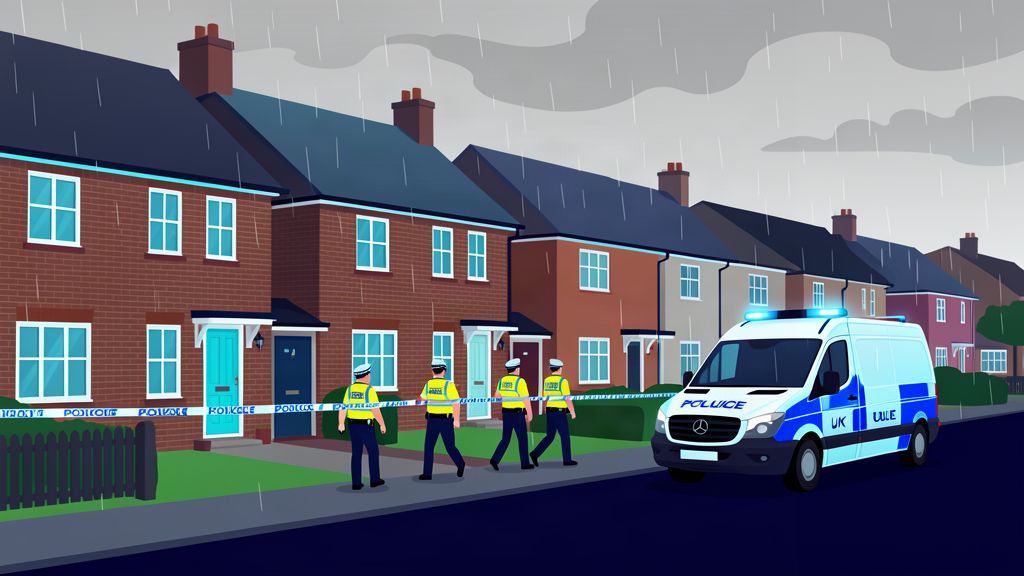
The arrest follows a knife attack in which a person died. Polish police acted to detain the suspect, identified as a Ukrainian national, and the case is now moving through the criminal justice process. The available reporting does not spell out the full circumstances of the stabbing — including where it took place, the identity of the victim, or the motive — and those details will emerge as the investigation continues.
The timing of the incident is significant because Poland and Ukraine have been working to manage a relationship that, while anchored in shared geopolitical interests, has also been marked by periodic tensions. Those tensions include historical grievances dating back to the Second World War and the post-war period, as well as more recent debates over grain imports, border issues, and political rhetoric.
A violent crime involving a Ukrainian national in Poland inevitably carries the risk of being drawn into those broader dynamics. Public reactions can be shaped by preexisting attitudes, and politicians on all sides may find themselves responding not just to the crime itself but to what it symbolises in the context of the bilateral relationship.
Why it matters
The incident matters for several reasons. First, it is a serious crime — a fatal stabbing — and the priority for Polish authorities is to establish the facts, prosecute where appropriate, and provide justice for the victim. That process is the core of the matter and should not be overshadowed by the diplomatic context.
Second, the involvement of a Ukrainian national in a fatal attack in Poland lands at a sensitive moment in Poland-Ukraine relations. The two countries are partners in a broad sense — both are members of the European Union, both are committed to the security of the region, and both have a strong interest in the outcome of the war in Ukraine — but that partnership has been tested by disagreements and by public opinion on both sides.

ADVERTISEMENT
Third, incidents of this kind can fuel negative narratives if they are mishandled. The challenge for both governments is to respond to the crime on its own terms while avoiding a spiral into broader mutual recrimination. That requires measured language, transparent policing, and a recognition that individual criminal acts are not representative of entire communities.
What happens next
The arrested individual will face the Polish criminal justice process, which will determine whether there is sufficient evidence to charge and, ultimately, whether a prosecution leads to a conviction. Investigators will work to establish the full circumstances of the stabbing, including what led to the attack and whether it was an isolated incident or part of a wider pattern.
Both the Polish and Ukrainian governments are likely to monitor the case and may issue statements as facts become clear. The broader bilateral relationship will continue to be shaped by the many structural factors that define it — security cooperation, trade, history, and public opinion — with this incident as one data point among many.
















We do not allow links of any sort in comments. No SPAM whatsoever. On topic comments only.