

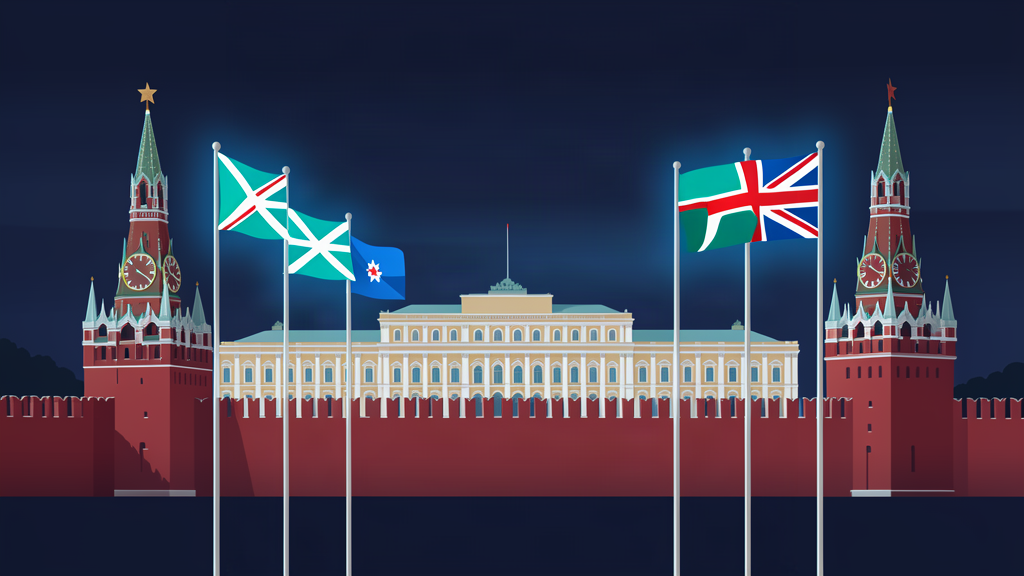
Russia’s foreign minister has prompted a sharp rebuke from Welsh politicians after questioning what will become of the United Kingdom and casting doubt on the future of the Celtic nations within it.
Sergei Lavrov’s remarks, made in a public statement, suggested that the UK’s internal tensions could lead to a reordering of the British state in which the Celtic nations — Wales, Scotland, and others — might take a different path. The comments were swiftly rejected by Plaid Cymru, the Welsh nationalist party, which said Wales’ future was not for the Kremlin to endorse, oppose, or exploit.
What Lavrov said
The Russian foreign minister’s intervention was framed as a commentary on the durability of the United Kingdom as a political entity. By questioning what will become of the UK and singling out the Celtic nations, Lavrov was touching on a long-running theme in Russian strategic discourse: the idea that Western states are internally divided and that those divisions can be exploited.
The remarks stop short of any explicit threat or promise of support for separatist movements, and it is not clear what, if any, policy action Russia intends to take in response to the situation he described. But the language was blunt enough to draw a response from those on the receiving end.
The Welsh response
Plaid Cymru’s rebuke was unambiguous. The party said Wales’ future was not for the Kremlin to endorse, oppose, or exploit, and the statement made clear that any suggestion of external powers having a say in Welsh sovereignty was unacceptable. For a party that has long campaigned for Welsh independence within a European context, the idea of Russian sponsorship or encouragement was unwelcome.
The response also underscored a broader discomfort among Celtic nationalist parties when it comes to Russian attention. While some of these parties have historically been sceptical of UK foreign policy, the prospect of being wooed or weaponised by Moscow sits uneasily with their democratic and European aspirations.

ADVERTISEMENT
Why it matters
Lavrov’s remarks are part of a pattern of Russian diplomacy that seeks to highlight fracture lines in Western societies, from Scotland to Catalonia and beyond. Whether or not there is a concrete Russian strategy behind the words, the effect is to keep the question of national breakup alive in international discourse and to remind Western governments that their internal divisions are being watched.
For the UK government, the comments are an unwelcome intrusion into domestic constitutional debates. They complicate the already delicate politics of the union by introducing an external actor whose motives are straightforwardly hostile, and they give ammunition to those who argue that the UK needs to take its internal cohesion more seriously.
What happens next
The most likely outcome is that Lavrov’s remarks will be absorbed into the steady hum of Russian rhetorical pressure on the West and will not, on their own, change the trajectory of Scottish or Welsh politics. But they will be noted by analysts tracking Russian influence activity, and they may prompt a further round of questions about how UK security services assess and counter foreign attempts to stoke constitutional divisions.
Plaid Cymru and similar parties are likely to continue rejecting any suggestion that their cause has external backing, while the UK government is likely to keep pressing the message that the union’s future is for the people of the UK to decide, not for the Kremlin.
Source: BBC News.



















We do not allow links of any sort in comments. No SPAM whatsoever. On topic comments only.