

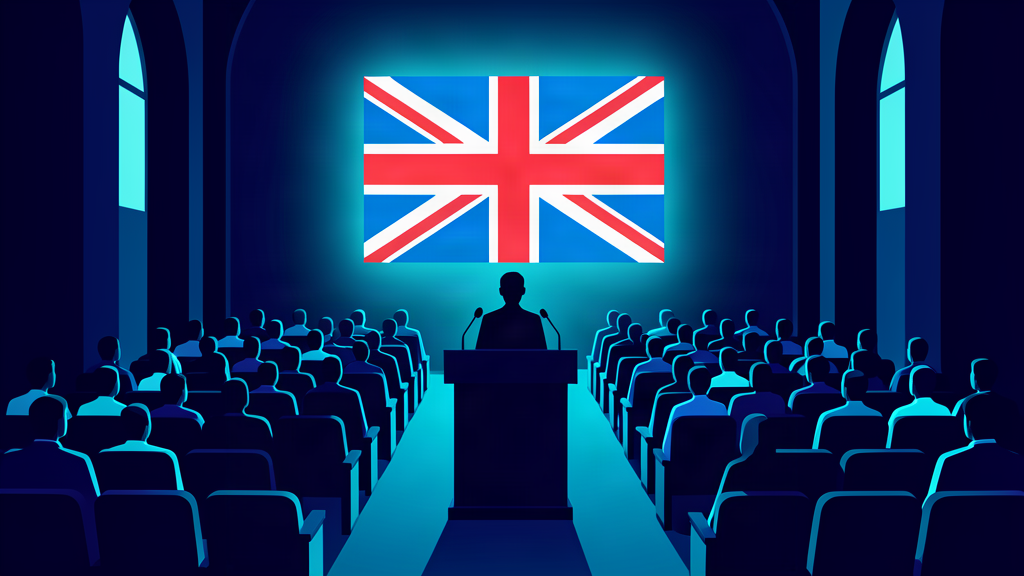
Andy Burnham’s address was, in the reading of the BBC’s political editor Chris Mason, a speech that fused the language of a new prime minister with the cadence of a grieving son — a combination that gave the remarks a deeply political texture without ever feeling like a routine statement of office. The analysis, published by the BBC, frames the speech as both a governing moment and a personal one, a dual register that has become increasingly central to how Burnham is now heard in public.
A prime minister speaking from family experience
Mason’s piece notes that the substance of the speech mattered, but so did the delivery — the way a prime minister who has only recently taken office can still sound as though he is speaking from a place shaped by personal loss. That framing is significant because it points to a style of leadership that leans on lived experience rather than on the polished detachment often associated with Downing Street. It is the kind of address that invites the audience to read the speaker as a whole person rather than as a purely institutional figure.
For a prime minister in his first months, that is a high-wire act. Too much personal exposure can blur the line between authentic connection and political performance. Too little, and a new leader can seem remote. Burnham appears to have chosen a middle path in which the personal material is presented not as an end in itself but as a lens on the responsibilities of office — a distinction that matters to audiences who have grown wary of speeches that are emotionally charged without being policy substantial.
The politics beneath the personal
The speech also lands in a political environment where Burnham’s positioning is under constant scrutiny. As prime minister, he is answerable for decisions that will shape public services, economic conditions, and Britain’s standing abroad, and every speech is measured against that wider ledger. Mason’s analysis suggests the address worked because it contained enough policy content to ground the personal material, enough emotional honesty to feel genuine, and enough political framing to signal the direction a new administration intends to take.
That combination is harder to achieve than it sounds. A speech that leans too heavily on personal story risks being read as sentimental or evasive. A speech that leans too heavily on policy can flatten the human element. The most effective addresses from leaders in a transitional moment tend to do both at once, making a case for the political project through the texture of lived experience. Whether Burnham can repeat that balance across a full parliamentary term is a separate question, and one that the next set of speeches and crises will answer.
Why it matters
This matters because prime ministerial communication is one of the few tools that translates policy ambition into public trust in real time. A leader who can hold together the personal and the political without either buckling under the weight of the other has a material advantage in shaping how a government is understood beyond the parliamentary chamber. It also matters as a marker of how the prime minister’s office is being used — whether it is treated as a platform for carefully managed personal narrative or for narrower partisan messaging, and what that says about the character of the administration.

ADVERTISEMENT
What happens next
The next test is whether the speech is followed by action that matches its register. A deeply personal address draws attention; a governing programme holds it. The immediate question for Downing Street and for the prime minister’s critics will be whether the themes raised in the speech are reflected in the next round of decisions on the front line — in public services, in questions of grief and support, and in the way the government frames its priorities when the cameras are not in the room. If the speech is remembered as a one-off occasion rather than the opening of a consistent approach, its political effect will be short-lived. If it is the start of a sustained pattern, it may come to define how Burnham is recognised as a prime minister.






















We do not allow links of any sort in comments. No SPAM whatsoever. On topic comments only.