

What PC Audit Does
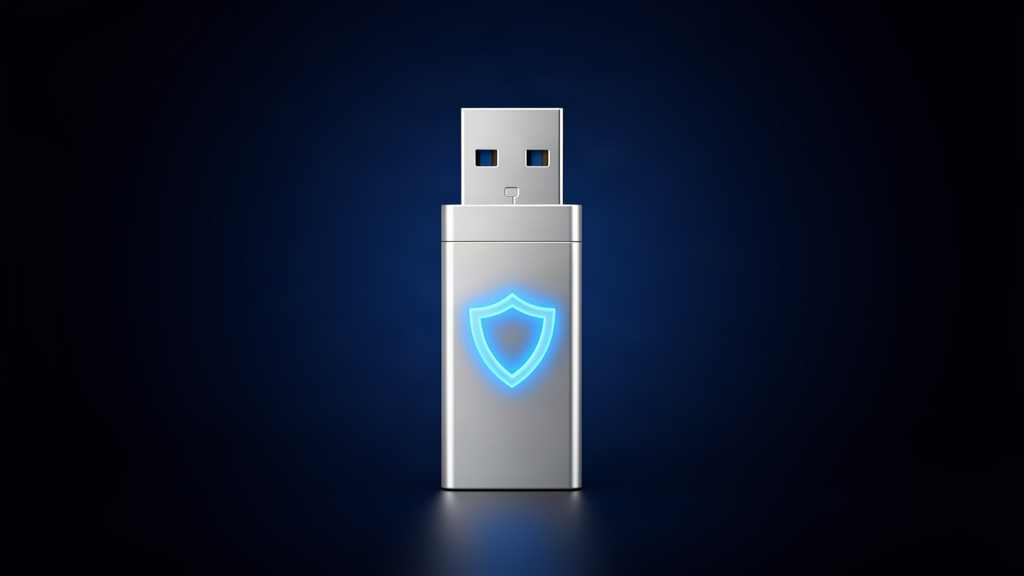
PC Audit is a complete penetration testing and security auditing suite that fits on a single USB stick and runs on any Windows or Linux machine — with no installation required on the target. That combination makes it unusual in a field where most audit tools are tied to a single operating system and demand a full software deployment before they can do anything useful.
Dual-Use by Design
The core selling point is the dual-use licence. One licence covers both Windows and Linux PCs, so an IT team that audits mixed environments — a Windows domain joined to a fleet of Ubuntu servers, for example — buys once and audits everywhere. There is no second purchase for the Linux side of the estate, no compatibility patch to chase, and no separate dongle or activation to manage. The USB stick is the entire delivery mechanism: boot the target machine from it and the suite runs straight away.
That bootable, non-invasive approach matters in practice. For a penetration tester working on a client engagement, or an internal audit team checking a machine that cannot have new software installed on it, the ability to carry the entire toolset on a USB stick and run it without leaving a footprint on the audited system is a genuine operational advantage. The suite is designed to be self-contained — all dependencies ship on the stick, so it works on machines that have no network access, no package manager available, and no prior tooling installed.
What Is Actually On the Stick
PC Audit ships as a collection of 44 individual security and auditing tools bundled into one suite. The mix covers the full range of tasks an auditor or penetration tester is likely to need on a general-purpose machine audit:
- Password recovery and cracking: John the Ripper for offline password auditing, plus the Ophcrack live CD for Windows password hash cracking from a bootable environment.
- Network enumeration and discovery: Nmap for port scanning and service detection, Wireshark for packet capture and traffic analysis, and Netcat for quick network connections and data transfer.
- Vulnerability assessment: Metasploit Framework for exploit development and testing, Nikto for web server scanning, and SSLscan and SSlyze for TLS/SSL configuration auditing.
- Web and application testing: Burp Suite Community for web proxying and manual testing, SQLmap for automated SQL injection detection, and Skipfish for web application reconnaissance.
- Wireless assessment: Aircrack-ng, Kismet, and Reaver for Wi-Fi auditing, capture, and WPA/WPA2 handshake testing — useful when the machine being audited has a wireless interface.
- Digital forensics and disk tools: FTK Imager for disk imaging, dc3dd and ddrescue for forensic disk imaging with hashing, TrueCrypt and VeraCrypt for encrypted volume handling, and HFSExplorer for Mac filesystem access.
- System and log analysis: Sysinternals Suite for deep Windows process and file analysis, Ghidra for reverse engineering, mimikatz for credential auditing on Windows, and Volatility for memory forensics.
- Exploitation and access: Medusa, Hydra, and Ncrack for password auditing against network services, plus a working exploit development environment in the form of the Metasploit Framework.
How It Fits Into a Real Audit Workflow
A typical use case is straightforward: an IT professional or security consultant arrives at a machine — a Windows workstation, a Linux server, a mixed environment — and needs to run a security audit. With PC Audit, they boot the machine from the USB stick. The suite loads and the auditor has immediate access to all 44 tools without installing anything on the target, without configuring a separate auditing environment, and without leaving software behind on the machine under test.
That workflow suits several common scenarios:

ADVERTISEMENT
- Remote or travel-based auditing: consultants who move between client sites and need a consistent, portable toolkit that works regardless of what is already installed on the target.
- Air-gapped or restricted environments: machines that cannot reach the internet, cannot install new software, or are subject to strict change control — the USB stick sidesteps all three restrictions.
- Mixed-OS estates: organisations where Windows and Linux systems coexist and the audit team needs one consistent toolkit rather than two separate ones.
- Incident response and forensics: the suite includes imaging, memory analysis, and credential auditing tools that are directly useful in a response scenario where speed and a minimal footprint matter.
Licensing and Pricing
PC Audit is sold as a single-licence purchase at £26.53 including VAT, with volume discounts available for tray quantities through CritchCorp Computers Ltd. A five-licence tray is priced at £79.99 (a 20% saving per unit), and a thirty-licence tray at £449.99 (a 33% saving per unit). All purchases include a free update subscription so the suite stays current as the underlying tools evolve.
The dual-use model is what sets the pricing apart: one licence is genuinely one licence, not one per operating system. For an organisation that audits both Windows and Linux machines, that halves the licence count compared with a single-OS tool and removes the need to track separate Windows and Linux entitlements.
Who It Is For
PC Audit is aimed at security professionals, penetration testers, system administrators, IT auditors, forensic investigators, incident response teams, network analysts, and vulnerability assessors — anyone who needs a ready-to-run security toolkit on a USB stick and does not want to be locked into a single operating system to use it.
It is also a practical choice for educational and training contexts: a bootable USB with 44 tools gives students and trainees a self-contained environment for learning penetration testing, network auditing, and digital forensics without needing to install and configure each tool individually.
The Bottom Line
PC Audit sets itself apart by doing two things at once: it delivers a broad, professional-grade penetration testing and auditing toolkit, and it does so in a form factor — a single USB stick with a dual-use licence — that removes the usual friction of OS lock-in and software deployment. For teams that audit mixed Windows and Linux environments, or that need a portable toolkit for travel, restricted sites, or forensic work, that combination is a genuine practical advantage rather than a marketing claim.















We do not allow links of any sort in comments. No SPAM whatsoever. On topic comments only.