

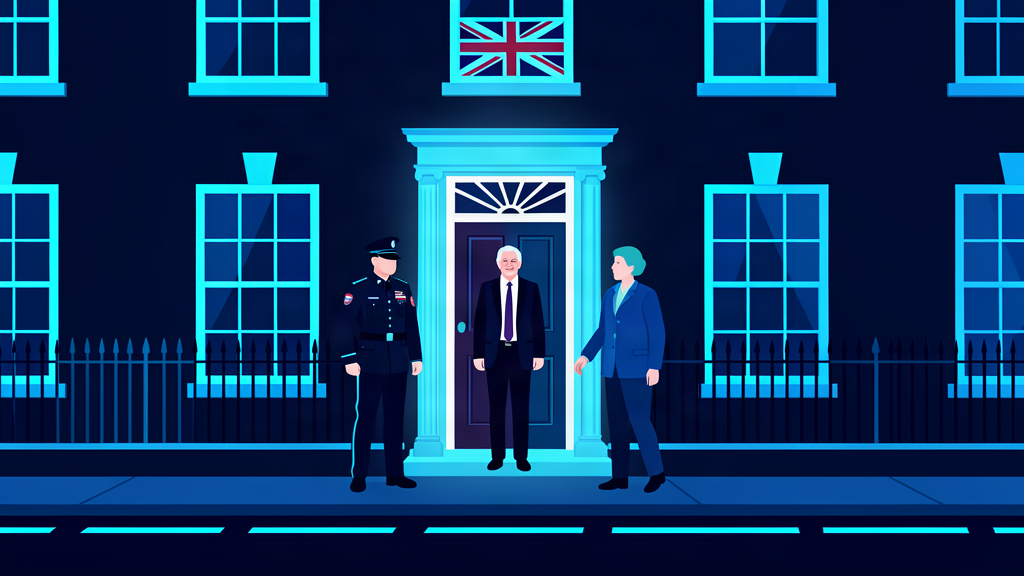
Prime Minister Andy Burnham’s government has announced an expansion of publicly funded protection for political figures who fall outside the traditional circle of sitting MPs, including local councillors, community leaders and party activists who have become targets of harassment and intimidation. Deputy Prime Minister Shabana Mahmood said the change addresses what she described as “insufficient protection” for those who play a role in public life but lack the security details automatically granted to senior ministers.
Who is covered
The new guidance extends the National Protective Security Service’s remit to anyone who has received credible threats tied to their public profile or electoral activity. Previously, protection was reserved for cabinet ministers, senior royals and a small number of high-profile MPs. Under the revised framework, local authority leaders in England’s larger cities, as well as elected mayors of combined-authority areas, will be assessed for protection on a case-by-case basis. Officials have pledged additional funding for the scheme, drawn from existing counter-terrorism budgets.
Motivation and concern
Recent high-profile resignations of local councillors citing personal safety concerns prompted the policy shift. Across the UK, police have recorded a sustained rise in electoral-related harassment offences, according to Home Office figures. Mahmood told the Commons that the intimidation of community volunteers risks hollowing out democratic participation at the grassroots level, where most citizens first interact with public service. The message from Downing Street is clear: threats against anyone in public life are now treated as threats against democracy itself.
Implementation
The expansion will roll out over the winter, with local police forces required to report protection requests within a set timeframe. A statutory review of the scheme’s effectiveness is planned for later next year. Some opposition figures have questioned whether the measure goes far enough to cover online harassment, which they argue is now more pervasive than in-person threats. The Home Office has indicated that a separate consultation on digital abuse will follow in the new year.
Why it matters
Democracy does not end at Parliament’s gates. When local voices are silenced by fear — whether at town-council meetings or on the doorstep during election canvasses — entire communities lose representation. Extending protection signals that public service at every level carries both honour and risk, and that the state accepts responsibility for those risks.
What happens next
Local police forces will begin accepting protection requests under the new framework from next month. A statutory consultation on extending the scheme to cover online harassment alongside in-person threats will run through the winter. If successful, the model could be broadened to cover candidates in next year’s European Parliament elections, though some legal scholars argue that the definition of “political figure” remains too narrow to capture the full scope of those now targeted.

ADVERTISEMENT
Source: BBC UK.





We do not allow links of any sort in comments. No SPAM whatsoever. On topic comments only.