

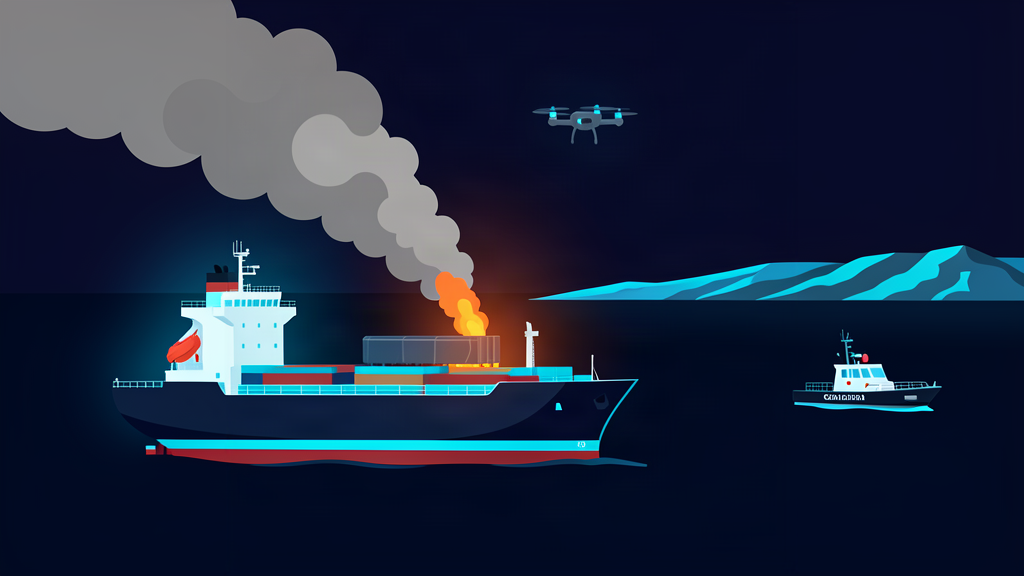
A cargo ship bound for Russia remains engulfed in flames in the Gulf of Finland after a drone attack that Finnish defence forces say was probably carried out by Ukraine. The vessel was reportedly damaged in international waters before drifting into Finnish territory, where it has continued to burn, prompting a security and environmental response from the authorities. For Britain, the incident is a stark reminder that the war in Ukraine is increasingly playing out across the seas as well as on the battlefield, with direct implications for the shipping lanes, energy routes and insurance costs that underpin UK trade.
A ship left burning near Finland
The BBC report, published on Sunday, states that Finnish defence forces assessed Ukraine as the likely culprit behind the strike on the vessel. Al Jazeera reported separately that the ship was heading for Russia’s Baltic exclave of Kaliningrad when it was hit, and that it had been damaged in international waters before drifting towards the Finnish coast. No further details about casualties or the extent of the damage have been confirmed in the reports available, and the vessel’s condition remained the focus of the emergency response at the time of writing.
The Gulf of Finland sits at the eastern end of the Baltic Sea, a narrow stretch of water that funnels commercial traffic towards St Petersburg and Kaliningrad. Its proximity to both NATO members Finland and Estonia and to Russian territory makes it one of the most sensitive maritime corridors in Europe. An incident in which a vessel is set alight and left to drift across a maritime boundary is therefore far more than a local emergency: it tests the rules that govern how states respond to attacks on civilian shipping in peacetime.
Why it matters
The United Kingdom is a maritime trading nation, and the Baltic is a route used by British exporters and by the wider European economy. When a ship can be struck in international waters and then drift into the territory of a neighbouring state, the risks facing crews, vessel owners and insurers rise sharply. Even without a formal blockade, a run of such incidents pushes up the cost of marine insurance and encourages shipping companies to reroute or add extra safeguards, costs that eventually feed through into the price of goods. London’s shipping, legal and insurance sectors have a direct interest in how this episode is investigated and whether it is treated as an act of war, a criminal attack or something in between.
There is also a broader strategic dimension. Finland joined NATO in 2023, bringing the alliance’s border directly onto the Gulf of Finland. An attack attributed to a Ukrainian operation but taking place close to Finnish waters creates a delicate situation for Helsinki and for allies, including Britain, who have committed to defending NATO territory. Keeping the distinction clear between an incident in international waters and one inside a member state’s territory will matter greatly to how the response is framed in London and across the alliance.
What happens next
The immediate priorities are the safety of the crew, bringing the fire under control and preventing any fuel or cargo from leaking into the Baltic. Investigators will then seek to establish exactly where the drone was launched from, how it reached the ship and whether the vessel was targeted because of its destination. Finnish authorities will also have to consider whether the ship’s drift into their waters raises questions about search-and-rescue obligations and maritime security procedures.

ADVERTISEMENT
For UK observers, the coming days will be about pattern rather than one-off incident. If similar attacks recur, the pressure for a coordinated naval and diplomatic response will grow, and the safety calculations made by British shipping firms will change with it. The reports attribute the assessment to Finnish defence forces, and further official comment will be needed before a firm conclusion can be drawn about responsibility.



















We do not allow links of any sort in comments. No SPAM whatsoever. On topic comments only.