

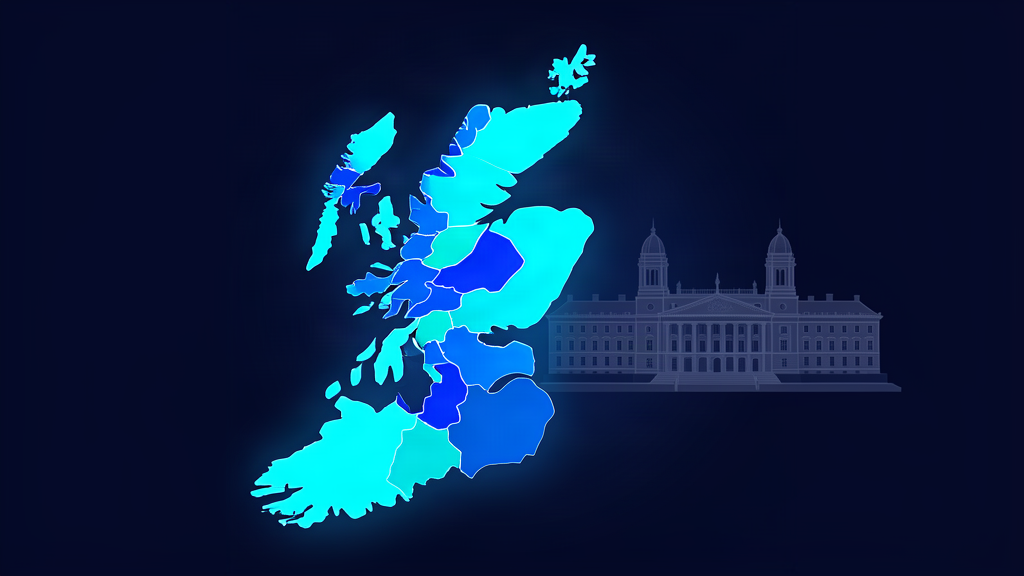
Scottish councillors are wrestling with a proposal that would rip up the map of local government across Scotland for the first time in three decades. The plan, which would fundamentally reshape how Scotland’s communities are represented and served, has prompted a wave of caution from the people who know best how tangled the current system already is.
A shake-up decades in the making
The existing council map has been largely static since the reorganisations of the 1990s. Scotland currently has 32 local authorities, each with its own elected council responsible for education, social care, housing, roads and waste collection among other duties. The new proposal, which officials are now digesting, would redraw boundaries across the country in what would be the most significant change to the local government map since the current arrangements were established.
For the average Scottish resident, the practical implications are substantial. A boundary change can mean a new council, a new set of councillors, a new place to pay council tax and a new chain of command for the services people rely on day to day. The administrative upheaval involved in moving services from one authority to another is not trivial, and councillors across the political spectrum have warned that the transition must be handled with extreme care.
The scale of the ambition is considerable. Any plan that touches dozens of council boundaries at once will affect millions of people, and the consultation that will inevitably follow is likely to be among the most intensive local government consultations Scotland has ever seen. Councillors are already cautioning that the detail matters enormously: where a boundary falls can determine which school a child attends, which bin collection a household receives and which politician is accountable when a pothole goes unfilled.
Why the timing matters
Local government reform tends to surface at moments of political realignment, and this proposal arrives in a Scotland where councils are already under significant pressure. Budgets have been tight for several years running, and many councils are balancing demands from an ageing population against the cost pressures that affect every section of the public sector. The prospect of a reshuffle layered on top of that pressure is giving local leaders pause.
There is also a broader question about the purpose of the exercise. Boundary changes can be justified on grounds of efficiency, of community identity, of better alignment between services and the populations they serve, or of political convenience. Councillors and the public alike will want to know which of those motives is driving this particular plan, because the answer shapes whether the outcome is judged a success or a failure.

ADVERTISEMENT
Council caution
The caution from council leaders is not necessarily opposition for its own sake. The people who run councils day to day are the ones who would have to implement a change of this magnitude, and they know how much can go wrong when boundary changes are rushed or poorly designed. History offers examples of boundary reforms that landed with a thud because they were implemented without enough thought about the practical consequences, and current councillors have every incentive to avoid repeating those mistakes.
The political calculus on all sides is intricate. Any change to council boundaries can shift the electoral map, and parties are naturally attentive to how a redrawing might affect their own prospects in future elections. That does not mean the reform is necessarily a partisan exercise, but it does mean that the public debate will need to separate substantive arguments about local democracy from the narrower question of who gains electorally.
What changes for residents
For residents, the most immediate question is whether the services they receive would improve as a result of the change. A council reorganisation is not an end in itself. If a new map leads to clearer accountability, better coordination between neighbouring areas, or more efficient use of resources, then people may eventually feel the benefit in their daily lives. If it leads to confusion, duplication, or simply a new set of politicians responsible for the same hard problems, then it will be hard to justify the disruption.
Education and social care are the two most sensitive areas. Schools and care homes do not sit neatly within paper boundaries, and families and carers often have relationships with services that predate any boundary line. A redrawing that ignores those realities is likely to provoke local resistance, while one that takes them seriously has at least a chance of earning public trust.
Why it matters
Local government is the layer of democracy closest to daily life, and how its boundaries are drawn shapes whose voice is heard and which services are provided where. A change of this scale in Scotland would affect how millions of people interact with their local authority, and the decisions made now will set the pattern for a generation. Getting it wrong would mean years of confusion and lost trust. Getting it right could mean a system that reflects the way people actually live rather than the way they were arranged decades ago.
What happens next
The immediate next step is the period of digestion that councillors are now entering: reading the detail, asking questions, and beginning to assess what the proposal would mean for their own areas. From there, a formal consultation is likely, and that is where the public gets a real say. The strength of the reaction from council leaders in the coming weeks will give a sense of whether the proposal goes forward with broad support or meets significant resistance before it ever reaches the implementation stage.



















We do not allow links of any sort in comments. No SPAM whatsoever. On topic comments only.