

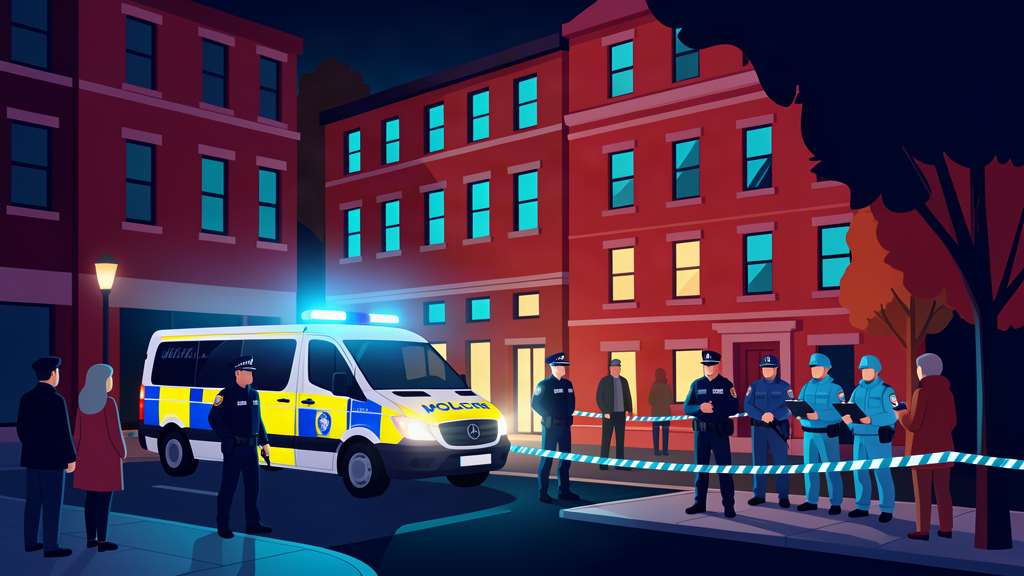
British counterterrorism police have released five British nationals on bail after arresting them near RAF Fairford, but the men remain under investigation, and their release has prompted fresh questions about what investigators believe may have been planned at the Gloucestershire airbase. The arrests were made on suspicion of preparing a terrorist act, and the men, all UK nationals in their twenties who live in London, were detained under the Explosives Act.
A major incident at one of America’s key UK bases
RAF Fairford is a United States Air Force base in Gloucestershire that has long served as a hub for American operations in Europe and beyond. Its role as a staging post for heavy aircraft and a logistics gateway gives it a profile that extends well beyond routine airfield activity, and any suggestion that it could be the target of a terror plot therefore carries significance for both UK and US security planning.
The arrests near the base were made by British counterterrorism officers, and the detail that the suspects were bailed rather than charged indicates that the investigation is still active and that detectives believe there is more to establish. In cases of this kind, bail is often used to allow investigators time to examine devices, digital material, and anything else recovered during the search, without requiring a charging decision at the earliest possible moment.
Why it matters
Terrorism investigations involving a major military airfield on UK soil always attract close attention, not only because of the potential threat they represent but because they touch on the wider question of how secure high-profile sites are, and how well intelligence and policing networks are able to identify plots before they move toward action. RAF Fairford’s connection to US operations adds an international dimension that could widen the interest in the case beyond the immediate UK investigation.
The fact that the men arrested are all London-based nationals in their twenties also fits a pattern that investigators and policymakers have had to contend with in recent years: plots that emerge from a mix of local networks and online influence, rather than from a single, easily identifiable structure. That makes each case a test of how effectively the security services can piece together intent, capability, and timing.
What happens next
The investigation is continuing, and the suspects remain on bail. Counterterrorism inquiries of this kind can take time to conclude, and fewer details are usually available in the immediate aftermath of arrests than in the longer term, when investigators have had time to assess what they have recovered. The public is likely to hear more as the investigation develops, though the timing and extent of further updates will depend on what the police are able to establish and on the normal constraints around active inquiries.

ADVERTISEMENT
For now, the key point is that the investigation is open, the arrests were serious enough to be made under the Explosives Act, and the men have not been cleared.
Source: New York Times World. Read the original report at NYT World.















We do not allow links of any sort in comments. No SPAM whatsoever. On topic comments only.