

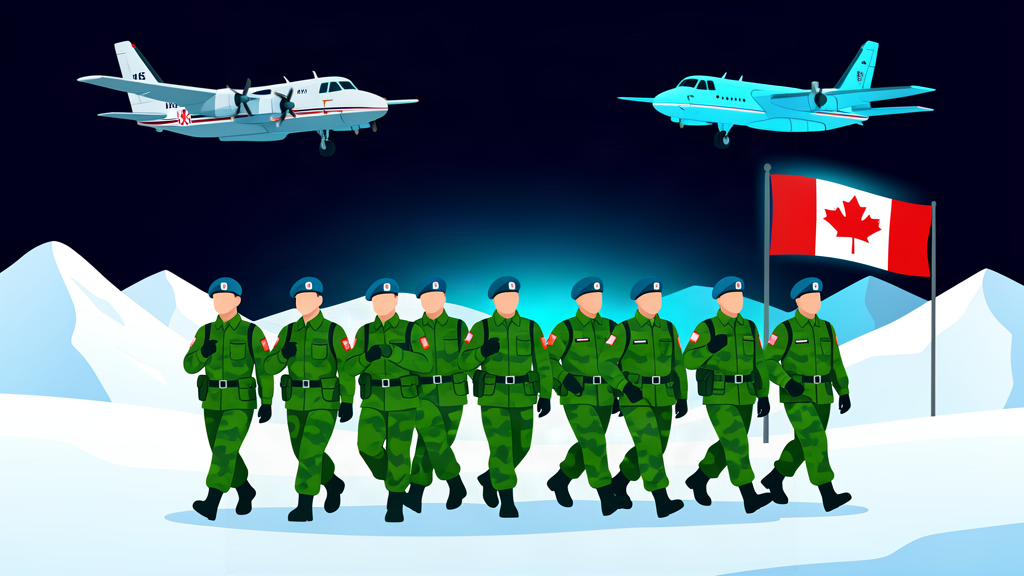
Canada’s prime minister has admitted that he has prepared for a scenario once thought unthinkable: an invasion by the United States. Mark Carney told the New York Times that he has a responsibility to consider all possibilities as the relationship between the two countries is redefined under the Donald Trump presidency, adding simply: “That’s just risk management.” He stressed the risk was low and the likelihood highly improbable.
The shift follows a campaign of economic pressure. Trump’s global tariffs and his oft-repeated wish to see Canada become the 51st state have pushed Ottawa into war-gaming an attack by its closest neighbour. In 2025 the US president said it was “highly unlikely” that the US would ever use force against Canada, and said instead that he would keep applying economic pressure to achieve political aims. The White House told the BBC this week: “President Trump has done more than anyone to protect the great people of Canada.”
Why most observers doubt it
Military experts quoted by the BBC regard an invasion as a long shot, pointing to the depth of interlocked defence cooperation. Canada and the US are both members of Nato, whose rules oblige members to defend a fellow member nation if attacked. They run joint Arctic missions under the North American Aerospace Defence Command, share intelligence, and depend on each other’s infrastructure for missile warning and airspace control.
Lt-Gen Christopher Coates, who spent 34 years in the Royal Canadian Air Force including service on Nato missions, said a war between the two would be almost impossible to imagine. “I was involved in military operations for my whole career, and we never considered the possibility that there would be a military attack coming from US territory.” He acknowledged the US has far greater military capacity, but argued that pound for pound Canadian soldiers would be able to put up a fight.
The fear is real even if the threat is not
The issue appears to be weighing heavily on public opinion. A Leger poll in January, taken after the US captured Nicolás Maduro in Venezuela, suggested more than 30% of Canadians believed a US invasion was likely. Canada is also seeing its biggest military recruitment surge in three decades, with more people volunteering for service than at any point since the 1990s.
Why it matters
For Britain, the story is a reminder of how far the transatlantic relationship has shifted. Washington’s alliance with Ottawa is the quiet foundation of North American defence, and it underpins British thinking about the continent’s security architecture. A serious Canadian contingency plan, even one described as highly improbable, changes how allies plan for the worst.

ADVERTISEMENT
What happens next
Carney’s office has framed this as prudent planning rather than preparation for war. Watch for further investment in northern radar, surveillance and Arctic infrastructure, which Canadian officials increasingly describe as both a defence priority and a hedge against a future that many still consider unlikely.


















We do not allow links of any sort in comments. No SPAM whatsoever. On topic comments only.