

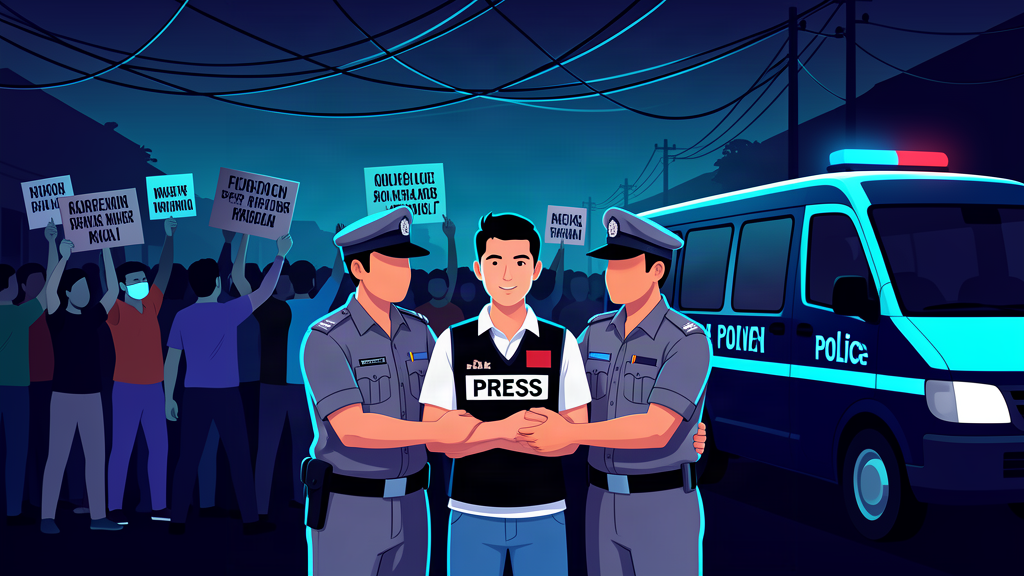
Indian police have been accused of sexual harassment against journalists covering a protest, according to the BBC. The allegations were made after officers detained dozens of demonstrators who were demanding the resignation of the country’s election chief over changes to the voter rolls, turning what began as a dispute over electoral administration into a broader confrontation with the press.
From voter rolls to confrontation
The protest grew out of a specific grievance: changes to the voter rolls and the official response to them. Demonstrators who gathered over that issue were detained in numbers, and the manner of those detentions is now the subject of the allegations. In practice, an argument about the administration of an election has become an argument about how the state treats people who challenge it.
The position of the press
Journalists covering protests in India operate in a context where the line between reporting and being drawn into events is frequently blurred. Allegations of sexual harassment against reporters are serious wherever they occur, and in a country where press freedom has been a persistent international concern, they attract particular attention.
Any such case requires proper investigation and, if substantiated, consequences. The BBC reports the allegations; it does not report a finding, and the distinction matters at this stage.
What happened at the protest
The BBC reports that police detained dozens of demonstrators. The detentions were carried out at a protest whose stated purpose was to demand the resignation of the election chief over changes to the voter rolls, a procedural area that sits at the centre of considerable argument in Indian electoral politics.
Detaining large numbers of people at a political demonstration is a standard response in many jurisdictions. What made this occasion different, on the BBC’s account, was that the journalists reporting it were reportedly caught up in the same conduct, which is what turns a dispute between protesters and police into a dispute involving the press.

ADVERTISEMENT
Why the allegation is serious
Sexual harassment is not a lesser charge for being non-physical, and where allegations involve detained protesters the power imbalance between the person making the complaint and the body investigating it is pronounced. That is why the identity of any investigating authority, and the independence of that authority, matters as much as whether an investigation happens at all.
Campaigners and press organisations in India have a long record of pressing for accountability over similar allegations. Their involvement would not itself resolve the question, but it makes it harder for the matter to be quietly closed.
The wider context
The protest sits inside a broader pattern in India of public disagreement over how elections are administered and how dissent is handled. Election commissions have faced repeated criticism in recent years over the pace of rolls revision, the registration of voters at new addresses, and the removal of names believed to have migrated.
For critics, disputes about voter rolls are the precursor to a dispute about who actually votes. For officials, the management of rolls is routine administration requiring accuracy rather than negotiation. Both readings were visible in the protest described by the BBC, with the demands for the election chief’s resignation signalling how little of the official account demonstrators accepted.
Why it matters
The story connects two issues that are individually significant in India: the integrity of electoral administration and the treatment of journalists. Both bear on public confidence, and allegations that remain unresolved tend to erode it more than either would alone.
What happens next
Attention will centre on whether an investigation is opened into the allegations and what authority conducts it. The separate question of the protest itself, and the demands for the election chief’s resignation, is likely to run its own course. For now, the position remains that allegations have been made and no finding has been reported.






















We do not allow links of any sort in comments. No SPAM whatsoever. On topic comments only.