

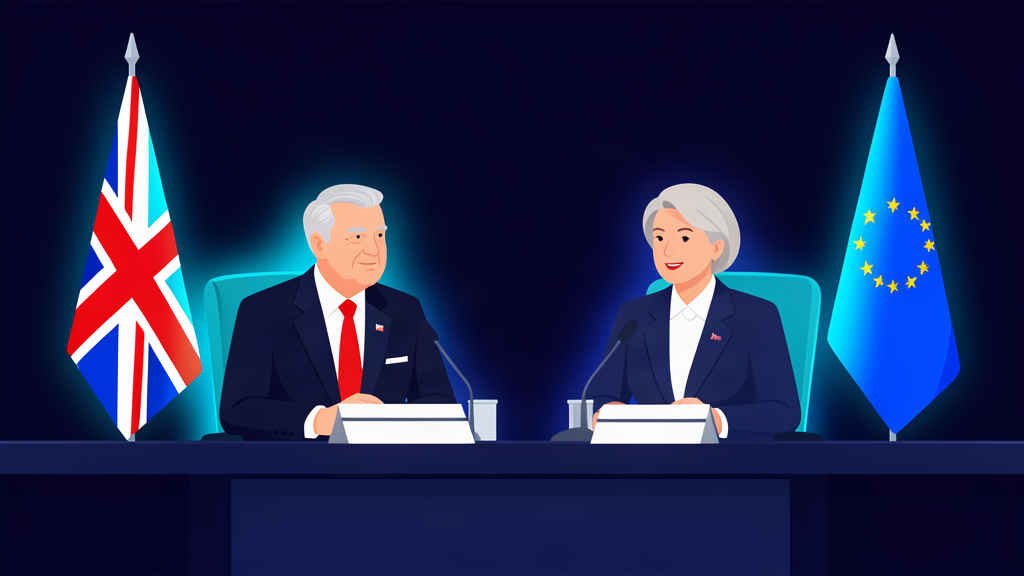
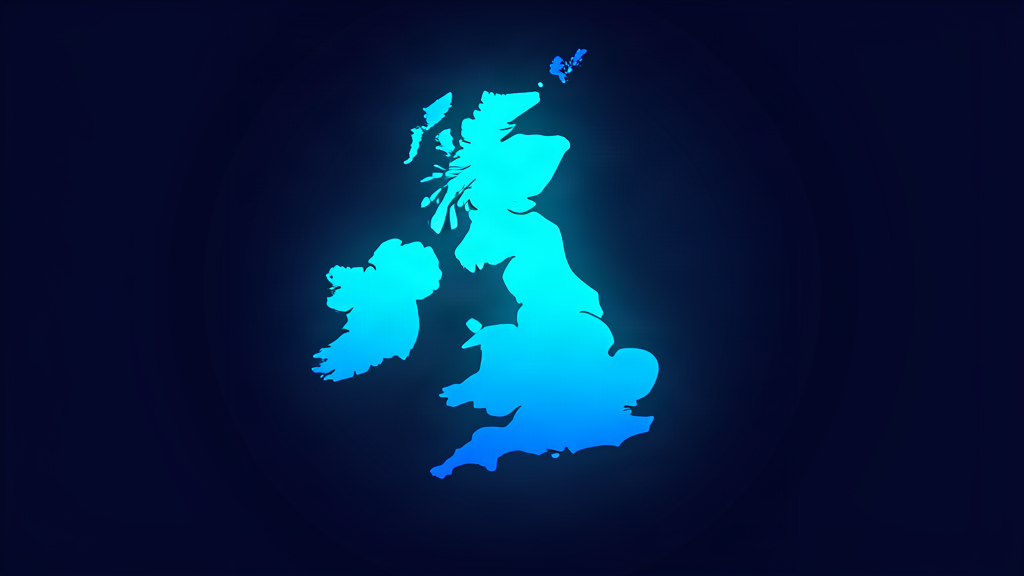
The UK prime minister is set to warn the president of the European Commission that the EU’s proposed “Made in Europe” labelling scheme could cause significant damage to British businesses, in a confrontation that risks reopening a fault line from the Brexit years at a time when both sides are trying to repair their trading relationship.
The prime minister, Andy Burnham, is due to raise the matter directly with European Commission President Ursula von der Leyen when the two meet on the sidelines of the United Nations General Assembly in New York later this week. The meeting has been billed as an opportunity to discuss the reset in UK-EU relations that followed the government’s decision to rejoin the EU’s Horizon research programme and make progress on other long-standing disputes.
What is the Made in Europe scheme?
The scheme, which the EU is still developing, would introduce a voluntary label allowing food and drink producers to flag their products as “Made in Europe”. The idea, as floated by commission officials, is to give EU products a stronger identity in global markets and to help consumers distinguish European goods from competitors elsewhere.
The problem, from the UK’s perspective, is that the label could be misread as meaning a product is made entirely within the EU when in fact it contains significant non-EU content — including, in many cases, British ingredients, components, or processing. Some British producers, particularly in food and drink, export to the EU and have supply chains that cross the Channel in both directions. If a product containing British ingredients were labelled “Made in Europe”, the UK government fears it could mislead consumers and, over time, erode the value of British provenance.
Why the UK is objecting
Downing Street’s concern, officials say, is not just about consumer confusion. It is also about fairness in trade. If a labelling scheme were to be adopted that subtly favours EU-origin content, British businesses that have spent years building export relationships with European customers could find themselves at a competitive disadvantage — not through any formal restriction, but through a labelling system that shapes consumer perception.
There is also a political dimension. The “Made in Europe” idea has echoes of the kind of product-origin disputes that became a feature of the Brexit years, when the question of what counted as British or EU-made became a flashpoint in everything from sausages to shellfish. The government will be keen to avoid a situation where a new EU labelling initiative is seen as quietly undermining the UK’s position in its own largest export market.

ADVERTISEMENT
Why it matters
Trade labels may sound technical, but they can carry real weight. In food and drink, provenance is a major selling point, and the words on a label can influence what ends up on a supermarket shelf. A scheme that nudges consumers toward thinking of “Made in Europe” as a mark of quality — and that, intentionally or not, sidelines products with significant British content — could, over time, affect the fortunes of individual producers and whole sectors.
The broader significance is in what the row says about the state of UK-EU relations. The government has invested political capital in its post-Brexit reset, and a confrontation over a labelling scheme might seem small in isolation. But these are the kind of granular disputes that can harden into bigger arguments if they are not handled carefully. Both sides are trying to demonstrate that the relationship has moved on; a fight over a label risks sending the opposite message.
What happens next
The prime minister is expected to raise the issue directly with the European Commission president in New York. Whether the commission is willing to adjust the scheme — or to provide guarantees that British content would not be misrepresented — is the key question. If the EU sticks to its position, the UK may need to decide whether to push harder, to seek a formal exemption, or to accept a compromise that limits the damage.
Watch for whether the discussion stays behind closed doors or spills into public. Trade rows are easier to manage when they can be described as discussions between partners; they become much harder when they start to look like a clash of principle. Either way, the outcome will be a test of how far the UK-EU reset has genuinely gone.












We do not allow links of any sort in comments. No SPAM whatsoever. On topic comments only.